
Competitions · Research and innovation · CNAD
The Academic Decathlon - USAD, now CNAD in China.
One theme a year, seven subjects, and the heaviest English reading load of the three programmes. Founded on a principle almost no competition shares: teams must include students who are not top of the class.

First, the names
USAD, CNAD and IAD.
The competition was renamed for the China region after a period of suspension. If you have been searching one name and finding the other, this is why.
USAD - the American original
The United States Academic Decathlon, run since 1968 by a non-profit association. This is where the format and the name come from.
CNAD - what you enter in China
SKT-CNAD, the academic decathlon programme for Chinese high-school students. The source expands the abbreviation two different ways, so confirm the full name if you need it for an application.
IAD - the global stage
The international body whose academic standards and honours the China programme follows, and to which CNAD is described as the sole exclusive channel. Its predecessor dates from 1968.
The founding idea
The teams were designed to be uneven, deliberately.
This is the most interesting thing about the decathlon and the reason it is worth considering for a student who is not top of their year.
It started with a question about breadth
The founder’s premise was that a student "should undertake ten studies". It took twenty-five years of work before the first contest ran, in California in 1968.
And teams had to include B and C students
From the first contest, every team was required to include not only high achievers but students with B and C averages. The founder held that each group would benefit from the process differently.
Which changes what a team optimises for
A team cannot simply recruit the seven strongest students. It has to work out how to make a mixed group good, which is a different and more useful problem.
And it survives in the format
Seven subjects across mathematics, science, social science, economics, literature, art and music mean nobody is strong everywhere. As one team put it, no one is genuinely a decathlete - you play to your subject and do your best in the rest.
At a glance
What the programme is.
One global theme a year, developed by academic specialists into English-language reading across seven subjects, then assessed through six quite different formats. The 2026 theme is Our Changing Climate.
- Who can enter
- Students in grades 9 to 12
- Team
- 3 to 6 students. The source gives 3 to 5 in its FAQ, so confirm before forming a team
- Language
- English throughout - the reading materials, the writing and the speaking
- Subjects
- Seven - mathematics, science, social science, economics, literature, art and music
- Reading load
- All-English cross-disciplinary material, the deepest of the three programmes
- Content standard
- Individual subjects follow the American Common Core State Standards, so the material stays aligned with school work
- Stages
- Three - a preliminary stage, the China station, and the IAD global station
- Assessment
- Six modules, from a timed objective test to a 36-hour team challenge
- Two paths
- A classic mode focused on mastering the full subject content within a fixed window, and a research mode with more freedom, working through guided questions. Both are supervised, and process and outcome are assessed separately
- Commitment
- Four to five months of study alongside a team
The six modules
What a team is actually assessed on.
Only the first of these resembles an examination. The rest are the reason the programme takes months rather than weeks.
| Module | Format | What it tests |
|---|---|---|
| Objective knowledge test | Timed, individual | Vocabulary, core concepts and factual understanding across all seven subjects |
| Analytical writing | Timed, online, individual | A 150-word-plus argumentative essay, choosing from six subjects |
| Super Q&A | Timed, team | Transferring knowledge between subjects at speed - the module that most rewards a genuinely mixed team |
| Theme speech | Team, prepared | A self-chosen topic within the year’s cross-disciplinary theme, delivered as a prepared speech with questions afterwards |
| The Boya Museum | Team research project | A full research cycle: choosing a topic and gathering material, designing and preparing the study, then a timed display board and defence at the China station, and a research paper plus board defence at the global station |
| U20 Youth Voice | Global station only | Cross-cultural teams formed on site pick a global issue and have 36 hours: mentor briefing, brainstorming, incubation, poster and slides, then a live defence |
The Boya Museum module is the one to plan for. It runs across both the China and global stations and is a complete research project, which means it starts months before either.
The three stages
Reading, then performing, then arguing.
Each stage raises the demand in a different direction rather than simply getting harder.
Preliminary - reading and comprehension
Large volumes of English text across the seven subjects, with exercises consolidating understanding, assessed both objectively and subjectively.
China station - the full range
Discussion, defence, presentation and enquiry. The subjective modules give repeated opportunities to apply both the knowledge and the language.
IAD global station - dialectic and culture
Forming your own position, understanding someone else’s, and exchanging views on the same issue with people from different backgrounds.
What it builds
Why a general-education programme is worth four months.
The case the organisers make is about breadth, and it is a fair one for a student whose application is otherwise all one subject.
One theme, seven subjects
A single topic connecting mathematics, science, social science, economics, literature, art and music builds a whole view of a question rather than a deeper view of one part of it.
Academic English, at volume
Four hundred thousand words of original English reading is the kind of load university study assumes and school rarely provides. It also lifts standardised test performance as a side effect.
And team work that is actually structured
Four to five months with a mixed-ability team, dividing subjects, teaching each other and covering each other’s weaknesses.
Plus a first taste of research
The Boya Museum module asks a team to define a question worth researching and carry it through - which is closer to how universities work than any exam is.
Preparation
How Hanlin prepares a CNAD team.
The reading is published, the theme is announced, and the modules are known. What decides a result is how a team divides four months.
Building a mixed team on purpose
The format was designed for uneven teams and still rewards them. Seven subjects mean a team of specialists who teach each other outperforms a team of generalists.
Working through the reading systematically
Four hundred thousand words is the single largest commitment. Dividing it, summarising for each other and testing understanding is more efficient than seven students each reading everything.
Practising the subjective modules separately
Timed argumentative writing, prepared speaking with questions, and rapid team Q&A are three different skills. None of them improves by reading more.
Starting the research module early
The Boya Museum project runs across two stations and ends in a research paper. It is the part that cannot be compressed.
Why Hanlin
Preparation for CNAD at Hanlin is taught by full-time subject tutors, on a course tier chosen by placement paper rather than by year group.
Programme formats
Five ways this is taught.
Group size is the whole difference between these. It decides how much of the tutor's attention a student gets and how far the course can bend to them, so it is worth choosing rather than accepting.
| Format | Group size | What it suits |
|---|---|---|
| One-to-one | One student | Content, pace and emphasis set by what this student actually needs rather than by a syllabus. The only format that can be rebuilt mid-course. |
| Small group | Three to eight | Opens at three. Frequent discussion, and the tutor can slow down or move on according to what the group has absorbed. Most students chasing a higher award are taught in this one. |
| Class | Eight to twelve | Taught by the subject lead or a medal coach. Less back-and-forth, so it suits a student who will say when something is unclear. |
| Large class | Ten to twenty | For students in the middle of the placement range, and a way to try a competition before committing. Students often move to a small group or to one-to-one afterwards. |
| Past-paper class | No cap | Past papers worked through in sequence in the weeks before the sitting. Free to students already enrolled. |
Course length for CNAD is set after a placement paper. The gap between where a student is and what the paper asks for is what the course has to close, and that gap is not the same for two students in the same year group.
How it runs
Six steps, four people on your side.
The same process for every student, so that nothing depends on one tutor remembering to do it.
 Step 1
Pre-course assessment
A placement paper before anything is booked, so the course tier is chosen on evidence rather than on a year group.
 Step 2
Tutor matching
A subject tutor is matched to the result, and their full background is provided before you agree to it.
 Step 3
Plan and group
A study group opens with four people on one student: the tutor, a planner, a supervisor and an academic manager.
 Step 4
Scheduled teaching
The teaching office sets the timetable around the competition date and school term, and teaching begins.
 Step 5
After-class reports
What was covered, and how the student handled it, reported after every lesson.
 Step 6
Homework follow-up
The teaching assistant and the form teacher both check that homework is done, which is where most preparation quietly fails.
Free resource pack
Motions and case-file pack
The same material our own CNAD students work from. Scan the code, say what you need, and an advisor sends it.

Tell an advisor which competition and year group, and the material comes back the same day. Free, and you do not have to enrol in anything. If we do not already hold what you need, we will go and find it.
- PDFPast motions and topic areas
- DOCXA case-file template, ready to fill in
- PDFFormat, speaking times and the judging criteria
- PDFEntry checklist and the dates for the current cycle
Teaching team
Who would teach it.
Three of the twenty-two tutors on the published Hanlin roster - the ones whose subject this is.

Dr An
Mathematics at Illinois Urbana-Champaign with highest honours and the Elizabeth R. Bennett scholarship, then a PhD in mathematics at Johns Hopkins on full funding with the Owen fellowship and the Joel Dean award for excellent teaching. Years of US university teaching, translating high-level mathematics into language students can use.

Yu
Master's in bioinformatics and computational biology from UT Dallas and a nutritional sciences degree from Wisconsin-Madison. Second author on an SCI-indexed paper from the Tanumihardjo vitamin-A laboratory, and formerly at ABS Global.

Tan
Master's in data science from the University of Sydney after a statistics degree at Simon Fraser University, graduating in the top 5% with repeated chancellor's honours; A-Levels at a Cambridge international school, and formerly a data analyst at Tencent. An AMC-accredited coach, a College Board-accredited AP teacher, and holder of a Math League excellent-teacher award.
Where it is taught
Hanlin learning centres.
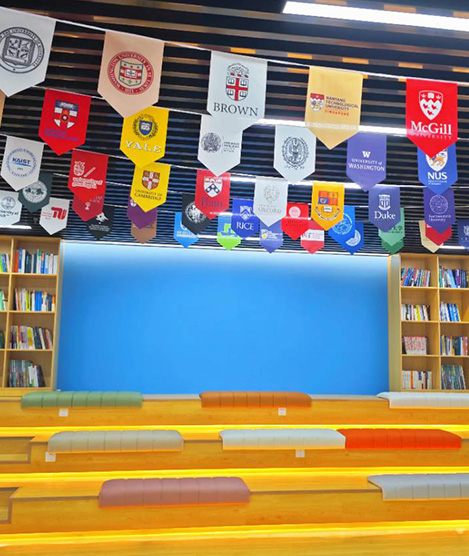
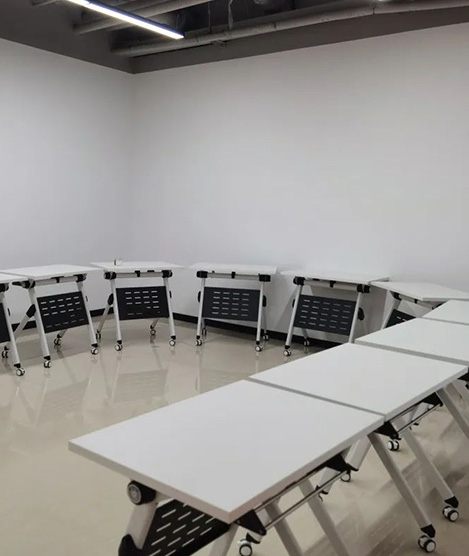
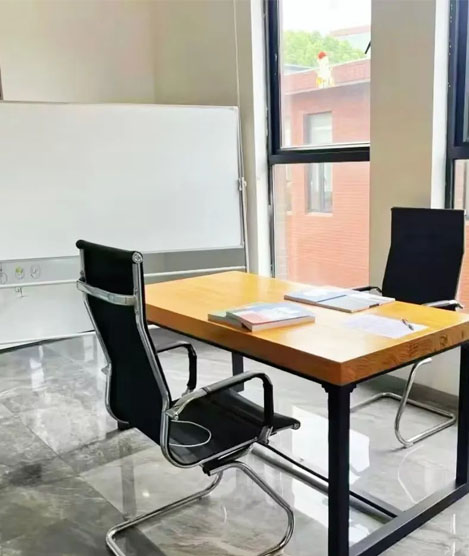
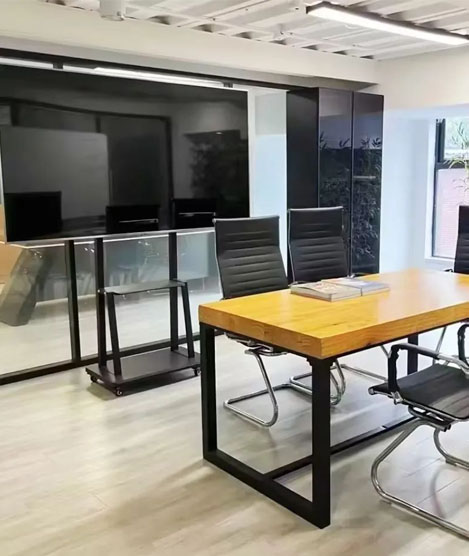
Teaching runs from Hanlin's own centres in Shanghai, Shenzhen, Chengdu and Hangzhou, and online for students elsewhere.



Talk to an advisor
Everything Hanlin does for CNAD, in one conversation.
Entry, planning, coaching and the past papers. An advisor will tell you which of these a student actually needs, including when the answer is none of them.
Competition entry and planning
Which competitions suit this student, in what order, and by when - then we handle the registration, including the ones that can only be entered through a school or a centre.
Competition coaching
Taught by full-time subject tutors, on a course tier chosen by placement paper rather than by year group.
International curriculum tutoring
IB, AP, A-Level, IGCSE and the US high school curriculum, taught alongside school and timed around the exam calendar.
Competition past papers, free
A large library of past papers, mark schemes and syllabus breakdowns across every competition on this site. No charge and no enrolment.
Scan to add an advisor
Say which competition or course you are asking about. Replies in Chinese or English.
Or call +86 21 6352 6630FAQ
The Academic Decathlon, briefly answered.
What students, teachers and families ask before entering.
Is CNAD the same as USAD?
They are the same format. USAD is the American original, run since 1968. After a period of suspension the programme was renamed, and in the China region it now runs as SKT-CNAD, which feeds the IAD global stage.
Who can enter?
Students in grades 9 to 12, in teams. The source gives the team size as 3 to 6 in one place and 3 to 5 in another, so confirm before forming one.
Why is it called a decathlon if there are seven subjects?
The name comes from the founder’s premise that a student should undertake ten studies. The China programme covers seven subjects - mathematics, science, social science, economics, literature, art and music - assessed through six modules.
What language is it in?
English throughout: the reading materials, the writing and the speaking.
How much reading is there?
A substantial body of English cross-disciplinary material across the seven subjects - the heaviest reading load of the three programmes.
What is the 2026 theme?
Our Changing Climate - approached through literature, science, social science and art rather than as a science topic alone.
What are the six modules?
A timed objective knowledge test; timed analytical writing of 150 words or more; a team Super Q&A; a prepared team theme speech with questions; the Boya Museum team research project; and, at the global station, the U20 Youth Voice - a 36-hour cross-cultural team challenge.
How long does it take?
Four to five months of study alongside a team, across three stages: a preliminary stage, the China station and the IAD global station.
Do I need to be top of my class?
No, and the format was explicitly designed the other way. From the first contest in 1968 teams were required to include students with B and C averages, on the founder’s view that different students benefit from the process differently.
Are there two ways to prepare?
Yes. A classic mode focused on mastering the full content within a fixed window, and a research mode with more freedom, working through guided questions. Both are supervised, and process and outcome are assessed separately.
Related
Other team and research competitions.
What students enter alongside CNAD.
CNAD enquiries
Designed for teams that are not all top of the class.
Seven subjects mean nobody is strong everywhere, and the format has required mixed teams since 1968. Tell us who you have and what they are each good at, and an advisor will map the four months and the three stages.