
Competitions · Research and innovation · CTB
CTB, China Thinks Big.
Think Big, Start Small. A research or action project taken to a national forum and then to Harvard - and if your paper is already written, you can submit it for nothing.
At a glance
What the challenge is.
China Thinks Big was launched in 2012 by scholars from Harvard Business School and Tsinghua’s School of Economics and Management. Over a decade it has worked with professors from Yale, Stanford, Tsinghua, Peking and dozens of other universities, alongside Nobel and Pulitzer laureates, to set research topics and innovation challenges for Chinese secondary students worldwide.
- Since
- 2012
- Who can enter
- Students in grades 9 to 12, of any nationality and in any region. There is no absolute age requirement, but real-name verification is needed after registering
- Team
- Individually, or in a team of up to ten. The roster locks about a week after registration closes
- Project types
- Two - a research project or an innovation action project. A student submits to one, not both
- Entries per year
- One paper per person, in any given year
- Language
- Chinese or English. Online tasks are presented bilingually and may be submitted bilingually
- For the global forum
- An English project presentation video is required, and an English paper after selection
- Coach
- Compulsory. Every participant, including a team of one, must have an adult coach over 18
- Participation fee
- USD 215 per person, paid to the organiser, covering coaching resources, the online tools and expert review and feedback on work in progress
- The season
- Registration through the autumn, papers by late January, the national forum in late February or early March, and the global English forum at Harvard in April
- Consent
- Participants under 18 need a parent or guardian’s signed consent before presenting at a live forum
The route most people miss
If the paper is already written, submission is free.
This is stated on the source page and is easy to read past. For a student who has already done the work, it changes the proposition entirely.
Free submission by the autumn deadline
A student with a completed project and a completed paper who does not need CTB’s online coaching and feedback can submit for expert review at no cost, before a deadline in late September.
And nothing is payable until you are invited
No fee falls due before the paper passes review and an invitation to the national forum arrives. Forum attendance is charged separately and announced in advance.
Bursaries exist for the forums
Both the Chinese and the English forums offer financial assistance, and selected students from families in financial difficulty can apply to have on-site fees reduced.
So the paid route buys coaching, not entry
The participation fee covers academic resources, the online tools and expert feedback on work in progress. It is a service, and a student who does not need it is not required to buy it.
The coach rule
You must have one. It must not do the work.
CTB is unusually explicit about this, and the reasoning is worth reading in full before choosing who to ask.
An adult over 18, and that is the whole requirement
A school teacher, an outside tutor, a parent, or a professional in the field. The committee states that the coach’s identity, profession, age and credentials have no effect on whether a paper is selected.
Their job is supervision, not expertise
The stated purpose is that a young researcher works under some adult guidance - on time and task management, on finding necessary resources, and on defining a sensible topic. Not on producing the research.
And professional ghost-work costs eligibility
The committee says plainly that if a project shows obvious signs of having been done by a professional on the student’s behalf, it directly affects continued eligibility. Choosing a famous coach is not the point and can be the problem.
Coaches are trained and certified
Everyone acting as a CTB coach completes a short online training and certification, with an optional deeper project-based-learning course.
Two kinds of project
Research, or action.
The choice is made at submission and cannot be doubled up. They are assessed differently because they are trying to do different things.
A research project
Investigating a topic of academic value - surveying, experimenting, and recording the process and the findings. The value is academic: sharing and accumulating knowledge. Applied value and real action are welcome but not required.
Submitted as a research report
Abstract, background, research methods, analysis of results, and discussion.
An innovation action project
A practical action with an innovative purpose - a venture, an invention, a charity initiative - recorded and analysed in detail. Its core value is documenting a serious attempt and what it meant socially.
Submitted as an action report
Abstract, background, a description of the action plan, verification of its effect, and discussion. It still needs an academic research basis showing the design was sound or the effect real.
Language
The organisers say it is not a language challenge.
That is their phrasing, and it is a meaningful commitment rather than a courtesy.
Work in the language you think in
The organisers state they are looking for the academic and innovative thinking behind the language, not the language itself, and that CTB is not a speech competition.
Bilingual throughout the online stage
Online tasks are presented in both languages and may be submitted in both. The national forum accepts papers in Chinese or in English.
English becomes necessary at the global forum
To be selected for the global forum a student submits an English presentation video, and completes an English version of the paper once selected.
Which is worth planning for
A team working in Chinese through the autumn needs to budget time for the English video before selection, not after.
The season
Autumn to Harvard.
The dates below follow a recent cycle. Confirm the current year’s deadlines before planning around them.
| Stage | When | What happens |
|---|---|---|
| Free paper submission | By late September | For students who already have a finished project and paper and want no coaching |
| Registration | September to late November | Form a team of one to ten and start a project. An early deadline in October and a regular deadline in late November |
| The project | Registration to mid-January | Choose a topic, work through the guided tasks, and upload drafts for scholar comment as you go |
| Paper submission | Late January | Project title and abstract in both languages, the paper in one language, and an English presentation video |
| National forum | Late February to early March | Live presentation and defence. Every project attending enters the CTB electronic library, and outstanding ones the Chinese paper collection |
| Global forum at Harvard | April | In English. Projects enter the English electronic library and papers are collected in the Harvard YSA-CTB volume |
Every project gets its own page on the CTB site, and that page is kept for three years - long enough to still be usable when the student applies to university.
Preparation
How Hanlin supports a CTB project.
CTB runs its own coaching and feedback as part of the fee, so outside support is most useful in the places that structure does not reach.
Choosing between research and action
The same interest can become either. A research project accumulates knowledge; an action project records an attempt and its effect. The reports they require are structured quite differently, and the choice is made once.
Finding the right coach
The committee does not want an expert who will do the work. It wants an adult who will hold a student to a schedule and help them scope a question. Identifying that person is often the practical obstacle.
Preparing the English presentation
Selection for the global forum requires an English video. Building it while the work is fresh is easier than reconstructing the argument in January.
And using the drafting feedback
CTB reviews drafts at each stage and answers questions from scholars throughout. Teams that upload early get several rounds; teams that upload once get one.
Why Hanlin
Hanlin has been entering students for CTB for years, and publishes what they got. The record is further down this page.
Programme formats
Five ways this is taught.
Group size is the whole difference between these. It decides how much of the tutor's attention a student gets and how far the course can bend to them, so it is worth choosing rather than accepting.
| Format | Group size | What it suits |
|---|---|---|
| One-to-one | One student | Content, pace and emphasis set by what this student actually needs rather than by a syllabus. The only format that can be rebuilt mid-course. |
| Small group | Three to eight | Opens at three. Frequent discussion, and the tutor can slow down or move on according to what the group has absorbed. Most students chasing a higher award are taught in this one. |
| Class | Eight to twelve | Taught by the subject lead or a medal coach. Less back-and-forth, so it suits a student who will say when something is unclear. |
| Large class | Ten to twenty | For students in the middle of the placement range, and a way to try a competition before committing. Students often move to a small group or to one-to-one afterwards. |
| Past-paper class | No cap | Past papers worked through in sequence in the weeks before the sitting. Free to students already enrolled. |
Course length for CTB is set after a placement paper. The gap between where a student is and what the paper asks for is what the course has to close, and that gap is not the same for two students in the same year group.
How it runs
Six steps, four people on your side.
The same process for every student, so that nothing depends on one tutor remembering to do it.
 Step 1
Pre-course assessment
A placement paper before anything is booked, so the course tier is chosen on evidence rather than on a year group.
 Step 2
Tutor matching
A subject tutor is matched to the result, and their full background is provided before you agree to it.
 Step 3
Plan and group
A study group opens with four people on one student: the tutor, a planner, a supervisor and an academic manager.
 Step 4
Scheduled teaching
The teaching office sets the timetable around the competition date and school term, and teaching begins.
 Step 5
After-class reports
What was covered, and how the student handled it, reported after every lesson.
 Step 6
Homework follow-up
The teaching assistant and the form teacher both check that homework is done, which is where most preparation quietly fails.
Free resource pack
Project and submission pack
The same material our own CTB students work from. Scan the code, say what you need, and an advisor sends it.
Tell an advisor which competition and year group, and the material comes back the same day. Free, and you do not have to enrol in anything. If we do not already hold what you need, we will go and find it.
- PDFPast finalist project titles and abstracts
- PDFCategory definitions and the judging criteria, broken down
- DOCXA project timeline working back from the submission date
- PDFEntry checklist and the dates for the current cycle
Teaching team
Who would teach it.
Three of the twenty-two tutors on the published Hanlin roster - the ones whose subject this is.

Dr An
Mathematics at Illinois Urbana-Champaign with highest honours and the Elizabeth R. Bennett scholarship, then a PhD in mathematics at Johns Hopkins on full funding with the Owen fellowship and the Joel Dean award for excellent teaching. Years of US university teaching, translating high-level mathematics into language students can use.

Yu
Master's in bioinformatics and computational biology from UT Dallas and a nutritional sciences degree from Wisconsin-Madison. Second author on an SCI-indexed paper from the Tanumihardjo vitamin-A laboratory, and formerly at ABS Global.

Tan
Master's in data science from the University of Sydney after a statistics degree at Simon Fraser University, graduating in the top 5% with repeated chancellor's honours; A-Levels at a Cambridge international school, and formerly a data analyst at Tencent. An AMC-accredited coach, a College Board-accredited AP teacher, and holder of a Math League excellent-teacher award.
Student results
What Hanlin students got.
Taken from Hanlin's published record of student honours and rewritten in English. Figures are as the organisers reported them.
An editor's pick, global top 4%
One line from Hanlin's published CTB record. The rest of it is below.
CTB
- 2024-253 teams reached the national forum and 2 the global forum
- 2023-242 teams, 5 students, reached the global forum
Earlier years
- 2022-236 teams had papers accepted, 3 reached the global forum and one was an editor's pick, the global top 4%
The full record, across every subject and year, is on the student honours page.
Where it is taught
Hanlin learning centres.
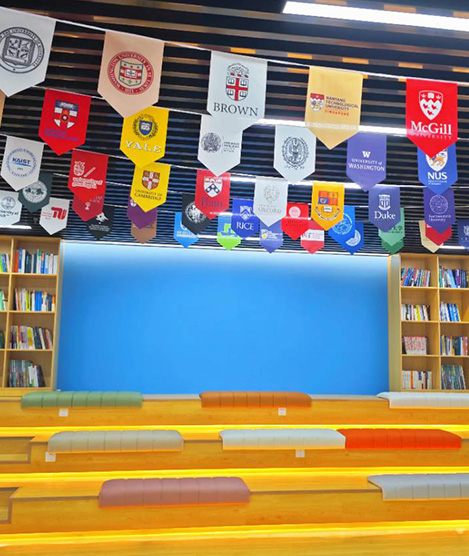
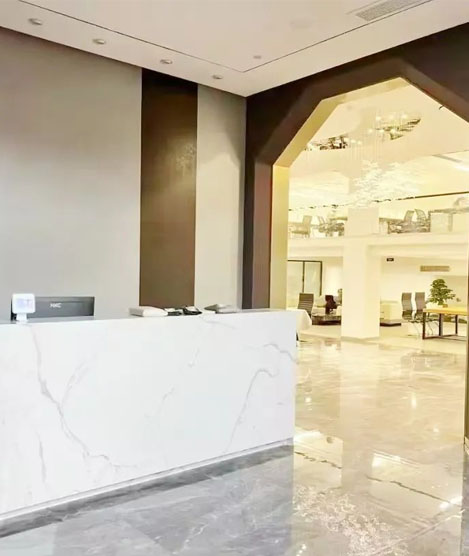
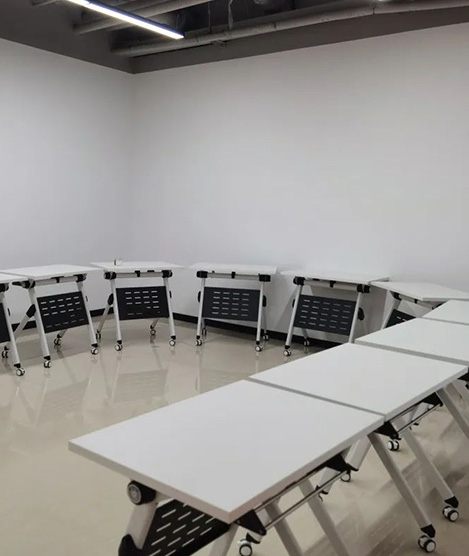
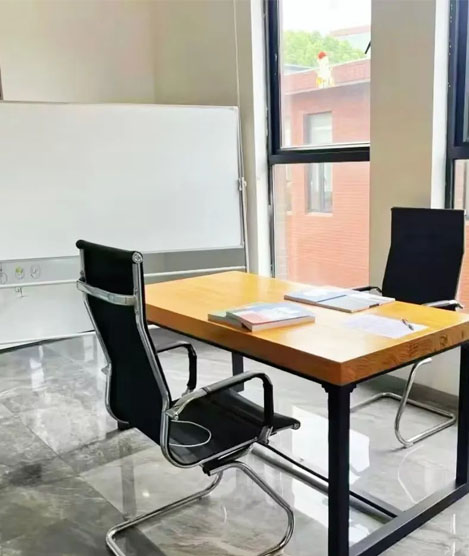
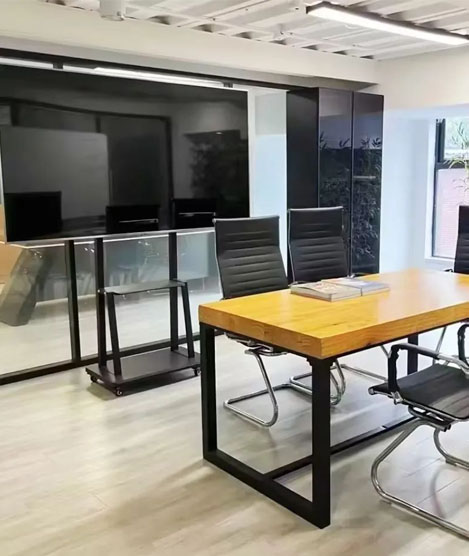
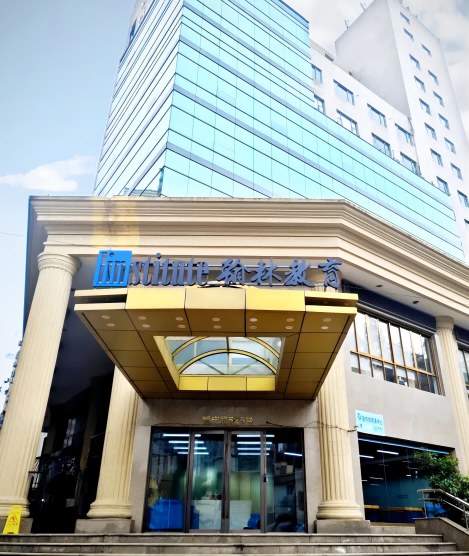
Teaching runs from Hanlin's own centres in Shanghai, Shenzhen, Chengdu and Hangzhou, and online for students elsewhere.

Talk to an advisor
Everything Hanlin does for CTB, in one conversation.
Entry, planning, coaching and the past papers. An advisor will tell you which of these a student actually needs, including when the answer is none of them.
Competition entry and planning
Which competitions suit this student, in what order, and by when - then we handle the registration, including the ones that can only be entered through a school or a centre.
Competition coaching
Taught by full-time subject tutors, on a course tier chosen by placement paper rather than by year group.
International curriculum tutoring
IB, AP, A-Level, IGCSE and the US high school curriculum, taught alongside school and timed around the exam calendar.
Competition past papers, free
A large library of past papers, mark schemes and syllabus breakdowns across every competition on this site. No charge and no enrolment.
Scan to add an advisor
Say which competition or course you are asking about. Replies in Chinese or English.
Or call +86 21 6352 6630FAQ
CTB, briefly answered.
What students, teachers and families ask before entering.
Who can enter?
Students in grades 9 to 12, of any nationality and in any region, individually or in a team of up to ten. There is no absolute age requirement, but real-name verification is needed after registering.
Can I enter without paying?
Yes, if your project and paper are already finished and you do not want CTB’s online coaching. Submit for expert review before the late-September deadline; no fee is due unless the paper passes review and you are invited to the national forum, which is charged separately.
What does the participation fee cover?
USD 215 per person, covering the academic coaching resources and their copyright, the website and online tools, and expert review, feedback and guidance on work in progress before the national forum.
Do I need a coach?
Yes. Every participant, including a one-person team, must have an adult coach over 18 - a school teacher, an outside tutor, a parent, or a professional in the field.
Does the coach need to be an expert?
No, and the committee states that a coach’s identity, profession, age and credentials have no bearing on whether a paper is selected. It also states that a project showing obvious signs of having been done by a professional on the student’s behalf will directly affect continued eligibility.
What are the two project types?
A research project, investigating a topic of academic value and submitted as a research report; or an innovation action project, documenting and analysing a practical action such as a venture, an invention or a charity initiative, submitted as an action report. You choose one.
What language do I work in?
Chinese or English. The organisers state that CTB is not a language challenge and they are looking for the thinking behind the language. Selection for the global forum requires an English presentation video and an English paper.
How many papers can I submit?
One per person in any given year.
Can my team change after registration?
Only briefly. The roster locks about a week after registration closes. For teams that only submit a paper, the membership is whatever was registered at submission.
What happens to my project afterwards?
Every project attending a forum enters the CTB electronic library, outstanding ones enter the Chinese paper collection, and global forum papers are collected in the Harvard YSA-CTB volume. Each project also keeps its own page on the CTB site for three years.
Related
Other research competitions.
What students enter alongside CTB.
CTB enquiries
If the work is already done, submitting costs nothing.
CTB charges for coaching, not for entry - a finished paper can be submitted free for review before the autumn deadline. Tell us whether the student has a project under way and an advisor will map which route makes sense.