
Competitions · Research and innovation · FRC
FRC, the FIRST Robotics Competition.
Six weeks to build a 68-kilogram robot from a theme published in January - and you need a workshop with a lathe and a mill to do it. Twenty-six awards, and only three of them are for winning matches.
Read this first
FRC needs a workshop, not a classroom.
This is the most demanding entry requirement of any competition on this site, and it is worth confirming before anything else.
A 68-kilogram machine
The robot weighs around 68 kilograms and is built from scratch. This is not a kit assembled on a desk.
A space with real machine tools
Teams need somewhere to design and build, equipped with substantial tools and powered machining equipment - lathes, milling machines and the like.
Ten students and two adults, minimum
At least ten high-school-age students willing to commit real time, and two or more adult mentors with both technical and non-technical expertise, guiding the team through the build and competition season.
And sponsors
FRC expects teams to have sponsors providing backup funding and practical help. Fundraising is a standing part of running a team, not a one-off.
At a glance
What the competition is.
FRC is run by FIRST and is its senior robotics programme - an industrial-grade robot competition described by its organisers as the highest-level and most spectacular youth robotics event there is. In 2020 it drew 4,000 teams, more than 75,000 students and 19,000 mentors across more than twenty countries.
- Organiser
- FIRST, an American non-profit
- Who can enter
- High-school students, roughly ages 14 to 18, with some programming background
- Team size
- Ten or more students, plus two or more adult mentors
- Robot
- Built by the team from standard parts and kits governed by FRC rules, weighing around 68 kilograms
- The theme
- Published in early January and different every year, with an animation setting out the rules and the field
- Build period
- Six weeks from the theme announcement to source parts and build a robot that completes the tasks
- Match phases
- An autonomous phase and a driver-controlled phase
- On the field
- Four or five team members - one coach as field commander, two drivers and one or two human players
- Season
- Theme in January, build through February, regional qualifiers from March, and the world championship in Houston in late April
- Sponsors
- More than 3,000 worldwide, including NASA, PTC, Google, National Instruments, Microsoft and Apple
- Recognition
- More than 500 universities recognise FRC and offer scholarships to competitors. Several ask on their application forms whether an applicant has taken part in a FIRST programme
The six weeks
The build season is the competition.
Everything about how an FRC team is organised follows from the fact that the problem is unknown until January and the robot is due in February.
The theme lands in January
FIRST publishes the year’s challenge with an animation explaining the rules and the field. Nothing about the specific task can be prepared before that moment.
Six weeks to a finished machine
Teams source parts and build a robot that can complete the tasks. Six weeks is the whole of it, which is why teams that have practised as a unit beforehand do so much better.
Then regionals from March
Regional qualifiers run through March, with successful teams going to the world championship in Houston in late April.
And a post-season after that
China runs post-season events in July and August, and domestic whitelist events from August to October, so the year does not end in April.
How a team is organised
Six departments, and only two of them build.
FRC teams are structured like small organisations, which is a large part of what the competition teaches.
Mechanical, and programming and electrical
Mechanical handles structural design, detail design, CAD drawings and machining. Programming and electrical handles the circuitry and the code - assembly, design, writing and debugging.
Tactics and assets
Tactics designs the machine’s strategic role, plans competition strategy and gathers intelligence on other teams. Assets manages the team’s property, purchasing and equipment control.
Publicity and business
Publicity builds and maintains the team’s identity and its channels. Business secures sponsorship, negotiates with sponsors and applies for the business-related awards.
The match format
Alliances, and the top eight pick their partners.
The elimination format is unusual and it rewards being visibly useful as much as being individually strong.
Qualification - random alliances
Each team is randomly allied with two others against another three-team alliance, red against blue. The three teams’ combined score is the alliance score. Teams usually play eight to ten qualification matches.
Elimination - the top eight choose
After qualification, the eight highest-scoring teams take turns selecting two other teams each, forming eight alliances that then compete in elimination.
Which changes what you optimise for
A team that is not top eight needs to be a team the top eight want to pick. That is often a specific, reliable capability rather than a high score.
Then the final
The winning alliance from elimination goes through to the final match of the competition.
The awards
Twenty-six awards, and three are for winning.
This is the thing about FRC that most repays understanding. The overwhelming majority of what a team can win has nothing to do with match results.
| Group | Count | What they recognise |
|---|---|---|
| Machine, Creativity and Innovation | 6 | The Autonomous Award, Creativity Award, Excellence in Engineering Award, Industrial Design Award, Innovation in Control Award and Quality Award - the robot as an engineered object |
| Team Attribute | 9 | Engineering Inspiration, Entrepreneurship, Gracious Professionalism, the Imagery Award, the Judges’ Award, Rookie All-Star, Rookie Inspiration and Team Spirit - how the team behaves and what it contributes |
| Submitted | 5 | The Chairman’s Award, Digital Animation Award, FIRST Dean’s List Award, Safety Animation Award and Woodie Flowers Finalist Award - entered by application rather than won on the field |
| Robot Performance | 3 | Winner and Finalist for the alliances reaching the final match, and Highest Rookie Seed for the best-placed new team after qualification |
| Other | 2 | The Founder’s Award and Volunteer of the Year, recognising contributions to FIRST itself |
Two awards are worth singling out. The Chairman’s Award is FIRST’s highest honour and is submitted rather than won on the field. The two Rookie awards mean a first-year team is competing against other first-year teams, not against programmes a decade old.
FRC and FTC
Which of the two your school should run.
FTC is the junior programme in the same family, and the practical differences are large.
FRC is far more expensive
A 68-kilogram robot, machine tools and a sponsorship operation. FTC builds a robot the size of a microwave and has a substantially lower entry barrier.
And the build window is fixed
FRC teams have six weeks and then ship. FTC teams keep improving their robot through the season, which suits a team learning as it goes.
FRC needs ten students; FTC recommends eight to twelve
The numbers are similar, but FRC also needs six functioning departments, which means a larger team works better.
So most schools start with FTC
FTC covers grades 7 to 12 and builds the habits FRC assumes. Moving up after a season or two is the usual route.
Preparation
How Hanlin supports an FRC team.
With the challenge unknown until January, preparation is about capability and organisation rather than about the task.
Building the capability before the theme
CAD, machining, control systems and autonomous programming can all be developed in autumn. Teams that arrive in January able to build are the ones the six weeks suit.
Staffing all six departments
Tactics, business and publicity win awards that mechanical and programming cannot. Teams that treat them as optional forfeit most of the award list.
Preparing the submitted awards
Five awards are entered by application, including FIRST’s highest honour. They are written work, they are due on a schedule, and they are the most under-contested part of the competition.
And being pickable
For a team outside the top eight, the goal is to be selected into an alliance. That means one reliable, visible capability rather than an all-round average machine.
Why Hanlin
Preparation for FRC at Hanlin is taught by full-time subject tutors, on a course tier chosen by placement paper rather than by year group.
Programme formats
Five ways this is taught.
Group size is the whole difference between these. It decides how much of the tutor's attention a student gets and how far the course can bend to them, so it is worth choosing rather than accepting.
| Format | Group size | What it suits |
|---|---|---|
| One-to-one | One student | Content, pace and emphasis set by what this student actually needs rather than by a syllabus. The only format that can be rebuilt mid-course. |
| Small group | Three to eight | Opens at three. Frequent discussion, and the tutor can slow down or move on according to what the group has absorbed. Most students chasing a higher award are taught in this one. |
| Class | Eight to twelve | Taught by the subject lead or a medal coach. Less back-and-forth, so it suits a student who will say when something is unclear. |
| Large class | Ten to twenty | For students in the middle of the placement range, and a way to try a competition before committing. Students often move to a small group or to one-to-one afterwards. |
| Past-paper class | No cap | Past papers worked through in sequence in the weeks before the sitting. Free to students already enrolled. |
Course length for FRC is set after a placement paper. The gap between where a student is and what the paper asks for is what the course has to close, and that gap is not the same for two students in the same year group.
How it runs
Six steps, four people on your side.
The same process for every student, so that nothing depends on one tutor remembering to do it.
 Step 1
Pre-course assessment
A placement paper before anything is booked, so the course tier is chosen on evidence rather than on a year group.
 Step 2
Tutor matching
A subject tutor is matched to the result, and their full background is provided before you agree to it.
 Step 3
Plan and group
A study group opens with four people on one student: the tutor, a planner, a supervisor and an academic manager.
 Step 4
Scheduled teaching
The teaching office sets the timetable around the competition date and school term, and teaching begins.
 Step 5
After-class reports
What was covered, and how the student handled it, reported after every lesson.
 Step 6
Homework follow-up
The teaching assistant and the form teacher both check that homework is done, which is where most preparation quietly fails.
Free resource pack
Season and build pack
The same material our own FRC students work from. Scan the code, say what you need, and an advisor sends it.

Tell an advisor which competition and year group, and the material comes back the same day. Free, and you do not have to enrol in anything. If we do not already hold what you need, we will go and find it.
- PDFPast season materials and game manuals
- PDFThe judging rubric, broken down by what earns each point
- DOCXBuild log and documentation checklist
- PDFEntry checklist and the dates for the current cycle
Teaching team
Who would teach it.
Three of the twenty-two tutors on the published Hanlin roster - the ones whose subject this is.

Dr An
Mathematics at Illinois Urbana-Champaign with highest honours and the Elizabeth R. Bennett scholarship, then a PhD in mathematics at Johns Hopkins on full funding with the Owen fellowship and the Joel Dean award for excellent teaching. Years of US university teaching, translating high-level mathematics into language students can use.

Yu
Master's in bioinformatics and computational biology from UT Dallas and a nutritional sciences degree from Wisconsin-Madison. Second author on an SCI-indexed paper from the Tanumihardjo vitamin-A laboratory, and formerly at ABS Global.

Tan
Master's in data science from the University of Sydney after a statistics degree at Simon Fraser University, graduating in the top 5% with repeated chancellor's honours; A-Levels at a Cambridge international school, and formerly a data analyst at Tencent. An AMC-accredited coach, a College Board-accredited AP teacher, and holder of a Math League excellent-teacher award.
Where it is taught
Hanlin learning centres.
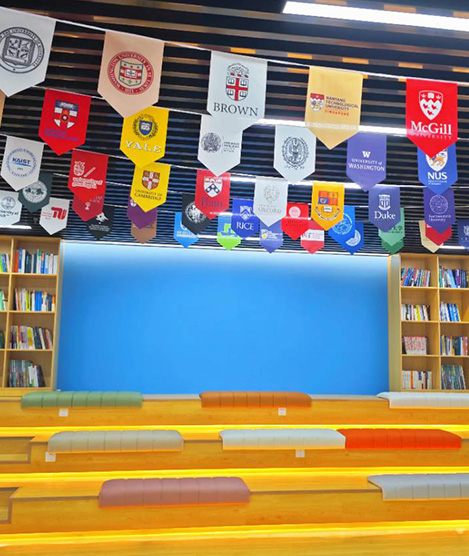
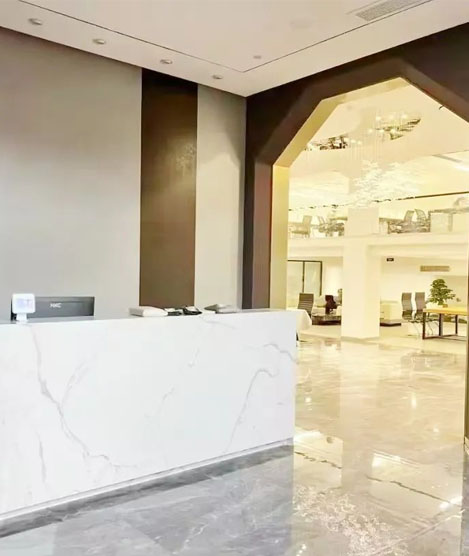
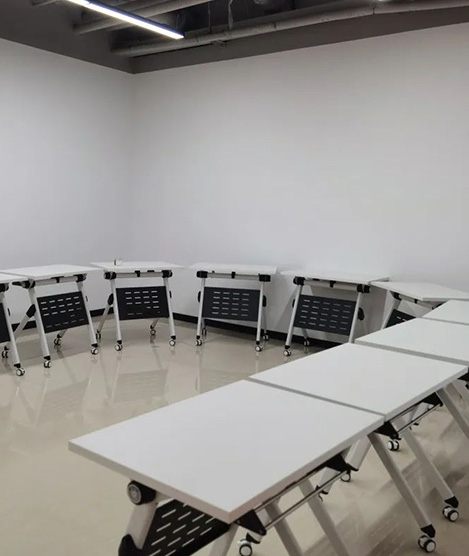
Teaching runs from Hanlin's own centres in Shanghai, Shenzhen, Chengdu and Hangzhou, and online for students elsewhere.

Talk to an advisor
Everything Hanlin does for FRC, in one conversation.
Entry, planning, coaching and the past papers. An advisor will tell you which of these a student actually needs, including when the answer is none of them.
Competition entry and planning
Which competitions suit this student, in what order, and by when - then we handle the registration, including the ones that can only be entered through a school or a centre.
Competition coaching
Taught by full-time subject tutors, on a course tier chosen by placement paper rather than by year group.
International curriculum tutoring
IB, AP, A-Level, IGCSE and the US high school curriculum, taught alongside school and timed around the exam calendar.
Competition past papers, free
A large library of past papers, mark schemes and syllabus breakdowns across every competition on this site. No charge and no enrolment.
Scan to add an advisor
Say which competition or course you are asking about. Replies in Chinese or English.
Or call +86 21 6352 6630FAQ
FRC, briefly answered.
What students, teachers and schools ask before starting a team.
What does a team need to start?
Ten or more high-school-age students, two or more adult mentors with technical and non-technical expertise, a workshop with substantial tools and powered machining equipment, standard parts and kits, and sponsors providing funding and help.
How long is the build?
Six weeks. The theme is published in early January and teams have that long to source parts and build a robot capable of the tasks.
How big is the robot?
Around 68 kilograms, built by the team rather than assembled from a kit.
How does a match work?
Each team is randomly allied with two others against another three-team alliance, with an autonomous phase and a driver-controlled phase. The three teams’ combined score is the alliance score, and teams usually play eight to ten qualification matches.
How does elimination work?
The eight highest-scoring teams after qualification take turns selecting two other teams each, forming eight alliances that compete in elimination. The winning alliance goes to the final.
Who goes on the field?
Four or five team members - one coach acting as field commander, two drivers and one or two human players.
What awards are there?
Twenty-six in total. Six for the robot as engineering, nine for team attributes, five submitted by application including FIRST’s highest honour, three for robot performance, and two recognising contributions to FIRST itself.
Are there scholarships?
Yes. More than 500 universities recognise FRC and offer scholarships to competitors, and several ask on their application forms whether an applicant has taken part in a FIRST programme. The source gives conflicting totals for the scholarship pool, so confirm current figures with the organiser.
Should we start with FRC or FTC?
Most schools start with FTC. It covers grades 7 to 12, builds a much smaller robot, costs considerably less and lets teams keep improving through the season. FRC assumes the capability FTC builds.
When is the season?
The theme in early January, the build through February, regional qualifiers from March and the world championship in Houston in late April, with post-season events in China through the summer.
Related
Other robotics competitions.
What teams enter alongside or before FRC.
FRC enquiries
Twenty-three of the twenty-six awards are not about winning.
A team that builds well and does nothing else competes for a small fraction of what is available. Tell us what your school has - students, mentors, workshop, sponsors - and an advisor will tell you honestly whether FRC or FTC is the right starting point.