
Competitions · Research and innovation · WRO
WRO, the World Robot Olympiad.
You cannot enter the international final. You qualify through a regional round - and the more teams enter your region, the harder qualifying gets, because the number of places is fixed per category.

Read this first
Places are capped per category, not per country.
This is the mechanic that decides how hard WRO is to reach, and it works differently from most competitions.
No direct entry to the final
Every team qualifies through a regional round run by a national organiser. There is no way to register for the international final directly.
And the quota per category is fixed
WRO controls tightly how many teams advance in each category. The practical consequence is stated plainly by the organisers: the more teams competing in your region, the harder qualification becomes.
So your region matters as much as your robot
A strong team in a crowded region can be eliminated by teams it would beat elsewhere. Knowing your region’s size is part of setting a realistic target.
Find your regional organiser first
Students in China look up their regional organising body in WRO’s China section and enter through them. That is the first practical step, before any building begins.
At a glance
What the competition is.
WRO is a non-profit organisation - all its income goes into promoting robotics within STEM education worldwide. It has run since 2004, has been joined by more than 99 countries and regions, and draws around 90,000 competitors a year.
- Since
- 2004
- Scale
- More than 99 countries and regions, around 90,000 competitors a year, across more than 50 regions and 20,000 teams
- The international final
- Around 400 teams and more than 2,500 people from nearly 60 countries, gathering in one host country
- Team
- Two or three members plus one coach
- The coach
- At least 20 years old. Coaches give guidance and advice only, take no part in the competition itself, and may work with more than one team
- Equipment
- Teams supply their own equipment, software and computers
- Categories
- Four - Robo Mission, Future Innovators, Robo Sports and Future Engineers
- Age groups
- Set separately for each category. Confirm the current bands with your regional organiser - the published summary table is incomplete
- When
- China-region registration closes at the end of March, with places limited and allocated as they fill. Regional competition follows in the summer
The four categories
Robots that complete tasks, invent, play sport, or engineer.
The categories are genuinely different competitions rather than difficulty tiers, and the choice determines what kind of team you need.
| Category | What a team does | Notes |
|---|---|---|
| Robo Mission | Design a robot to complete challenge tasks on a competition field, running fully autonomously under program control | Formerly the regular competition. WRO designs a new field and set of themed tasks for each age group every season |
| Future Innovators | Design and build a model or system of models answering the season’s theme, presenting the team’s own research and ideas | Formerly the creative competition. Roughly ages 8 to 12 and 11 to 15, in teams of two or three |
| Robo Sports | Two-against-two robot football, played under Bluetooth control rather than autonomously | Competitive and playful at once, training control and quick reasoning. Younger bands run from about age 6, in teams of one or two |
| Future Engineers | The most advanced category, aimed at older students | Confirm the age requirement with your organiser before planning an entry |
Robo Mission is the category most people mean by "WRO". Robo Sports is the one to look at for a younger child, since it starts earliest and is driver-controlled rather than autonomous.
The Future Innovators build
The model rules are unusually specific.
If your team is entering the creative category, these constraints shape the design from the first sketch.
It has to move, and be programmed
The model or system must include moving or mechanical parts that can be controlled by a program, performing actions that carry out the team’s solution to the theme.
It has to fit the field
The whole model must sit inside the black frame marked on the field plan. There is no height limit, but the structure must be stable, complete and visually legible.
Parts stay as they came
Components must keep their original form - no breaking or modifying them. Other decorative materials are allowed, but no glue and no paint, and decoration may not exceed a fifth of the finished work.
And it must show the thinking
The model has to present the team’s research and design on the theme, and their own new ideas about it. A well-built model that does not argue anything is not what this category rewards.
The season theme
One theme, and it shapes every category.
WRO sets a theme each season and designs the fields and tasks around it, so the theme is the first thing a team reads.
A recent season: the future of robots
Framed around space. Decades of satellites have taught us about the sun, the earth and other planets, and Mars exploration and settlement is a live question.
With a real problem behind it
Working in space is dangerous, difficult and extremely expensive. The season asks whether robots could take on some of that work for us.
And separate tasks per age group
The same theme produces different fields for different ages - space robots for the youngest, Mars exploration for the middle group.
Which is why the theme is the starting gun
Nothing specific can be built before it is published. What can be built before is the team’s capability.
Preparation
How Hanlin prepares a WRO team.
With a fixed quota per category and a theme published each season, the useful work happens before the theme lands.
Choosing the region and the category first
Both change the odds. Robo Mission is the largest field, Robo Sports starts youngest, and Future Innovators rewards a different kind of team entirely.
Building autonomous reliability
Robo Mission runs with no driver at all. A robot that works four times in five loses on the day, so the work is in consistency rather than in peak performance.
Working within the coach rule
Coaches advise and guide but take no part. Everything a team can do on the day, they must be able to do without help - which changes how the preparation is run.
And practising to the constraints
Field dimensions, part-modification rules and decoration limits are all checkable before the season starts. Teams lose more entries to rule breaches than to weak engineering.
Why Hanlin
Preparation for WRO at Hanlin is taught by full-time subject tutors, on a course tier chosen by placement paper rather than by year group.
Programme formats
Five ways this is taught.
Group size is the whole difference between these. It decides how much of the tutor's attention a student gets and how far the course can bend to them, so it is worth choosing rather than accepting.
| Format | Group size | What it suits |
|---|---|---|
| One-to-one | One student | Content, pace and emphasis set by what this student actually needs rather than by a syllabus. The only format that can be rebuilt mid-course. |
| Small group | Three to eight | Opens at three. Frequent discussion, and the tutor can slow down or move on according to what the group has absorbed. Most students chasing a higher award are taught in this one. |
| Class | Eight to twelve | Taught by the subject lead or a medal coach. Less back-and-forth, so it suits a student who will say when something is unclear. |
| Large class | Ten to twenty | For students in the middle of the placement range, and a way to try a competition before committing. Students often move to a small group or to one-to-one afterwards. |
| Past-paper class | No cap | Past papers worked through in sequence in the weeks before the sitting. Free to students already enrolled. |
Course length for WRO is set after a placement paper. The gap between where a student is and what the paper asks for is what the course has to close, and that gap is not the same for two students in the same year group.
How it runs
Six steps, four people on your side.
The same process for every student, so that nothing depends on one tutor remembering to do it.
 Step 1
Pre-course assessment
A placement paper before anything is booked, so the course tier is chosen on evidence rather than on a year group.
 Step 2
Tutor matching
A subject tutor is matched to the result, and their full background is provided before you agree to it.
 Step 3
Plan and group
A study group opens with four people on one student: the tutor, a planner, a supervisor and an academic manager.
 Step 4
Scheduled teaching
The teaching office sets the timetable around the competition date and school term, and teaching begins.
 Step 5
After-class reports
What was covered, and how the student handled it, reported after every lesson.
 Step 6
Homework follow-up
The teaching assistant and the form teacher both check that homework is done, which is where most preparation quietly fails.
Free resource pack
Season and build pack
The same material our own WRO students work from. Scan the code, say what you need, and an advisor sends it.

Tell an advisor which competition and year group, and the material comes back the same day. Free, and you do not have to enrol in anything. If we do not already hold what you need, we will go and find it.
- PDFPast season materials and game manuals
- PDFThe judging rubric, broken down by what earns each point
- DOCXBuild log and documentation checklist
- PDFEntry checklist and the dates for the current cycle
Teaching team
Who would teach it.
Three of the twenty-two tutors on the published Hanlin roster - the ones whose subject this is.

Dr An
Mathematics at Illinois Urbana-Champaign with highest honours and the Elizabeth R. Bennett scholarship, then a PhD in mathematics at Johns Hopkins on full funding with the Owen fellowship and the Joel Dean award for excellent teaching. Years of US university teaching, translating high-level mathematics into language students can use.

Yu
Master's in bioinformatics and computational biology from UT Dallas and a nutritional sciences degree from Wisconsin-Madison. Second author on an SCI-indexed paper from the Tanumihardjo vitamin-A laboratory, and formerly at ABS Global.

Tan
Master's in data science from the University of Sydney after a statistics degree at Simon Fraser University, graduating in the top 5% with repeated chancellor's honours; A-Levels at a Cambridge international school, and formerly a data analyst at Tencent. An AMC-accredited coach, a College Board-accredited AP teacher, and holder of a Math League excellent-teacher award.
Where it is taught
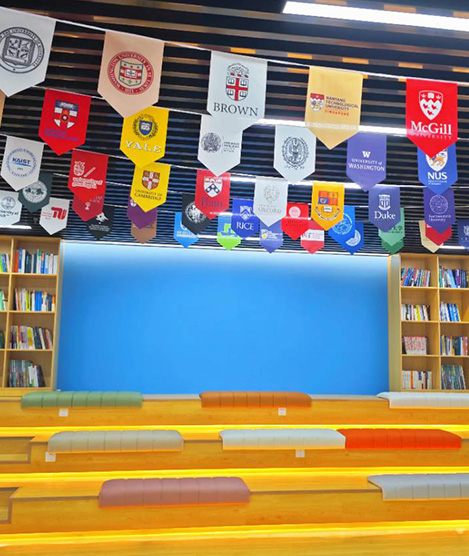
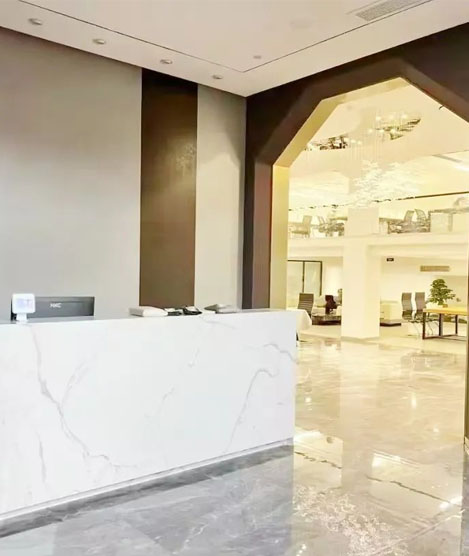
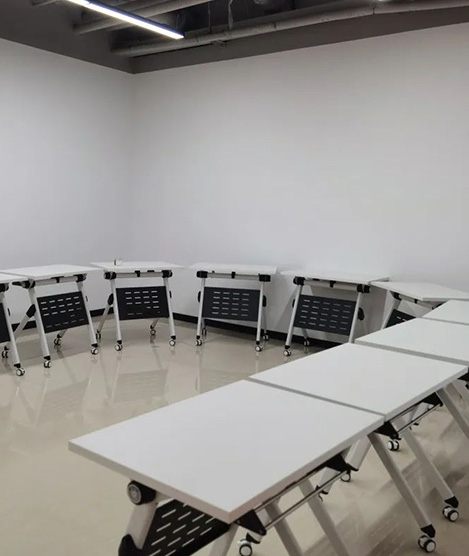
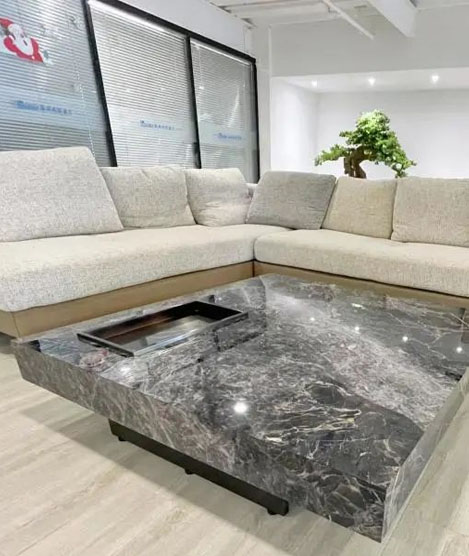
Hanlin learning centres.
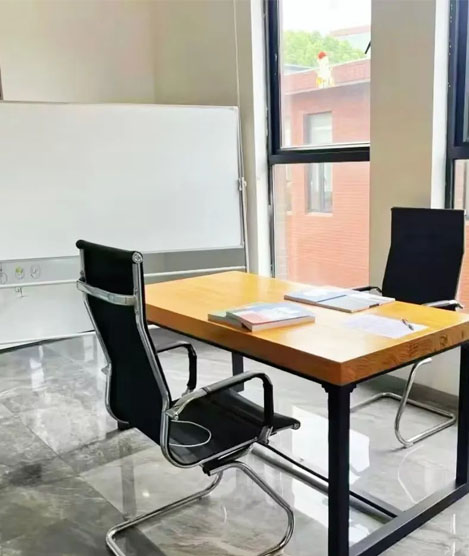
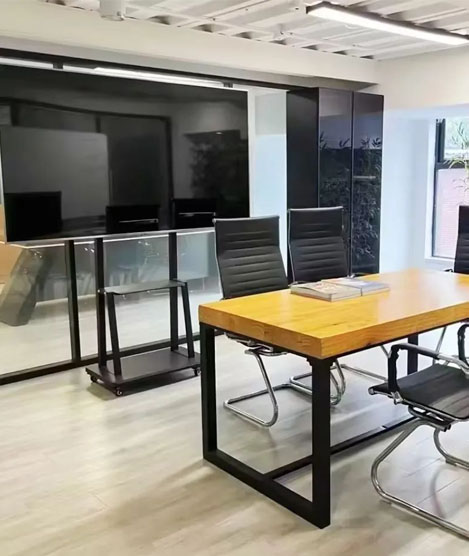
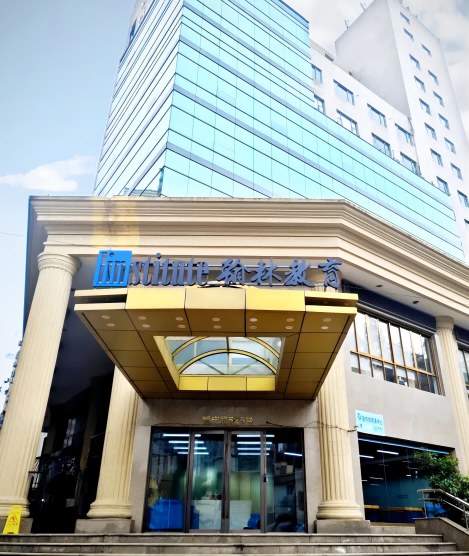
Teaching runs from Hanlin's own centres in Shanghai, Shenzhen, Chengdu and Hangzhou, and online for students elsewhere.
Talk to an advisor
Everything Hanlin does for WRO, in one conversation.
Entry, planning, coaching and the past papers. An advisor will tell you which of these a student actually needs, including when the answer is none of them.
Competition entry and planning
Which competitions suit this student, in what order, and by when - then we handle the registration, including the ones that can only be entered through a school or a centre.
Competition coaching
Taught by full-time subject tutors, on a course tier chosen by placement paper rather than by year group.
International curriculum tutoring
IB, AP, A-Level, IGCSE and the US high school curriculum, taught alongside school and timed around the exam calendar.
Competition past papers, free
A large library of past papers, mark schemes and syllabus breakdowns across every competition on this site. No charge and no enrolment.
Scan to add an advisor
Say which competition or course you are asking about. Replies in Chinese or English.
Or call +86 21 6352 6630FAQ
WRO, briefly answered.
What students, teachers and families ask before entering.
Can I register for the international final directly?
No. Every team qualifies through a regional round run by a national organiser. Students in China find their regional organising body in WRO’s China section and enter through them.
How hard is it to qualify?
That depends on your region. WRO controls how many teams advance in each category, so the more teams competing in your region, the harder qualification becomes.
How big is a team?
Two or three members plus one coach. The coach must be at least 20, gives guidance and advice only, takes no part in the competition, and may work with several teams.
What are the four categories?
Robo Mission, where an autonomous robot completes tasks on a field; Future Innovators, where a team builds a model answering the season theme; Robo Sports, which is two-against-two Bluetooth-controlled robot football; and Future Engineers, the most advanced category.
What are the age limits?
They are set separately for each category, and the published summary table is incomplete. Future Innovators runs roughly from ages 8 to 12 and 11 to 15; Robo Sports has bands starting from about age 6. Confirm the current bands with your regional organiser.
Who supplies the equipment?
The team. Equipment, software and computers are all brought by competitors.
Is the robot driven or autonomous?
It depends on the category. Robo Mission robots run fully autonomously under program control. Robo Sports is driver-controlled over Bluetooth.
When is registration?
China-region registration closes at the end of March, with a limited number of team places allocated as they fill, and regional competition in the summer.
How large is the international final?
Around 400 teams and more than 2,500 people from nearly 60 countries, all hosted in one country.
Related
Other robotics competitions.
What teams enter alongside WRO.
WRO enquiries
Your region decides the odds as much as your robot does.
Places at the international final are capped per category, so a crowded region is genuinely harder to escape. Tell us where you are and how old the students are, and an advisor will identify the regional organiser and the category that fits.