
Competitions · Research and innovation · Regeneron STS
Regeneron STS, the Science Talent Search.
Grade twelve only, and you may enter once in your life. Two thousand students apply, three hundred are named Scholars, forty go to Washington - and the research report may not exceed twenty pages.
Read this first
Four conditions, and each of them is absolute.
STS has the narrowest eligibility of any competition on this site. All four conditions must hold, and none can be worked around.
Grade twelve, and only grade twelve
Applicants must be in their final year of high school. There is no junior division and no early entry.
A US high school, or US citizenship abroad
Students at a US high school qualify. Students in grade 12 overseas - at Department of Defense schools, at international schools, or temporarily abroad for a parent’s work - must submit proof of US citizenship.
Once in a lifetime
Applicants must not have entered STS before. There is no second attempt, which makes the single application year genuinely decisive.
And no diploma yet
Applicants must have completed the high-school courses required for university application, but must not already hold a high-school diploma.
At a glance
What the competition is.
STS has run since 1942 and is the oldest and among the most prestigious science competitions in the United States - sometimes described as a Nobel prize for school students. Its alumni include thirteen Nobel laureates, two Fields medallists, recipients of the National Medal of Science and Breakthrough Prize, and MacArthur fellows.
- Organiser
- The Society for Science, sponsored by Regeneron
- Since
- 1942
- Who can enter
- Grade 12 students at a US high school, or grade 12 students overseas holding US citizenship
- Age and consent
- Applicants aged 13 to 17 need the consent of a parent or legal guardian. Applicants of 18 or over, and legally emancipated minors, apply on their own behalf
- Entries
- One project per student, on one topic
- Not eligible
- Children of Society for Science employees or contractors, and of STS judges and reviewers
- Scale
- Around 2,000 applicants a year
- Recognition
- 300 Scholars named annually, along with their schools. 40 of them become finalists
- The final
- A week in Washington DC in March - final judging, a public exhibition of the work, and meetings with leading scientists and government figures
- Prize pool
- USD 3.1 million a year across Scholars and finalists
- Application window
- Opens in June and closes in early November
The season
From application to the awards ceremony.
The calendar is fixed and the intervals are long. A student who misses the November deadline waits a year - and in grade 12, there is no next year.
| Stage | When |
|---|---|
| Applications open | Early June |
| Applications close | Early November, at 20:00 Eastern. Nothing is accepted afterwards, including recommendations |
| 300 Scholars announced | Early January |
| Top 40 finalists announced | Late January |
| Finals week in Washington DC | Early March |
| Public exhibition of projects | The Sunday of finals week |
| Awards ceremony | The Tuesday of finals week |
The deadline applies to every part of the application including the recommendations, and it is the student’s responsibility to ensure recommenders submit in time. Requesting them on the day the system opens is the organisers’ own advice.
What you submit
Five parts, and only one of them is the research.
STS assesses the student as much as the project, which distinguishes it from ISEF and changes how a year should be spent.
A research report
Describing an original, independent research project. Research done in any year of high school qualifies - it need not be from grade 12.
Three recommendations
An educator recommendation, a project recommendation, and a high school report - the transcript. All three are separate submissions with the same deadline.
Application sections about you
Who you are, your research project, your activities, and how you spend your time. This is a substantial part of the application in its own right.
Short essay questions, and optional test scores
The essays are required. Standardised test scores are optional, which is worth knowing for a student whose scores do not represent them.
The research report
Twenty pages, including everything.
The report rules are strict and specific, and several of them eliminate projects that would otherwise be strong.
Twenty pages is a hard ceiling
Photographs, tables, charts, drawings, maps, code and appendices all count toward it. Only the title page, abstract and bibliography sit outside. Anything past twenty pages is not read.
Four kinds of work do not qualify
Incomplete investigations, research proposals, literature reviews and unpublished papers. The investigation must be finished and must have reportable results.
Published work is allowed but discouraged
A published paper may be submitted if it meets the format rules, but the organisers advise against it unless the student is the sole or first author.
And disclosure is required
The report must reflect only the student’s own work, and must fully disclose any research or any person that influenced it. Students are encouraged to use books, journals, experts and adult advisers - but the investigation and the writing must be their own.
The recommendations
Who to ask, and the answer is not the professor.
The organisers are unusually specific about this, and following their guidance produces a stronger application than choosing the most senior name available.
The educator recommendation
From a high-school subject teacher, preferably in science, engineering or mathematics, who has taught you long enough to know you well. Multiple educator recommendations are worth requesting only if each offers a genuinely distinct view of you.
The project recommendation - ask the person who was there
From whoever knows your research and day-to-day work best. The organisers say explicitly that this is usually a graduate student in the lab rather than the lab head. One is required and up to two may be submitted.
If a relative supervised you, get a second opinion
Where a parent, guardian or relative is closely involved and writes the project recommendation, the organisers ask for an additional external one from someone with lab or research experience who did not supervise that work.
Submitted online, and confidential
Recommenders answer short questions in an online form - PDFs are not accepted. Recommendations are confidential and the applicant waives the right to see them.
Preparation
How Hanlin supports an STS application.
One attempt, in one year, on work that may have taken three. The preparation is mostly about not wasting it.
Starting the research long before grade 12
Research from any year of high school qualifies. The strongest applications draw on work begun in grade 10 or 11, because grade 12 alone is not enough time to produce results worth reporting.
Writing to twenty pages
Compressing a substantial project into twenty pages including every figure is a real editorial task. Most first drafts run to twice that and lose the argument in the detail.
Lining up the recommenders early
Three separate submissions, all due at the same moment, from people who are busy. Requesting them when the system opens is the difference between a complete and an incomplete application.
And preparing the parts that are about you
Essays, activities and how you spend your time carry real weight here. A student who prepares only the science submits a partial application.
Why Hanlin
Hanlin has been entering students for Regeneron STS for years, and publishes what they got. The record is further down this page.
Programme formats
Five ways this is taught.
Group size is the whole difference between these. It decides how much of the tutor's attention a student gets and how far the course can bend to them, so it is worth choosing rather than accepting.
| Format | Group size | What it suits |
|---|---|---|
| One-to-one | One student | Content, pace and emphasis set by what this student actually needs rather than by a syllabus. The only format that can be rebuilt mid-course. |
| Small group | Three to eight | Opens at three. Frequent discussion, and the tutor can slow down or move on according to what the group has absorbed. Most students chasing a higher award are taught in this one. |
| Class | Eight to twelve | Taught by the subject lead or a medal coach. Less back-and-forth, so it suits a student who will say when something is unclear. |
| Large class | Ten to twenty | For students in the middle of the placement range, and a way to try a competition before committing. Students often move to a small group or to one-to-one afterwards. |
| Past-paper class | No cap | Past papers worked through in sequence in the weeks before the sitting. Free to students already enrolled. |
Course length for Regeneron STS is set after a placement paper. The gap between where a student is and what the paper asks for is what the course has to close, and that gap is not the same for two students in the same year group.
How it runs
Six steps, four people on your side.
The same process for every student, so that nothing depends on one tutor remembering to do it.
 Step 1
Pre-course assessment
A placement paper before anything is booked, so the course tier is chosen on evidence rather than on a year group.
 Step 2
Tutor matching
A subject tutor is matched to the result, and their full background is provided before you agree to it.
 Step 3
Plan and group
A study group opens with four people on one student: the tutor, a planner, a supervisor and an academic manager.
 Step 4
Scheduled teaching
The teaching office sets the timetable around the competition date and school term, and teaching begins.
 Step 5
After-class reports
What was covered, and how the student handled it, reported after every lesson.
 Step 6
Homework follow-up
The teaching assistant and the form teacher both check that homework is done, which is where most preparation quietly fails.
Free resource pack
Project and submission pack
The same material our own Regeneron STS students work from. Scan the code, say what you need, and an advisor sends it.
Tell an advisor which competition and year group, and the material comes back the same day. Free, and you do not have to enrol in anything. If we do not already hold what you need, we will go and find it.
- PDFPast finalist project titles and abstracts
- PDFCategory definitions and the judging criteria, broken down
- DOCXA project timeline working back from the submission date
- PDFEntry checklist and the dates for the current cycle
Teaching team
Who would teach it.
Three of the twenty-two tutors on the published Hanlin roster - the ones whose subject this is.

Dr An
Mathematics at Illinois Urbana-Champaign with highest honours and the Elizabeth R. Bennett scholarship, then a PhD in mathematics at Johns Hopkins on full funding with the Owen fellowship and the Joel Dean award for excellent teaching. Years of US university teaching, translating high-level mathematics into language students can use.

Yu
Master's in bioinformatics and computational biology from UT Dallas and a nutritional sciences degree from Wisconsin-Madison. Second author on an SCI-indexed paper from the Tanumihardjo vitamin-A laboratory, and formerly at ABS Global.

Tan
Master's in data science from the University of Sydney after a statistics degree at Simon Fraser University, graduating in the top 5% with repeated chancellor's honours; A-Levels at a Cambridge international school, and formerly a data analyst at Tencent. An AMC-accredited coach, a College Board-accredited AP teacher, and holder of a Math League excellent-teacher award.
Student results
What Hanlin students got.
Taken from Hanlin's published record of student honours and rewritten in English. Figures are as the organisers reported them.
In the national top 40, 2023-24
One line from Hanlin's published Regeneron STS record. The rest of it is below.
Regeneron STS
- 2024-253 students in the top 300
- 2023-242 students in the top 40
- 2022-23A top 300 placing from New Jersey
Earlier years
- 2021-22Top 300 placings from New York, New Zealand and Virginia
- 2020-216 students in the top 300, from Massachusetts, Pennsylvania, Virginia, California and New York
The full record, across every subject and year, is on the student honours page.
Where it is taught
Hanlin learning centres.
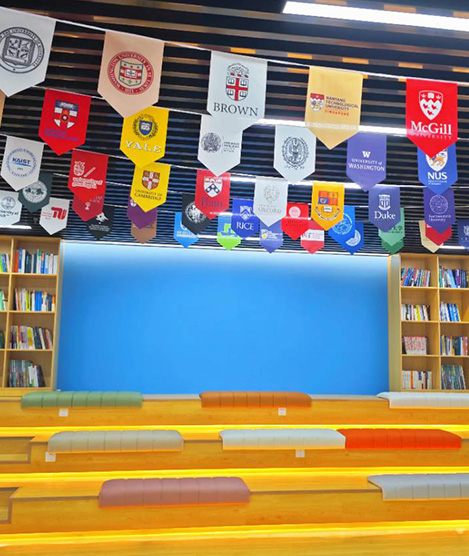
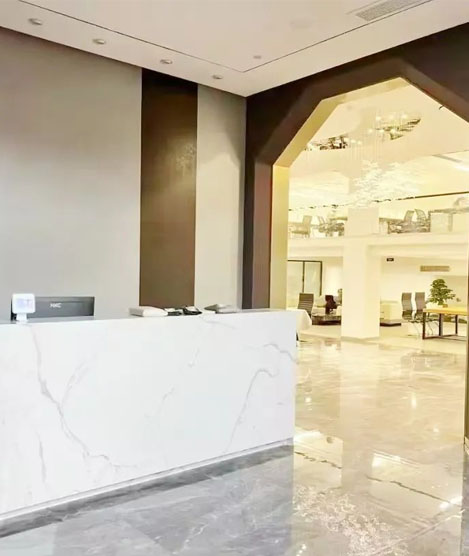
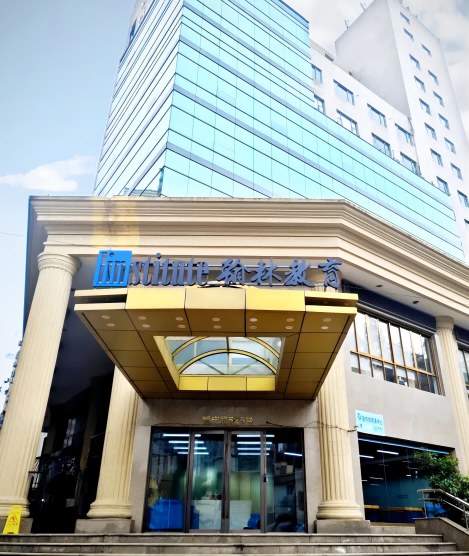
Teaching runs from Hanlin's own centres in Shanghai, Shenzhen, Chengdu and Hangzhou, and online for students elsewhere.
Talk to an advisor
Everything Hanlin does for Regeneron STS, in one conversation.
Entry, planning, coaching and the past papers. An advisor will tell you which of these a student actually needs, including when the answer is none of them.
Competition entry and planning
Which competitions suit this student, in what order, and by when - then we handle the registration, including the ones that can only be entered through a school or a centre.
Competition coaching
Taught by full-time subject tutors, on a course tier chosen by placement paper rather than by year group.
International curriculum tutoring
IB, AP, A-Level, IGCSE and the US high school curriculum, taught alongside school and timed around the exam calendar.
Competition past papers, free
A large library of past papers, mark schemes and syllabus breakdowns across every competition on this site. No charge and no enrolment.
Scan to add an advisor
Say which competition or course you are asking about. Replies in Chinese or English.
Or call +86 21 6352 6630FAQ
Regeneron STS, briefly answered.
What students and families ask before applying.
Can a student in China enter?
Only if they are in grade 12 and hold US citizenship - students overseas must submit proof of it. Students at a US high school qualify without that requirement. A student at a Chinese school without US citizenship cannot apply.
Can I apply in grade 11?
No. STS is open to grade 12 students only, and each student may apply once in their life.
Does the research have to be from grade 12?
No. Research conducted in any year of high school qualifies, and the strongest applications usually draw on work begun earlier.
How long can the research report be?
Twenty pages or fewer, including all photographs, tables, charts, drawings, maps, code and appendices. Only the title page, abstract and bibliography are excluded. Anything beyond twenty pages is not read.
What kind of work does not qualify?
Incomplete investigations, research proposals, literature reviews and unpublished papers. The investigation must be complete and have reportable results.
Can I submit published research?
Yes, if it meets the format rules - but the organisers advise against it unless you are the sole or first author.
Who should write my project recommendation?
Whoever knows your research and daily work best. The organisers say this is usually a graduate student in the lab rather than the lab head. One is required and up to two may be submitted.
When is the deadline?
Early November, at 20:00 Eastern. It applies to the whole application including recommendations, and nothing is accepted afterwards.
What happens if I am selected?
Three hundred students are named Scholars each year, along with their schools. Forty of them become finalists and travel to Washington DC in March for final judging, a public exhibition and meetings with leading scientists and government figures.
Are test scores required?
No. Standardised test scores are optional.
Related
Other research competitions.
What students enter alongside or instead of STS.
Regeneron STS enquiries
One application, one year, no second chance.
STS is open in grade 12 only and may be entered once, which means the research it reports has to be under way years earlier. Tell us the student’s year group and citizenship and an advisor will confirm eligibility and set the timeline.