
Competitions · Research and innovation · Yau Science Award
The Yau High School Science Award.
No exam paper and no standard answers - you submit a research report and defend it in English before an international panel at Tsinghua. Six subjects, and economics is one of them.

Read this first
Commercial coaching is grounds for disqualification.
This is stated in the competition’s own rules and it is unusual enough - and consequential enough - to come before anything else on this page.
Supervisors may not come from training organisations
A team’s one or two supervisors may be teachers at their own school, experts at research institutes, or teachers from other schools. They may not be teachers engaged by commercial training organisations, and the declaration must be truthful.
And the committee may disqualify on suspicion
Where the organising committee has reason to believe a student was coached by a training organisation to complete the paper, it reserves the right to cancel that student’s eligibility and revoke any award already given.
Paid supervision must be disclosed
The acknowledgements page must state the supervisor’s relationship to the students, the role they played in writing the paper, and whether that supervision was paid.
Which shapes what support is appropriate
Teaching a student the subject, the methods and the discipline of research is one thing; producing their paper is another, and the committee treats the second as misconduct. Any help we give is of the first kind, and it is disclosed.
At a glance
What the award is.
The award was founded on the principle that identifying and developing talent should begin in secondary school. It started in 2008 as a mathematics award and now spans six subjects, bringing an international competition model into China.
- Since
- 2008, as the Yau High School Mathematics Award
- Subjects
- Mathematics, Physics, Chemistry, Biology, Computer Science, and Economics and Financial Modelling
- Who can enter
- Secondary school students worldwide, through one of three regions
- Team
- 1 to 3 students from the same school, with 1 or 2 supervising teachers. Cross-school teams are not permitted
- What you submit
- A research report as a PDF, in a specified structure, with an academic integrity declaration signed and stamped by the school
- The final
- A defence conducted in English before an international review committee, held at Tsinghua University
- Awards per subject
- One gold, one silver, three bronze and five honourable mentions, each with a cash prize, a trophy and a certificate
- When
- Registration from mid-April, submission through the summer, regional judging in autumn and the final in early December
- Format
- No examination paper and no standard answers. The entire competition is the research and its defence
The six subjects
What each panel is looking for.
The published criteria differ in an instructive way. Three of the six ask what problem you solved rather than what you studied.
| Subject | Scope | What the panel weighs |
|---|---|---|
| Mathematics | All areas of pure and applied mathematics | Fundamental research, engineering applications, business applications, scientific applications and innovative design |
| Physics | All areas of physics | Relevance to the discipline |
| Chemistry | Any topic related to chemistry | Principally, what chemical problem the work solved |
| Biology | Any topic related to biology, whether experimental results or purely theoretical analysis such as bioinformatics | Principally, what biological problem the work solved |
| Computer Science | Any problem in computer science and technology, from basic theory to technical exploration | The contribution made |
| Economics and Financial Modelling | All areas of economics, including finance | Whether the topic contributes directly to answering an economic question, or contributes methodologically |
The economics award is worth noting. Very few research competitions open to secondary students take economics seriously as a research discipline, and this one judges it on the same terms as the sciences.
Three regions
Where you register depends on where you are.
The three regions run separately with their own registration sites and their own rounds, converging at the final.
Mainland China
For students at secondary schools in mainland China. Judging is split into a North and a South region, and mathematics adds an East region covering Zhejiang, Jiangsu, Shandong and Shanghai.
Asia region
For students in Hong Kong, Macau and Taiwan, and in other Asian countries, with its own registration site and its own two qualifying rounds.
North America region
For students in countries outside Asia, again with its own site and its own semi-final.
The mainland season
April to December.
The calendar is long and the intervals matter - the paper is submitted three months before regional judging concludes.
| Stage | When |
|---|---|
| Registration | Opens 15 April. The timeline block gives the deadline as 31 July; the entry section gives 30 June. Confirm before relying on either |
| Paper submission | From the close of registration until 15 September. Papers may be updated during this window |
| Regional judging | Mid-September to early November. Each region selects its national finalists |
| Public scrutiny | Early November. Finalist papers are published online for a week |
| The final | Early December, at Tsinghua University. An English-language defence before an international review committee, with the ceremony alongside |
The public scrutiny week is a feature worth understanding: finalist papers are posted publicly before the final, which is part of how the competition enforces its academic integrity rules.
The research report
A specified structure, and one page most teams underestimate.
The report format is prescribed, and the acknowledgements page carries more weight here than in any other competition on this site.
The prescribed structure
A cover page with names, the school’s province or state, country, supervisor and title. From page two: title, authors, abstract, keywords, contents and body. References on a separate page.
Then the acknowledgements page
It must set out where the topic came from and the research background, what each team member contributed to the writing, the supervisor’s relationship to the students, what role they played, and whether the supervision was paid. Help from others must be described. Team and supervisor CVs may be attached.
And a stamped integrity declaration
Signed by the students and the supervisor and stamped with the school or academic affairs office seal. Where the supervisor is external, their institution stamps it too. The signed declaration is scanned and uploaded.
Four research restrictions
No plagiarism, ghostwriting or other misconduct. Methods and conclusions from others must be cited and listed. Research must not break the law or public morals. And it may not involve food, tobacco or alcohol, medicines or medical devices that pose physical or psychological harm to humans or animals.
Preparation
How Hanlin supports a Yau Award entry.
The rules define what appropriate support looks like, and working inside them is the point rather than a constraint on it.
Teaching the subject and the method
Reading the literature, framing a question, choosing methods, handling data and writing it up are skills. Teaching them is legitimate; producing a student’s paper is not, and the committee treats the difference seriously.
Helping find the right supervisor
The supervisor must be a school teacher, a research institute expert or a teacher at another school - not a commercial trainer. Identifying and approaching one is often the hardest practical step.
Preparing the English defence
The final is a defence in English before an international panel. For most entrants that is the least familiar part of the whole process, and it is rehearsable.
And choosing the subject deliberately
Chemistry, biology and computer science are judged on what problem the work solved. Economics is judged on whether it answers an economic question or advances method. The same underlying work can be framed for different panels.
Why Hanlin
Hanlin has been entering students for Yau Science Award for years, and publishes what they got. The record is further down this page.
Programme formats
Five ways this is taught.
Group size is the whole difference between these. It decides how much of the tutor's attention a student gets and how far the course can bend to them, so it is worth choosing rather than accepting.
| Format | Group size | What it suits |
|---|---|---|
| One-to-one | One student | Content, pace and emphasis set by what this student actually needs rather than by a syllabus. The only format that can be rebuilt mid-course. |
| Small group | Three to eight | Opens at three. Frequent discussion, and the tutor can slow down or move on according to what the group has absorbed. Most students chasing a higher award are taught in this one. |
| Class | Eight to twelve | Taught by the subject lead or a medal coach. Less back-and-forth, so it suits a student who will say when something is unclear. |
| Large class | Ten to twenty | For students in the middle of the placement range, and a way to try a competition before committing. Students often move to a small group or to one-to-one afterwards. |
| Past-paper class | No cap | Past papers worked through in sequence in the weeks before the sitting. Free to students already enrolled. |
Course length for Yau Science Award is set after a placement paper. The gap between where a student is and what the paper asks for is what the course has to close, and that gap is not the same for two students in the same year group.
How it runs
Six steps, four people on your side.
The same process for every student, so that nothing depends on one tutor remembering to do it.
 Step 1
Pre-course assessment
A placement paper before anything is booked, so the course tier is chosen on evidence rather than on a year group.
 Step 2
Tutor matching
A subject tutor is matched to the result, and their full background is provided before you agree to it.
 Step 3
Plan and group
A study group opens with four people on one student: the tutor, a planner, a supervisor and an academic manager.
 Step 4
Scheduled teaching
The teaching office sets the timetable around the competition date and school term, and teaching begins.
 Step 5
After-class reports
What was covered, and how the student handled it, reported after every lesson.
 Step 6
Homework follow-up
The teaching assistant and the form teacher both check that homework is done, which is where most preparation quietly fails.
Free resource pack
Project and submission pack
The same material our own Yau Science Award students work from. Scan the code, say what you need, and an advisor sends it.
Tell an advisor which competition and year group, and the material comes back the same day. Free, and you do not have to enrol in anything. If we do not already hold what you need, we will go and find it.
- PDFPast finalist project titles and abstracts
- PDFCategory definitions and the judging criteria, broken down
- DOCXA project timeline working back from the submission date
- PDFEntry checklist and the dates for the current cycle
Teaching team
Who would teach it.
Three of the twenty-two tutors on the published Hanlin roster - the ones whose subject this is.
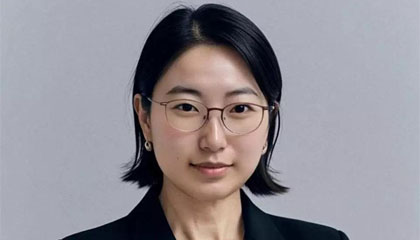
Dr An
Mathematics at Illinois Urbana-Champaign with highest honours and the Elizabeth R. Bennett scholarship, then a PhD in mathematics at Johns Hopkins on full funding with the Owen fellowship and the Joel Dean award for excellent teaching. Years of US university teaching, translating high-level mathematics into language students can use.

Yu
Master's in bioinformatics and computational biology from UT Dallas and a nutritional sciences degree from Wisconsin-Madison. Second author on an SCI-indexed paper from the Tanumihardjo vitamin-A laboratory, and formerly at ABS Global.

Tan
Master's in data science from the University of Sydney after a statistics degree at Simon Fraser University, graduating in the top 5% with repeated chancellor's honours; A-Levels at a Cambridge international school, and formerly a data analyst at Tencent. An AMC-accredited coach, a College Board-accredited AP teacher, and holder of a Math League excellent-teacher award.
Student results
What Hanlin students got.
Taken from Hanlin's published record of student honours and rewritten in English. Figures are as the organisers reported them.
Medals at the final, 2024
One line from Hanlin's published Yau Science Award record. The rest of it is below.
Yau Science Award
- 202416 students took Gold, Silver, Bronze or merit awards at the final, with 33 semifinal awards
- 202317 awards at the final and 57 at the semifinal
- 20225 at the final and 25 at the semifinal
Earlier years
- 20218 at the final and 22 at the semifinal
- 202012 students reached the final, 8 of them taking global Gold, with 32 semifinal awards
The full record, across every subject and year, is on the student honours page.
Where it is taught
Hanlin learning centres.
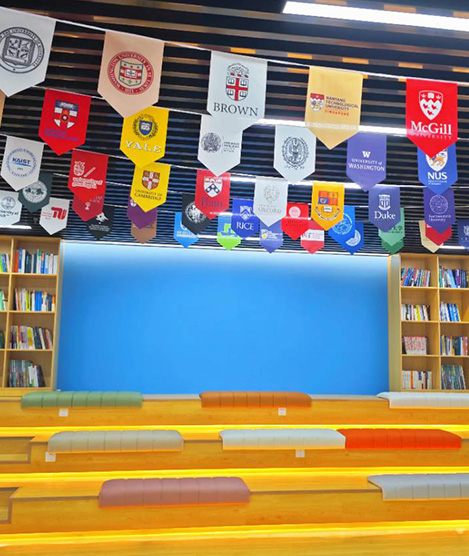
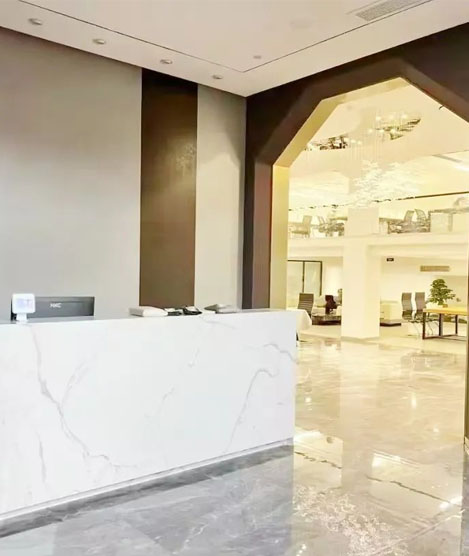
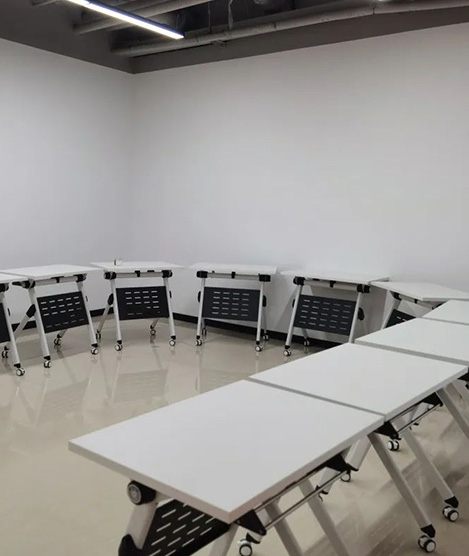
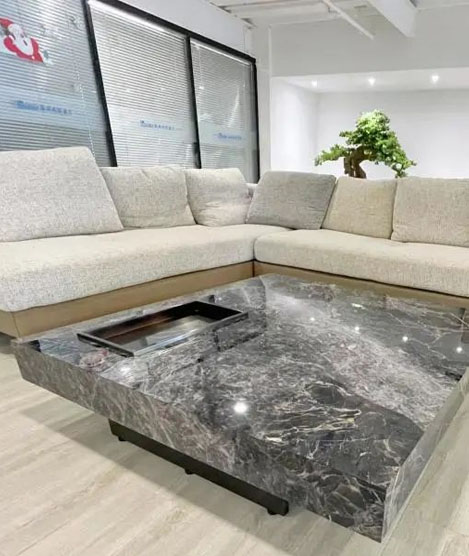
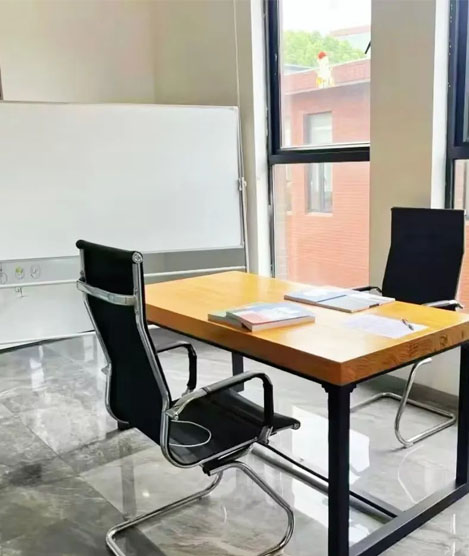
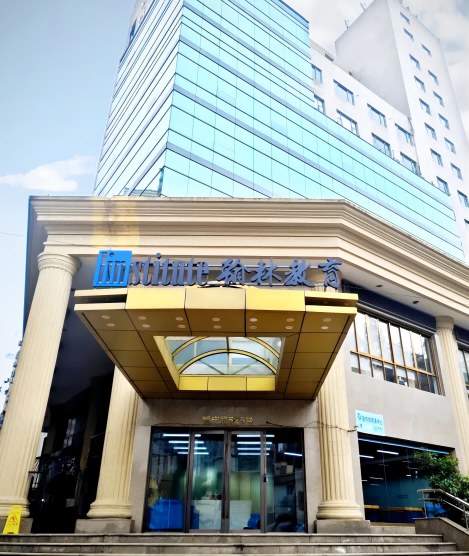
Teaching runs from Hanlin's own centres in Shanghai, Shenzhen, Chengdu and Hangzhou, and online for students elsewhere.

Talk to an advisor
Everything Hanlin does for Yau Science Award, in one conversation.
Entry, planning, coaching and the past papers. An advisor will tell you which of these a student actually needs, including when the answer is none of them.
Competition entry and planning
Which competitions suit this student, in what order, and by when - then we handle the registration, including the ones that can only be entered through a school or a centre.
Competition coaching
Taught by full-time subject tutors, on a course tier chosen by placement paper rather than by year group.
International curriculum tutoring
IB, AP, A-Level, IGCSE and the US high school curriculum, taught alongside school and timed around the exam calendar.
Competition past papers, free
A large library of past papers, mark schemes and syllabus breakdowns across every competition on this site. No charge and no enrolment.
Scan to add an advisor
Say which competition or course you are asking about. Replies in Chinese or English.
Or call +86 21 6352 6630FAQ
The Yau Science Award, briefly answered.
What students, teachers and families ask before entering.
Can a training organisation supervise my paper?
No. Supervisors may be teachers at your own school, experts at research institutes or teachers from other schools, but not teachers engaged by commercial training organisations. Where the committee believes a training organisation helped produce a paper, it may cancel the student’s eligibility and revoke any award.
What has to be disclosed?
The acknowledgements page must state where the topic came from, what each team member contributed, the supervisor’s relationship to the students, the role they played, and whether the supervision was paid.
Who can enter?
Secondary school students, in teams of one to three from the same school with one or two supervising teachers. Cross-school teams are not permitted. Student status is determined as at registration.
Which subjects are there?
Mathematics, physics, chemistry, biology, computer science, and economics and financial modelling. Each is awarded separately.
Where do I register?
Through one of three regions: mainland China, the Asia region covering Hong Kong, Macau, Taiwan and other Asian countries, or the North America region covering countries outside Asia. Each has its own site and its own rounds.
Is there an exam?
No. There is no paper and no standard answer. The competition is a research report and a defence of it.
What language is the final in?
English. The final is a defence before an international review committee, held at Tsinghua University in early December.
What are the awards?
In each subject: one gold, one silver, three bronze and five honourable mentions, each carrying a cash prize along with a trophy and certificate.
What research is not allowed?
Anything involving food, tobacco or alcohol, medicines or medical devices that pose physical or psychological harm to humans or animals, and anything that breaks the law or public morals. Plagiarism and ghostwriting are grounds for disqualification.
Are finalist papers made public?
Yes. Papers reaching the national final are published online for about a week before the final itself.
Related
Other research competitions.
What students enter alongside the Yau Award.
Yau Science Award enquiries
The rules define what help is allowed. We work inside them.
The committee excludes commercial trainers as supervisors and requires paid supervision to be declared. Teaching a student to do research is permitted and is what we do; writing their paper is not. Tell us the subject and the year group, and an advisor will map the season.