
Competitions · Research and innovation · CASTIC
CASTIC, the Youth Science and Technology Innovation Contest.
You must search the literature before you start, not after - a formal novelty report is required. And your display board may not mention your supervisor, your patents or anything you have won before.

At a glance
What the contest is, and why it carries weight.
CASTIC has run since 1982 and is organised by the China Association for Science and Technology together with the ministries of education and science and technology and the national development commission. It is on the Ministry of Education’s whitelist of school competitions, where science and innovation events make up about a third of the thirty-odd approved contests.
- Since
- 1982
- Organisers
- The China Association for Science and Technology, with the Ministry of Education, the Ministry of Science and Technology and the national development commission
- Who can enter
- Students at primary and secondary schools in China, including ordinary schools, secondary vocational schools, special education schools and international schools
- Entries per student
- One work per edition, whether individual or as part of a team
- Team
- No more than three students. The source gives the requirement as the same school in one place and the same city or county in another, in both cases at the same educational stage
- Supervisors
- One to three teachers, providing auxiliary guidance
- Research window
- The work must have been completed within the two years before 1 July of the final year
- Repeat topics
- A topic entered in a previous edition may be resubmitted only as new results, with more than a year of continued research
- Format
- A submitted paper, then a defence for finalists
- Where it leads
- One of the three Chinese routes to ISEF. Strong performers are sent to the winter camp from which the ISEF China team is selected
The novelty search
Prove you checked whether it had been done already.
No other competition on this site requires this, and it changes the order in which a project has to be planned.
Search before you begin
Every applicant must run a novelty search on the topic and the research content before starting the research, and again before entering.
And submit a formal report
At least one genuine, properly formatted novelty search report must be included in the submission. It is a required document, not a supporting one.
Which forces the question early
The requirement effectively obliges a student to establish that their question is actually open before spending a year on it - which is what a researcher would do anyway.
So it cannot be added at the end
A search conducted only at submission cannot honestly be described as having preceded the research. Teams that leave it late have nothing truthful to file.
The route
District, city, province, nation - and then the camp.
CASTIC is a quota system. At each level a fixed number of works is recommended upward, so competition is against your own district before it is against anyone else.
| Stage | When | What happens |
|---|---|---|
| Preparation | July to August | Materials prepared and applications made through the school to the district |
| District | August to October | District judging. A quota of works is recommended to the city |
| City | November to December | City judging. A quota is recommended to the province |
| Province | January to March | Provincial organisers run their contest under the national rules and recommend a quota of works to the national contest |
| National | March to July | Declaration, eligibility review, preliminary judging and the final |
| Results | August | Winners published, notices issued and certificates awarded |
| The winter camp | December | Outstanding winners are sent to the camp from which the ISEF China team is selected |
Note the length: from preparing materials in July to the ISEF team selection the following December is seventeen months. A student aiming at ISEF through CASTIC is planning two academic years, not one.
A and B
Two classes of work, judged differently.
Entries are divided by how specialised the topic is and where the work was done, and the classification affects who a project competes against.
Class A - laboratory work
Highly specialised topics requiring a deep professional foundation, carried out in a professional laboratory or institution.
Class B - from daily life
Topics arising from everyday life: small inventions, small constructions and short papers that make something easier for society or for daily living.
Primary students enter B
In principle primary-school students may submit only class B work. A primary student who submits class A is judged by the secondary-school standard.
Which is a real decision
The same idea can often be framed either way. Class B is not the lesser category - it is a different question about what the work is for.
What you submit
Six documents, and the attachments matter most.
The submission set is designed to establish that the student actually did the work, which is why the raw material is required alongside the writeup.
The application and the research report
The report carries a title, abstract, keywords, body - background, purpose, content, methods, experimental process and results, analysis, conclusions - and references. Others’ methods, data, views and conclusions must be properly cited, and help received must be stated explicitly.
Original records and research logs
Complete and genuine experimental records and logs are submitted as attachments to evidence the research process and the student’s contribution to the main innovations. Finalists must produce all of them again at the defence.
A one-minute video, if there is a model
Where the work includes a physical model, a video of no more than a minute must demonstrate its function and its innovation. Supporting images may be included.
And an integrity undertaking, stamped
Signed by the student and the supervising teacher and stamped with the school seal. Where research relied on a professional laboratory, the permission obtained before experiments began must be produced too.
The display rules
What your board may not say.
Finalists present at a public exhibition, and the restrictions on what may appear are unusually strict - and unusually fair.
No supervisor names, no past awards
Display materials may not show the supervising teacher’s name, expert evaluations, media coverage, previous awards, or patents applied for or granted. The work is judged as work.
A fixed board size
One board per entry, 1.2 metres high by 0.9 metres wide. Physical exhibits may be no more than 1.5 metres wide, 2 metres high and 100 kilograms.
And safety limits
No flammable or explosive materials and no controlled blades. Exhibit power must not exceed 220 volts. Stands are checked by the committee before judging begins.
Attendance is compulsory
A finalist must attend the final in person. Not attending is treated as withdrawal, and the place is not passed to anyone else.
How it is judged
The final is three assessments, not one.
Around 80% of entries clear the online preliminary, so the final is where the contest is actually decided - and it assesses the student as much as the project.
Research potential, measured
An assessment based on scales or set tasks, examining interest in science, willingness to share findings, scientific attitude, and grasp of how research actually works.
Comprehensive quality, through exchange
A many-to-many discussion format assessing the student’s general capability rather than their project specifically.
And innovation, through defence
A defence of the submitted work, at which the original records must be produced and the main innovations demonstrated.
Judged on four qualities
Innovation - new thinking in the premise, the argument or the method. Scientific rigour. Completeness, including sufficient workload and properly kept records. And practicality: whether the result can actually be applied.
Preparation
How Hanlin supports a CASTIC entry.
The requirements shape the project from the first week, which is unusual and which makes early planning genuinely valuable.
Running the novelty search first
Establishing that the question is open, and documenting that you did so, comes before the research. It also frequently improves the question.
Keeping records as you go
Original logs are required evidence and must be produced again at the defence. Reconstructing them afterwards is neither possible nor honest.
Choosing class A or class B deliberately
The classification determines the field and the standard. For a student without laboratory access, a well-chosen class B topic is a stronger entry than a weak class A one.
And rehearsing three different assessments
The final tests research potential, general capability and the project itself in three separate formats. Preparing only the project defence prepares for one third of it.
Why Hanlin
Preparation for CASTIC at Hanlin is taught by full-time subject tutors, on a course tier chosen by placement paper rather than by year group.
Programme formats
Five ways this is taught.
Group size is the whole difference between these. It decides how much of the tutor's attention a student gets and how far the course can bend to them, so it is worth choosing rather than accepting.
| Format | Group size | What it suits |
|---|---|---|
| One-to-one | One student | Content, pace and emphasis set by what this student actually needs rather than by a syllabus. The only format that can be rebuilt mid-course. |
| Small group | Three to eight | Opens at three. Frequent discussion, and the tutor can slow down or move on according to what the group has absorbed. Most students chasing a higher award are taught in this one. |
| Class | Eight to twelve | Taught by the subject lead or a medal coach. Less back-and-forth, so it suits a student who will say when something is unclear. |
| Large class | Ten to twenty | For students in the middle of the placement range, and a way to try a competition before committing. Students often move to a small group or to one-to-one afterwards. |
| Past-paper class | No cap | Past papers worked through in sequence in the weeks before the sitting. Free to students already enrolled. |
Course length for CASTIC is set after a placement paper. The gap between where a student is and what the paper asks for is what the course has to close, and that gap is not the same for two students in the same year group.
How it runs
Six steps, four people on your side.
The same process for every student, so that nothing depends on one tutor remembering to do it.
 Step 1
Pre-course assessment
A placement paper before anything is booked, so the course tier is chosen on evidence rather than on a year group.
 Step 2
Tutor matching
A subject tutor is matched to the result, and their full background is provided before you agree to it.
 Step 3
Plan and group
A study group opens with four people on one student: the tutor, a planner, a supervisor and an academic manager.
 Step 4
Scheduled teaching
The teaching office sets the timetable around the competition date and school term, and teaching begins.
 Step 5
After-class reports
What was covered, and how the student handled it, reported after every lesson.
 Step 6
Homework follow-up
The teaching assistant and the form teacher both check that homework is done, which is where most preparation quietly fails.
Free resource pack
Project and submission pack
The same material our own CASTIC students work from. Scan the code, say what you need, and an advisor sends it.

Tell an advisor which competition and year group, and the material comes back the same day. Free, and you do not have to enrol in anything. If we do not already hold what you need, we will go and find it.
- PDFPast finalist project titles and abstracts
- PDFCategory definitions and the judging criteria, broken down
- DOCXA project timeline working back from the submission date
- PDFEntry checklist and the dates for the current cycle
Teaching team
Who would teach it.
Three of the twenty-two tutors on the published Hanlin roster - the ones whose subject this is.

Dr An
Mathematics at Illinois Urbana-Champaign with highest honours and the Elizabeth R. Bennett scholarship, then a PhD in mathematics at Johns Hopkins on full funding with the Owen fellowship and the Joel Dean award for excellent teaching. Years of US university teaching, translating high-level mathematics into language students can use.

Yu
Master's in bioinformatics and computational biology from UT Dallas and a nutritional sciences degree from Wisconsin-Madison. Second author on an SCI-indexed paper from the Tanumihardjo vitamin-A laboratory, and formerly at ABS Global.

Tan
Master's in data science from the University of Sydney after a statistics degree at Simon Fraser University, graduating in the top 5% with repeated chancellor's honours; A-Levels at a Cambridge international school, and formerly a data analyst at Tencent. An AMC-accredited coach, a College Board-accredited AP teacher, and holder of a Math League excellent-teacher award.
Student results
What Hanlin students got.
Taken from Hanlin's published record of student honours and rewritten in English. Figures are as the organisers reported them.
CASTIC
- 2024-255 first prizes in Beijing and 3 awards in Shanghai
- 2022-236 second prizes in Shanghai
Earlier years
- 2021-223 first prizes in Shanghai, advancing to the provincial round
The full record, across every subject and year, is on the student honours page.
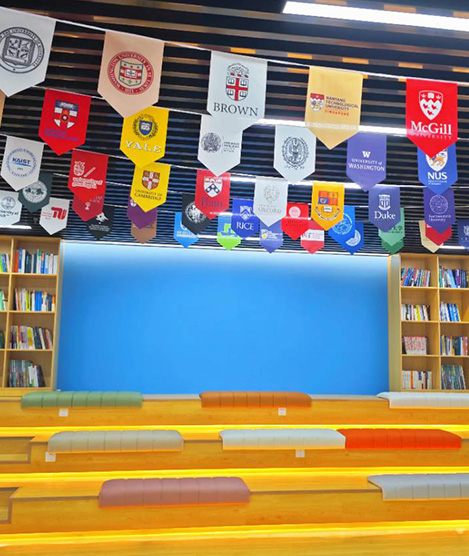
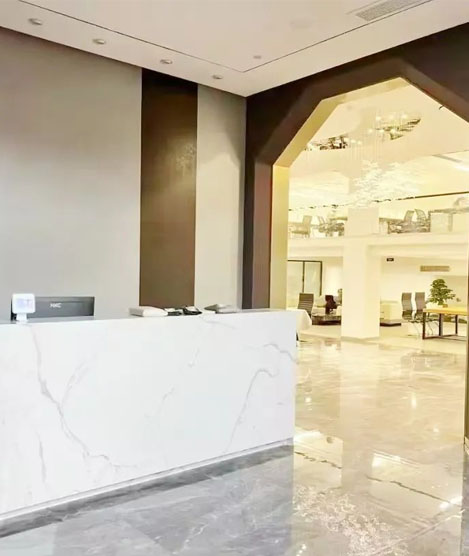
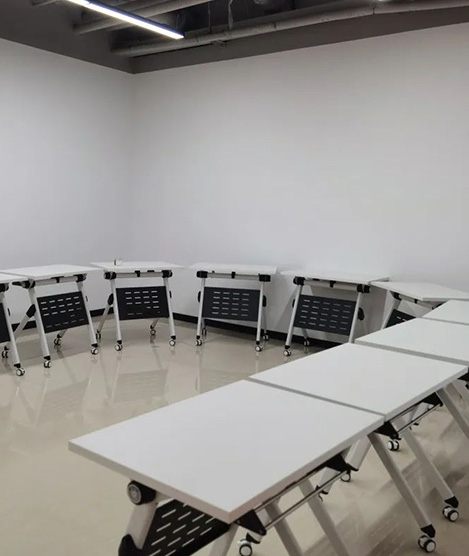
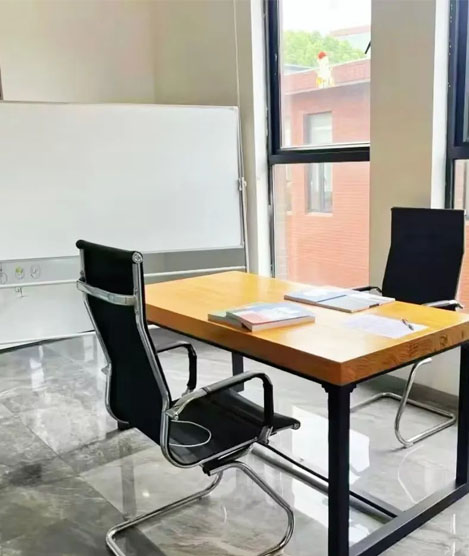
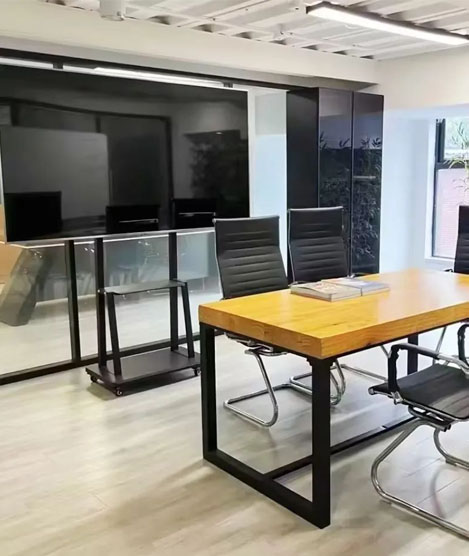
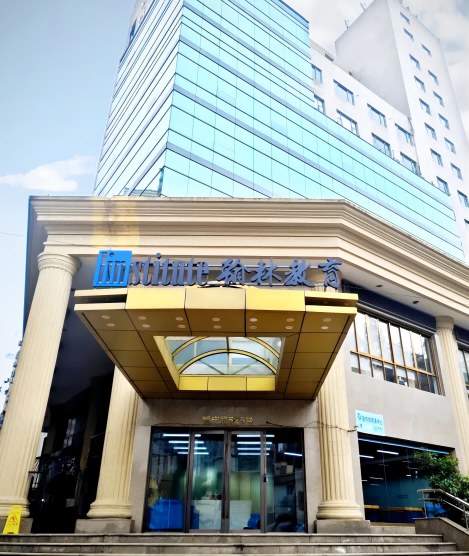
Where it is taught
Hanlin learning centres.
Teaching runs from Hanlin's own centres in Shanghai, Shenzhen, Chengdu and Hangzhou, and online for students elsewhere.

Talk to an advisor
Everything Hanlin does for CASTIC, in one conversation.
Entry, planning, coaching and the past papers. An advisor will tell you which of these a student actually needs, including when the answer is none of them.
Competition entry and planning
Which competitions suit this student, in what order, and by when - then we handle the registration, including the ones that can only be entered through a school or a centre.
Competition coaching
Taught by full-time subject tutors, on a course tier chosen by placement paper rather than by year group.
International curriculum tutoring
IB, AP, A-Level, IGCSE and the US high school curriculum, taught alongside school and timed around the exam calendar.
Competition past papers, free
A large library of past papers, mark schemes and syllabus breakdowns across every competition on this site. No charge and no enrolment.
Scan to add an advisor
Say which competition or course you are asking about. Replies in Chinese or English.
Or call +86 21 6352 6630FAQ
CASTIC, briefly answered.
What students, teachers and families ask before entering.
Who can enter?
Students at primary and secondary schools in China, including ordinary schools, secondary vocational schools, special education schools and international schools. Each student may submit one work per edition.
How do I get to the national contest?
Through district, city and provincial rounds, each recommending a fixed quota of works upward. National entrants are recommended by provincial organisers from among provincial winners.
What is the novelty search report?
A formal search of existing work on your topic, conducted before the research begins and again before entry. At least one genuine, properly formatted report must be submitted - it is a required document.
How old can the research be?
It must have been completed within the two years before 1 July of the final year. A topic entered in a previous edition may only be resubmitted as new results, with more than a year of further research.
What is the difference between class A and class B?
Class A covers specialised topics requiring a deep professional foundation and done in a professional laboratory. Class B covers topics from daily life - small inventions and short papers that bring practical benefit. Primary students may in principle submit only class B.
Can I enter as a team?
Yes, up to three students at the same educational stage. New members may not join part-way through, every member must fully participate and know the whole project, and each member’s division of work must be stated in the report. Within one cycle a team entry and an individual entry cannot be converted into each other.
What research is not accepted?
Anything unlawful, contrary to public morals or harmful to the public interest, or harmful to students’ physical or psychological development. Plagiarism, adult ghostwriting and infringement of others’ intellectual property. Primary-school work that harms or kills experimental animals or involves pathogens, tissue, blood or toxic agents. And secondary-school work on vertebrates or hazardous materials that did not follow protocols or lacked professional supervision.
What can my display board show?
Not your supervisor’s name, not expert evaluations, not media coverage, not previous awards, and not patents applied for or granted. The board is 1.2 metres by 0.9 metres, and physical exhibits are limited to 1.5 metres wide, 2 metres high and 100 kilograms.
Do I have to attend the final?
Yes. A finalist who does not attend is treated as having withdrawn, and the place is not filled by anyone else.
Does CASTIC lead to ISEF?
Yes. It is one of the three Chinese routes. Outstanding winners are sent to a winter camp in December, from which the ISEF China team is selected.
Related
Other research competitions.
What students enter alongside CASTIC.
CASTIC enquiries
The literature search comes before the research.
CASTIC requires a formal novelty report showing you checked the question was open before you spent a year on it, and original logs to prove you did the work. Tell us the student’s year group and the subject, and an advisor will map the district entry and the two years that follow.