
Competitions · Research and innovation · iGEM
iGEM, the Genetically Engineered Machine competition.
The highest-level academic competition in synthetic biology - and most of its awards are not for biology. Software, hardware, modelling, art, public engagement, the website and the poster are all judged separately.

At a glance
What the competition is.
iGEM began at MIT as an internal undergraduate competition and expanded to postgraduate and then high-school teams. It spans biology, computer science, education, art and design, and is the leading academic research competition in synthetic biology.
- Origin
- MIT
- Divisions
- High School, Undergraduate and Overgraduate, each awarded separately
- Format
- Team. Members typically bring strengths across computer science, art and design, physics, law, mathematics and the social sciences alongside biology
- The technical core
- Using standard biological parts - BioBricks - to build genetic circuits and mathematical models that predict, manipulate and measure an artificial biological system
- The standard expected
- Postgraduate-level research, whatever the division
- What a team submits
- A synthetic biology design, a project wiki, a poster and a presentation
- The presentation
- Twenty minutes, with all the important content of the project also carried on a single poster
- Season
- A project year running from winter through to the competition
- The final
- November, in the United States
The thing to understand first
This is not only a biology competition.
The award list makes the point clearly. Reading it before forming a team is the most useful preparation there is.
Nine awards for what the biology does
The Standard Track covers diagnostics, energy, environment, food and nutrition, foundational advance, information processing, manufacturing, new applications and therapeutics - awarded on the field the project addresses.
Four for how it was built
The Special Track awards Best Art and Design, Best Hardware, Best Measurement and Best Software. A team with a strong engineer or programmer competes for these directly.
And more than a dozen Special Prizes
Best Model, Best Wiki, Best Poster, Best Presentation, Best Integrated Human Practices, Best Education and Public Engagement, Best Applied Design, Best Supporting Entrepreneurship, and several for contributing new parts to the registry.
So the team decides what you can win
A team of six biologists competes for a fraction of the available awards. A mixed team competes for most of them, with the same underlying project.
The Grand Prizes
The top of each division.
A small number of teams are judged as finalists and compete for these, the competition’s highest honours, within their own age group.
| Division | Awards |
|---|---|
| High School | Grand Prize High School - the BioBrick Trophy |
| Undergraduate | Grand Prize - the aluminium BioBrick Trophy - plus First and Second Runner-Up |
| Overgraduate | Grand Prize - the aluminium BioBrick Trophy - plus First Runner-Up |
One rule worth knowing about the track awards below: a category needs at least ten candidates to award the undergraduate and overgraduate divisions separately. Below that the two merge and a single winner is chosen, with the high school division awarded alongside.
The track awards
Thirteen categories, judged on what the project is for.
Entries are assessed against these by the committee on the depth of what the team achieved. A project can be recognised here without reaching the finals.
| Award | What it asks for |
|---|---|
| Best Diagnostics | A faster, cheaper or better diagnostic technique - many conditions are curable if caught early |
| Best Therapeutics | How synthetic biology can improve the technology behind new treatments |
| Best Energy | Energy technology producing less carbon dioxide, energy made from feedstock and waste, or other sustainable generation |
| Best Environment | Biotechnology to clean air, provide fresh drinking water, restore or improve soil, or protect and enhance natural biodiversity |
| Best Food and Nutrition | Safely producing food and nutrition without shortage and without long-term environmental damage |
| Best Manufacturing | Using biology to make useful products, at scales from the atomic to the architectural |
| Best Foundational Advance | A method in nature not previously discovered that could change synthetic biology itself |
| Best Information Processing | A system for navigating and using the information held in biological properties, behaviours and parts |
| Best New Application | An entirely new field of application in biotechnology that nobody has proposed |
| Best Software | Better tools for assembling biological systems from standard parts |
| Best Hardware | Low-cost lab equipment, microfluidics, measurement devices and similar. Wetware components are encouraged but not required |
| Best Measurement | Accurate measurement remains a major unsolved problem in synthetic biology, even with well-equipped labs |
| Best Art and Design | Using art and design to explore the present and future impact of synthetic biology - stakeholders, communication, pedagogy |
Note how many of these are questions rather than categories. The committee is asking teams to answer something, which is why project choice matters more here than technique.
The Special Prizes
What else a team can be recognised for.
These reward parts of an iGEM entry that most teams treat as administrative, which is precisely why they are winnable.
Best Model
Synthetic biology is an engineering discipline, and part of engineering is simulating and modelling to confirm a system will work. This award goes to the best mathematical model or computer simulation of BioBrick parts in operation.
Best Wiki, Best Poster, Best Presentation
The wiki is the project’s public face and becomes a primary source for future teams worldwide. All three are judged as work in their own right.
Best Integrated Human Practices, Best Education and Public Engagement
For work that engages society and brings real information back into the project, and for finding more effective ways to communicate the science and involve people in it.
And the parts registry awards
Best New Basic Part, Best New Composite Part and Best Part Collection - for converting genetic sequences into standard BioBrick parts and contributing them to the registry. Submissions must follow the registry guidelines and be sent to the standard parts registry.
The year
What an iGEM season actually involves.
iGEM is a research year, not an event. The work divides into recognisable phases, and skipping any of them shows in the result.
Winter and spring - reading and design
Building the synthetic biology foundation, reading current literature and past projects, settling the project, designing the first BioBricks and identifying the DNA parts needed.
Spring and early summer - preliminary work
Constructing the first parts, testing experimental conditions and beginning the human practices work that develops the project’s background.
Summer - the lab, and the modelling
The main experimental period, generating data, alongside mathematical modelling training. This is where most of the substance is produced.
Autumn - the wiki, the poster, the talk
Organising data, building the wiki, preparing the poster and rehearsing the twenty-minute presentation, ideally in front of real scientists before the competition itself.
Results
How Hanlin teams have done.
Institutional results from the high school division, where the field is smaller and the standard is not.
2017 - three golds
Among 42 high school teams at the world final, four teams we supported took three gold medals, along with all of the mainland region’s individual awards and thirteen further nominations.
2018 - a world champion
Among 66 high school finalist teams, three supported teams took three golds. A Shenzhen team took the high school Grand Prize - at that point the best result any Chinese high school team had achieved.
2019 - seven golds, and a second title
Among 74 high school finalist teams, seven supported teams took seven golds, and a Shenzhen team took the high school Grand Prize for the second consecutive year.
Which says something about the format
Consecutive titles in a competition this broad come from building complete teams rather than from any single technical strength.
Preparation
How Hanlin supports an iGEM team.
A year-long team research project needs the team assembled correctly before anything else.
Building a mixed team deliberately
The award structure rewards software, hardware, modelling, design, communication and entrepreneurship as well as biology. A team recruited only from biology students forfeits most of what it could win.
Teaching the theory and the bench work
Molecular biology and genetics, genetic engineering principles, statistics and modelling on one side; DNA extraction, PCR, gel electrophoresis, Gibson assembly, sequencing, microbial culture and flow cytometry on the other.
Reading the literature weekly
A steady habit of finding, reading and summarising current papers is what separates a project with a real question from one with a technique looking for an application.
And getting out of the lab
iGEM expects teams to conduct outreach and collaboration alongside the research - visiting universities, research institutes and companies, and working with other teams. It is assessed, and it is the part teams most often leave until October.
Why Hanlin
Preparation for iGEM at Hanlin is taught by full-time subject tutors, on a course tier chosen by placement paper rather than by year group.
Programme formats
Five ways this is taught.
Group size is the whole difference between these. It decides how much of the tutor's attention a student gets and how far the course can bend to them, so it is worth choosing rather than accepting.
| Format | Group size | What it suits |
|---|---|---|
| One-to-one | One student | Content, pace and emphasis set by what this student actually needs rather than by a syllabus. The only format that can be rebuilt mid-course. |
| Small group | Three to eight | Opens at three. Frequent discussion, and the tutor can slow down or move on according to what the group has absorbed. Most students chasing a higher award are taught in this one. |
| Class | Eight to twelve | Taught by the subject lead or a medal coach. Less back-and-forth, so it suits a student who will say when something is unclear. |
| Large class | Ten to twenty | For students in the middle of the placement range, and a way to try a competition before committing. Students often move to a small group or to one-to-one afterwards. |
| Past-paper class | No cap | Past papers worked through in sequence in the weeks before the sitting. Free to students already enrolled. |
Course length for iGEM is set after a placement paper. The gap between where a student is and what the paper asks for is what the course has to close, and that gap is not the same for two students in the same year group.
How it runs
Six steps, four people on your side.
The same process for every student, so that nothing depends on one tutor remembering to do it.
 Step 1
Pre-course assessment
A placement paper before anything is booked, so the course tier is chosen on evidence rather than on a year group.
 Step 2
Tutor matching
A subject tutor is matched to the result, and their full background is provided before you agree to it.
 Step 3
Plan and group
A study group opens with four people on one student: the tutor, a planner, a supervisor and an academic manager.
 Step 4
Scheduled teaching
The teaching office sets the timetable around the competition date and school term, and teaching begins.
 Step 5
After-class reports
What was covered, and how the student handled it, reported after every lesson.
 Step 6
Homework follow-up
The teaching assistant and the form teacher both check that homework is done, which is where most preparation quietly fails.
Free resource pack
Project and submission pack
The same material our own iGEM students work from. Scan the code, say what you need, and an advisor sends it.

Tell an advisor which competition and year group, and the material comes back the same day. Free, and you do not have to enrol in anything. If we do not already hold what you need, we will go and find it.
- PDFPast finalist project titles and abstracts
- PDFCategory definitions and the judging criteria, broken down
- DOCXA project timeline working back from the submission date
- PDFEntry checklist and the dates for the current cycle
Teaching team
Who would teach it.
Three of the twenty-two tutors on the published Hanlin roster - the ones whose subject this is.

Yu
Master's in bioinformatics and computational biology from UT Dallas and a nutritional sciences degree from Wisconsin-Madison. Second author on an SCI-indexed paper from the Tanumihardjo vitamin-A laboratory, and formerly at ABS Global.

Li
Biology at Emory, biomedical engineering at Georgia Tech, and a bioengineering master's at the University of Pennsylvania. College Board-accredited, teaching from a cross-disciplinary research base and folding research practice into the classroom.

Dr An
Mathematics at Illinois Urbana-Champaign with highest honours and the Elizabeth R. Bennett scholarship, then a PhD in mathematics at Johns Hopkins on full funding with the Owen fellowship and the Joel Dean award for excellent teaching. Years of US university teaching, translating high-level mathematics into language students can use.
Where it is taught
Hanlin learning centres.
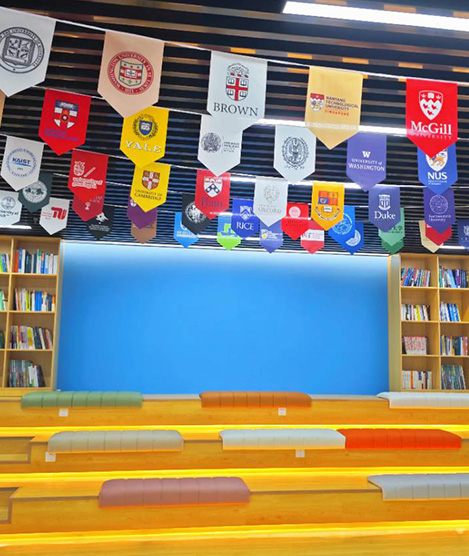
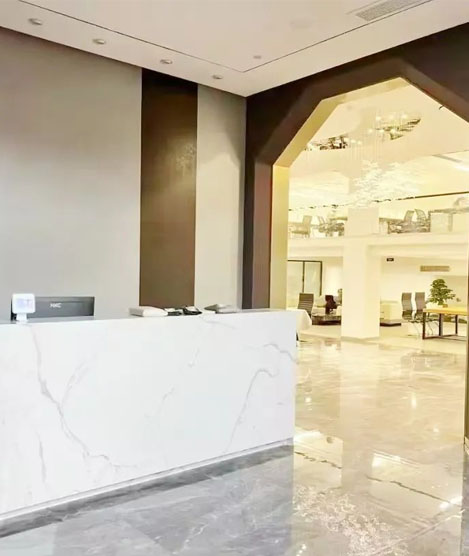
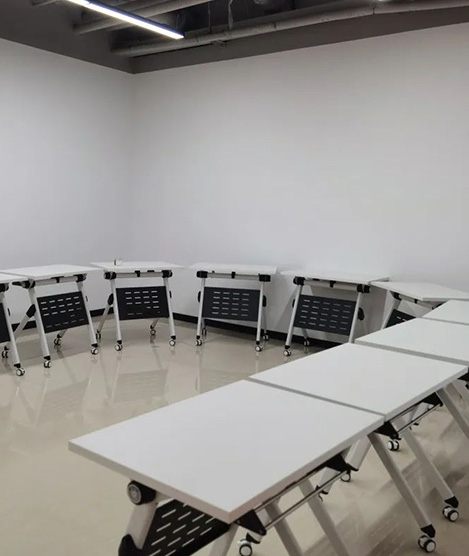
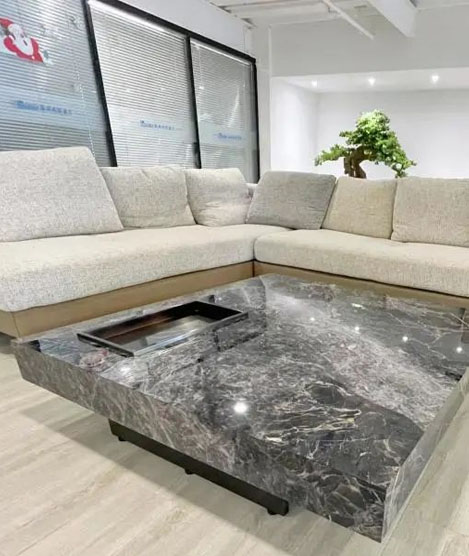
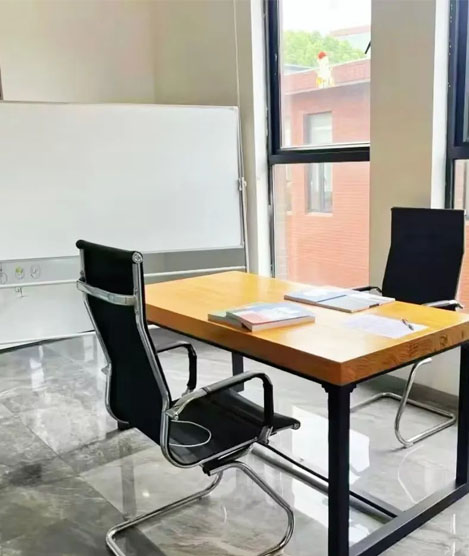
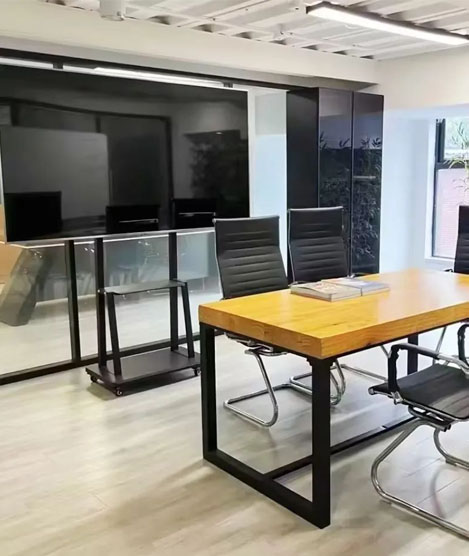
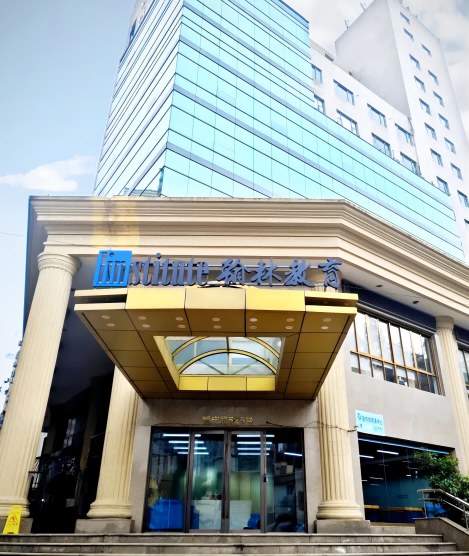
Teaching runs from Hanlin's own centres in Shanghai, Shenzhen, Chengdu and Hangzhou, and online for students elsewhere.
Talk to an advisor
Everything Hanlin does for iGEM, in one conversation.
Entry, planning, coaching and the past papers. An advisor will tell you which of these a student actually needs, including when the answer is none of them.
Competition entry and planning
Which competitions suit this student, in what order, and by when - then we handle the registration, including the ones that can only be entered through a school or a centre.
Competition coaching
Taught by full-time subject tutors, on a course tier chosen by placement paper rather than by year group.
International curriculum tutoring
IB, AP, A-Level, IGCSE and the US high school curriculum, taught alongside school and timed around the exam calendar.
Competition past papers, free
A large library of past papers, mark schemes and syllabus breakdowns across every competition on this site. No charge and no enrolment.
Scan to add an advisor
Say which competition or course you are asking about. Replies in Chinese or English.
Or call +86 21 6352 6630FAQ
iGEM, briefly answered.
What students, teachers and families ask before forming a team.
Is iGEM only for biology students?
No, and building a team that way is the commonest mistake. Awards are given for software, hardware, measurement, modelling, art and design, education and public engagement, entrepreneurship, the wiki, the poster and the presentation, as well as for the biology.
Can high-school students enter?
Yes. iGEM began as an undergraduate competition and now has High School, Undergraduate and Overgraduate divisions, each awarded separately.
What does a team actually submit?
A synthetic biology design, a project wiki documenting the whole project, a poster carrying all the important content, and a twenty-minute presentation.
What standard is expected?
The organisers describe it as postgraduate-level research, in every division.
What are BioBricks?
Standard biological parts. Teams use them to build genetic circuits and mathematical models that predict, manipulate and measure an artificial biological system.
How many awards are there?
Grand Prizes in each division, nine Standard Track awards on the field the project addresses, four Special Track awards on how it was built, and more than a dozen Special Prizes. A team can be recognised without reaching the finals.
Why do some categories merge the divisions?
A track award needs at least ten candidates to be given separately to the undergraduate and overgraduate divisions. Below that the two merge and one winner is chosen, with the high school division awarded alongside.
When is the competition?
The final is held in November in the United States, after a project year that begins the previous winter.
How long does a project take?
A full year. Reading and design through winter and spring, preliminary construction in spring, the main experimental work over the summer, and the wiki, poster and presentation through autumn.
Related
Other research competitions.
What students enter alongside iGEM.
iGEM enquiries
Who is on the team decides what you can win.
Most iGEM awards are for something other than the biology, so a team built only from biologists competes for a fraction of them. Tell us who you have and what they are good at, and an advisor will map the team and the project year.