
Competitions · Mathematics · Singapore Math Challenge
SMC, the Singapore Math Challenge.
Thirty-one questions in ninety minutes for grades 1 to 11, written by mathematics specialists from Singapore’s Ministry of Education. Two of its rules are easy to miss and change everything: you may enter a higher year group but never a lower one, and qualifying means competing a year up.
First, a clarification
Two competitions are called SMC.
This page is the Singapore Math Challenge, run by the Singapore International Mathematical Competitions Centre. The other SMC on this site is the North Carolina State Mathematics Contest, run by the North Carolina Council of Teachers of Mathematics. They are unrelated.
They differ in almost everything: year coverage, format, marking, and where a result leads. If you are looking for the American contest whose strong performers attract scholarship consideration from North Carolina universities, that is the other one.
At a glance
What the paper is, and who sits it.
The questions are written by mathematics specialists from Singapore’s Ministry of Education, and the contest is positioned against Singapore’s record in TIMSS and PISA rather than against olympiad tradition.
- Organiser
- The Singapore International Mathematical Competitions Centre (SIMCC)
- Who writes it
- Mathematics specialists from Singapore’s Ministry of Education
- Scale
- More than 30,000 students from over thirty countries and regions in a recent year
- Who can enter
- Students in grades 1 to 11, with no restriction by nationality or region
- Which grade you enter
- The grade you were in before July of that year. You may enter a higher year group but never a lower one
- Format
- 31 questions in three sections, sat on paper at an authorised centre or online
- Duration
- 90 minutes
- Marks
- 100
- Calculators
- Not permitted for grades 1 to 4. Permitted from grade 5 upward
- Language
- Chinese and English
- What it tests
- Depth of understanding, practical application and logical reasoning rather than calculation alone
The paper
Three sections, rising in value.
The marks per question more than double from the first section to the last, while the question count falls - so the back of the paper is where the difference is made.
| Section | Questions | Type | Marks each | Section total |
|---|---|---|---|---|
| A | 15 | Multiple choice | 2 | 30 |
| B | 10 | Fill-in | 4 | 40 |
| C | 6 | Fill-in | 5 | 30 |
Section B alone carries 40 of the 100 marks. Section A is worth less per question than anything else on the paper, so time spent perfecting it is time taken from where the marks are.
Two rules that decide your year
Grade selection is a strategic choice here.
SMC lets a student choose upward and then moves them upward again if they qualify. Both directions are worth understanding before registering.
You may go up, never down
Registration is by the grade you were in before July. A grade 5 student may enter the grade 6 group or higher, but never grade 4 or below. There is no route to an easier paper.
Qualifying moves you up a year
A student who advances competes in the finals one grade above the group they entered. Entering a year up in the first round therefore means competing two years up in the second.
Which makes ambition expensive
Choosing a higher group to look impressive compounds: a harder first paper, then a harder final still. The grade a student can genuinely handle is the one to enter.
And the choice is locked at registration
Because the group is set by July and cannot be lowered afterwards, this decision is made months before the paper rather than adjusted as preparation progresses.
Awards
Five bands covering the whole field.
The bands are consecutive slices rather than cumulative thresholds. Every entrant receives an electronic certificate and a score report regardless of band.
| Award | Share of the field | What it carries |
|---|---|---|
| Exemplary | Top 8% | Invitation to the global finals |
| Outstanding | 9 to 20% | Invitation to the global finals |
| Commendable | 21 to 40% | Invitation to the global finals |
| Honour | 41 to 50% | Invitation to the global finals |
| Participation | 51 to 100% | Electronic certificate and score report |
Because the Honour band runs to 50%, half the entry is invited to the Singapore Math Global Finals - a far wider gate than most contests offer.
What follows
The global finals, and one benefit that ended.
Half the field advances, which is unusually generous. One thing the contest used to carry, however, it no longer does.
The top half reaches SMGF
Every award winner is invited to the Singapore Math Global Finals the following March. Because the Honour band runs to 50%, that means half the entry advances.
But a year higher than you sat
Finalists compete one grade above their first-round group, so preparation for the finals is not simply more of the same material.
Honour society points ended in 2024
From 2024 SMC no longer carries scholarship points toward membership of the international junior honour society. If that was the reason for entering, it is no longer available through this contest.
Everyone gets a report
All entrants receive an electronic certificate and a score report, so even a participation result comes with a diagnostic worth reading.
Preparation
How Hanlin prepares students for SMC.
The contest is built on the Singapore mathematics teaching system and rewards application over calculation, which changes what practice should look like.
Application, not arithmetic
Questions cover algebra, geometry, number theory and combinatorics, but test whether a concept can be applied to an unfamiliar situation. Practice uses word problems and reasoning questions rather than drills.
Singapore material is the closest fit
Because the questions follow the Singapore teaching approach, Singapore textbooks and past papers match the style more closely than material from any other system.
Weighting time by section
Sections B and C carry 70 of the 100 marks across sixteen questions. Timed practice ensures a student reaches them with the time they need rather than polishing Section A.
Settling the grade choice honestly
Since a student may only move up and moves up again on qualifying, the registration decision is made on a past paper rather than on ambition.
Why Hanlin
Preparation for Singapore Math Challenge at Hanlin is taught by full-time subject tutors, on a course tier chosen by placement paper rather than by year group.
Programme formats
Five ways this is taught.
Group size is the whole difference between these. It decides how much of the tutor's attention a student gets and how far the course can bend to them, so it is worth choosing rather than accepting.
| Format | Group size | What it suits |
|---|---|---|
| One-to-one | One student | Content, pace and emphasis set by what this student actually needs rather than by a syllabus. The only format that can be rebuilt mid-course. |
| Small group | Three to eight | Opens at three. Frequent discussion, and the tutor can slow down or move on according to what the group has absorbed. Most students chasing a higher award are taught in this one. |
| Class | Eight to twelve | Taught by the subject lead or a medal coach. Less back-and-forth, so it suits a student who will say when something is unclear. |
| Large class | Ten to twenty | For students in the middle of the placement range, and a way to try a competition before committing. Students often move to a small group or to one-to-one afterwards. |
| Past-paper class | No cap | Past papers worked through in sequence in the weeks before the sitting. Free to students already enrolled. |
Course length for Singapore Math Challenge is set after a placement paper. The gap between where a student is and what the paper asks for is what the course has to close, and that gap is not the same for two students in the same year group.
How it runs
Six steps, four people on your side.
The same process for every student, so that nothing depends on one tutor remembering to do it.
 Step 1
Pre-course assessment
A placement paper before anything is booked, so the course tier is chosen on evidence rather than on a year group.
 Step 2
Tutor matching
A subject tutor is matched to the result, and their full background is provided before you agree to it.
 Step 3
Plan and group
A study group opens with four people on one student: the tutor, a planner, a supervisor and an academic manager.
 Step 4
Scheduled teaching
The teaching office sets the timetable around the competition date and school term, and teaching begins.
 Step 5
After-class reports
What was covered, and how the student handled it, reported after every lesson.
 Step 6
Homework follow-up
The teaching assistant and the form teacher both check that homework is done, which is where most preparation quietly fails.
Free resource pack
Past papers and preparation pack
The same material our own Singapore Math Challenge students work from. Scan the code, say what you need, and an advisor sends it.

Tell an advisor which competition and year group, and the material comes back the same day. Free, and you do not have to enrol in anything. If we do not already hold what you need, we will go and find it.
- PDFPast papers, every year the organiser has released
- PDFWorked solutions, where the organiser publishes them
- PDFThe syllabus on one page - every topic, and how heavily it is examined
- PDFEntry checklist and the dates for the current cycle
Teaching team
Who would teach it.
Three of the twenty-two tutors on the published Hanlin roster - the ones whose subject this is.

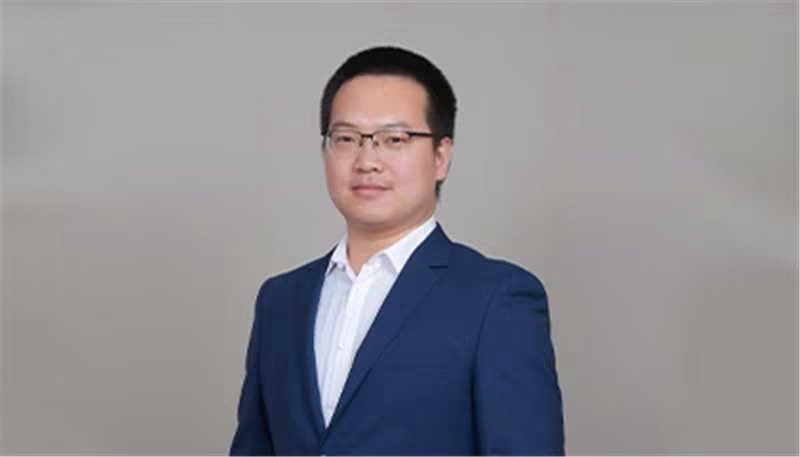
Dr Zhang
PhD in theoretical mathematics from the University of Rochester and a postdoctoral fellow at the Shanghai Center for Mathematical Sciences at Fudan. An AMC-accredited coach, ASDAN-accredited for DMM and ITCCC, and an accredited UKMT BMO2 and PUMaC coach. His students have gone on to read mathematics and physics at Harvard, MIT, Princeton, Caltech and Cambridge.
Dr Zhuang
PhD in mathematics from the University of Denver, working in mathematical logic, after a first degree in applied mathematics at Southeast University. A repeat conference speaker on his research, with three years lecturing and assisting on undergraduate mathematics at Denver.

He
A Cambridge master's after a computer science degree with a mathematics minor at the University of Nebraska-Lincoln, and a US high school GPA of 4.13. Six years overseas and teaches entirely in English, across AMC, Math League, AP Computer Science and AP Calculus.
Where it is taught
Hanlin learning centres.
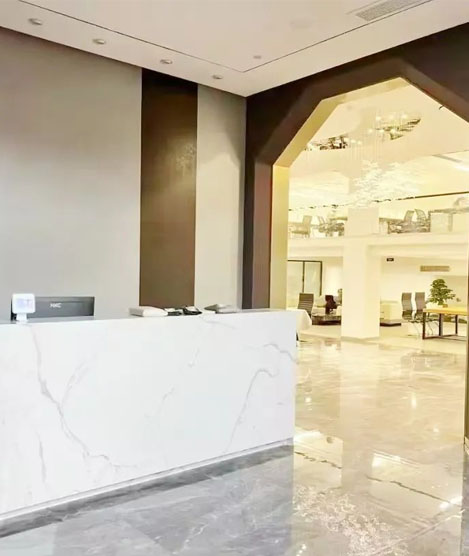
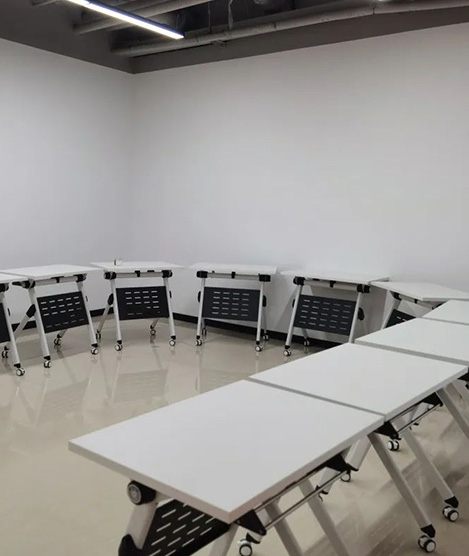
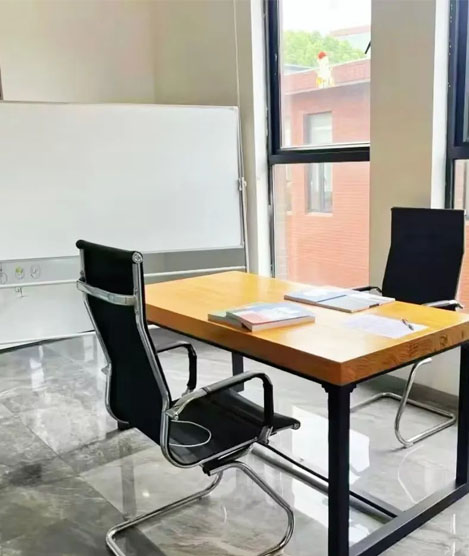
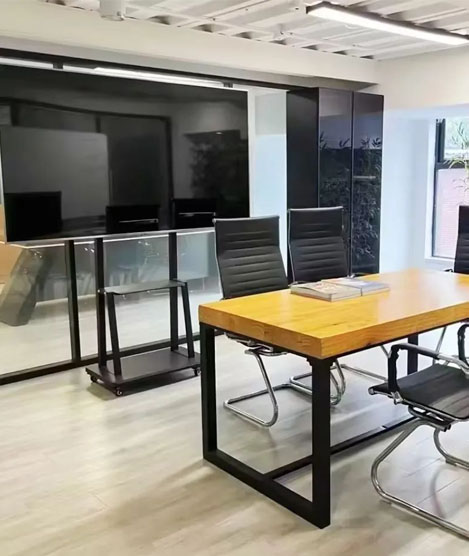
Teaching runs from Hanlin's own centres in Shanghai, Shenzhen, Chengdu and Hangzhou, and online for students elsewhere.



Talk to an advisor
Everything Hanlin does for Singapore Math Challenge, in one conversation.
Entry, planning, coaching and the past papers. An advisor will tell you which of these a student actually needs, including when the answer is none of them.
Competition entry and planning
Which competitions suit this student, in what order, and by when - then we handle the registration, including the ones that can only be entered through a school or a centre.
Competition coaching
Taught by full-time subject tutors, on a course tier chosen by placement paper rather than by year group.
International curriculum tutoring
IB, AP, A-Level, IGCSE and the US high school curriculum, taught alongside school and timed around the exam calendar.
Competition past papers, free
A large library of past papers, mark schemes and syllabus breakdowns across every competition on this site. No charge and no enrolment.
Scan to add an advisor
Say which competition or course you are asking about. Replies in Chinese or English.
Or call +86 21 6352 6630FAQ
The Singapore Math Challenge, briefly answered.
What students and families ask before entering.
Is this the same as the North Carolina SMC?
No. This is the Singapore Math Challenge, run by SIMCC. The North Carolina State Mathematics Contest is a separate American competition with its own page here.
Who can enter?
Students in grades 1 to 11 worldwide, with no restriction by nationality or region. You register by the grade you were in before July of that year.
Can I enter a different year group?
You may enter a higher one but never a lower one. A grade 5 student may sit the grade 6 group or above, but not grade 4.
What is on the paper?
Thirty-one questions in ninety minutes for 100 marks: fifteen multiple-choice at 2 marks, ten fill-in at 4 marks, and six fill-in at 5 marks.
Can I use a calculator?
Not in grades 1 to 4. From grade 5 upward calculators are permitted.
What are the award bands?
Exemplary for the top 8%, Outstanding from 9 to 20%, Commendable from 21 to 40%, Honour from 41 to 50%, and a participation certificate below that. Everyone receives an electronic certificate and a score report.
What happens if I win an award?
Award winners are invited to the Singapore Math Global Finals the following March - and compete there one grade above the group they entered in the first round.
Does SMC still count toward honour society membership?
No. From 2024 it no longer carries scholarship points toward the international junior honour society.
Related
The rest of this family, and the other SMC.
Contests run by the same organiser, and the American competition with the same acronym.
Singapore Math Challenge enquiries
Choose the year group carefully. It compounds.
You can enter above your grade but never below it, and qualifying moves you up again. Tell us the student’s year group and where they currently sit, and an advisor will settle the entry on evidence rather than ambition.