
Competitions · Mathematics · MOG
MOG, the Mathematical Olympiad for Girls.
Five questions in two and a half hours, set by UKMT for girls in year 11 and above. Three of the five want the whole argument written out rather than an answer - and a strong result here is read when Britain picks its team for the European Girls’ Mathematical Olympiad.

At a glance
What the paper is, and who sits it.
UKMT was founded in 1996 and is the largest mathematics assessment body in the United Kingdom, running national papers for some 700,000 students at more than six thousand schools each year. MOG is the one it wrote specifically to bring more girls into olympiad mathematics.
- Organiser
- The United Kingdom Mathematics Trust (UKMT)
- Who sits it
- Girls in grades 10 to 12
- Why it exists
- UKMT’s position is that olympiad mathematics should not be a boys’ game. MOG was created to raise the participation of girls in its assessments
- Scale
- More than five thousand students enter in the UK each year
- Format
- Five questions, each worth 10 marks and each carrying several parts
- Duration
- 2 hours 30 minutes
- Answering
- Two of the five want the answer alone. The other three want a full written solution
- Equipment
- A ruler and a pair of compasses are permitted. Calculators and protractors are not
- Where
- In person, at partner teaching schools
- When
- Late September, sat in the evening
- Entry
- Each school receives four free places
- What it feeds
- Results are used as a reference when selecting students for the European Girls’ Mathematical Olympiad
The paper
How the five questions are built.
MOG is structured to be entered rather than conquered. The design assumes most candidates will not finish, and rewards them for how far they get.
Early questions open the later ones
The paper runs roughly from easier to harder, and questions come in parts. Earlier parts typically hand you a result or an idea needed further down - so working them is not just about their own marks.
Three questions want the argument
Questions 1, 4 and 5 require a written solution. Where a solution uses a calculation, an equation or a table, you have to say where it came from, how it is used, and how the steps connect. An answer on its own earns little or nothing.
Two questions want only the answer
Questions 2 and 3 are answered numerically, with the answer sheet marking where each goes. They are the quickest marks on the paper, and worth banking before committing time to the written three.
Partial credit for a good idea
Marks are available for a partly correct approach, so everything recording your thinking is worth submitting - legibly. But one complete solution scores more than several unfinished attempts, which is the trade-off to plan around.
Awards
What each mark band earns.
Two award tiers sit above a participation certificate. The thresholds below are the 2023 figures, out of 50 - they are reset each year, and the award names themselves occasionally change.
| Award | 2023 threshold | As a share of the paper |
|---|---|---|
| Distinction | 26 marks | Just over half the paper |
| Merit | 16 marks | Under a third of the paper |
| Participation | Any entrant | Awarded regardless of score |
The Merit threshold is worth noting: 16 marks out of 50 is roughly one complete question plus useful progress on another. A candidate does not need to be near the top of the field to come away with something.
Entering
How a student actually gets a place.
MOG is entered through a school rather than individually, and the practical terms are more forgiving than most olympiad papers.
Four free places per school
Every participating school receives four places at no cost. For a school testing whether there is appetite among its students, that removes the usual reason not to try a new paper.
What the entry covers
The registration covers the paper itself, marking, invigilation, past papers and the certificate. There is no separate charge for having the script marked or for the award that follows.
Registration closes ten days before
The deadline falls roughly a week and a half before the paper, which is sat on a weekday evening in late September. Entries are handled by the school, not by individual candidates.
Withdrawing costs a quarter
A student who withdraws before the registration deadline is refunded less 25% retained for academic materials and service. After the deadline there is no refund, so the decision needs making before it closes.
Preparation
How Hanlin prepares students for MOG.
Almost every mark lost on this paper is lost in the writing rather than in the mathematics. That is what preparation concentrates on.
Justifying every assertion
UKMT asks for complete proofs of any claim made along the way. Students practise spotting the step they were about to assert without support, because that is exactly where a marker stops awarding.
Writing up, then comparing
Solutions are written out for problems already solved, then checked against UKMT’s published solutions. Reading how the setters write an argument is the fastest route to knowing what a full-credit answer looks like.
Thirty minutes a question
Two and a half hours across five questions sounds generous and is not, once three of them need prose. Timed papers teach students to secure questions 2 and 3 quickly and spend the remainder writing properly.
Finishing one, not starting three
Because a complete solution outscores several partial ones, choosing which question to commit to is a real decision. That judgement is rehearsed rather than left to instinct on the day.
Why Hanlin
Preparation for MOG at Hanlin is taught by full-time subject tutors, on a course tier chosen by placement paper rather than by year group.
Programme formats
Five ways this is taught.
Group size is the whole difference between these. It decides how much of the tutor's attention a student gets and how far the course can bend to them, so it is worth choosing rather than accepting.
| Format | Group size | What it suits |
|---|---|---|
| One-to-one | One student | Content, pace and emphasis set by what this student actually needs rather than by a syllabus. The only format that can be rebuilt mid-course. |
| Small group | Three to eight | Opens at three. Frequent discussion, and the tutor can slow down or move on according to what the group has absorbed. Most students chasing a higher award are taught in this one. |
| Class | Eight to twelve | Taught by the subject lead or a medal coach. Less back-and-forth, so it suits a student who will say when something is unclear. |
| Large class | Ten to twenty | For students in the middle of the placement range, and a way to try a competition before committing. Students often move to a small group or to one-to-one afterwards. |
| Past-paper class | No cap | Past papers worked through in sequence in the weeks before the sitting. Free to students already enrolled. |
Course length for MOG is set after a placement paper. The gap between where a student is and what the paper asks for is what the course has to close, and that gap is not the same for two students in the same year group.
How it runs
Six steps, four people on your side.
The same process for every student, so that nothing depends on one tutor remembering to do it.
 Step 1
Pre-course assessment
A placement paper before anything is booked, so the course tier is chosen on evidence rather than on a year group.
 Step 2
Tutor matching
A subject tutor is matched to the result, and their full background is provided before you agree to it.
 Step 3
Plan and group
A study group opens with four people on one student: the tutor, a planner, a supervisor and an academic manager.
 Step 4
Scheduled teaching
The teaching office sets the timetable around the competition date and school term, and teaching begins.
 Step 5
After-class reports
What was covered, and how the student handled it, reported after every lesson.
 Step 6
Homework follow-up
The teaching assistant and the form teacher both check that homework is done, which is where most preparation quietly fails.
Free resource pack
Past papers and preparation pack
The same material our own MOG students work from. Scan the code, say what you need, and an advisor sends it.

Tell an advisor which competition and year group, and the material comes back the same day. Free, and you do not have to enrol in anything. If we do not already hold what you need, we will go and find it.
- PDFPast papers, every year the organiser has released
- PDFWorked solutions, where the organiser publishes them
- PDFThe syllabus on one page - every topic, and how heavily it is examined
- PDFEntry checklist and the dates for the current cycle
Teaching team
Who would teach it.
Three of the twenty-two tutors on the published Hanlin roster - the ones whose subject this is.

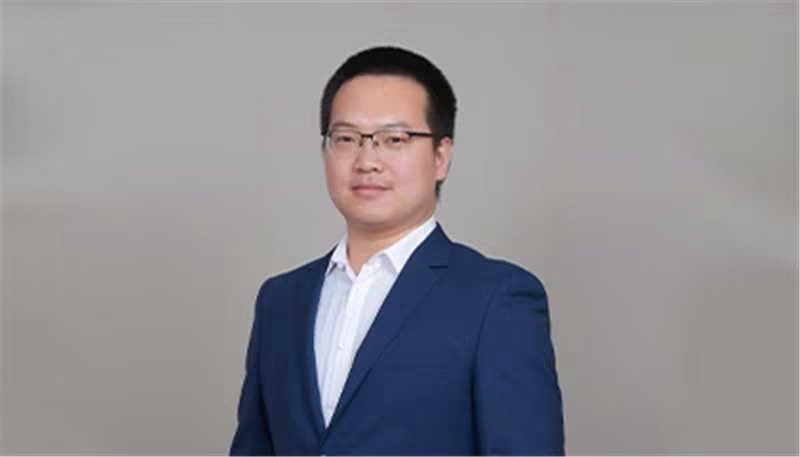
Dr Zhang
PhD in theoretical mathematics from the University of Rochester and a postdoctoral fellow at the Shanghai Center for Mathematical Sciences at Fudan. An AMC-accredited coach, ASDAN-accredited for DMM and ITCCC, and an accredited UKMT BMO2 and PUMaC coach. His students have gone on to read mathematics and physics at Harvard, MIT, Princeton, Caltech and Cambridge.
Dr Zhuang
PhD in mathematics from the University of Denver, working in mathematical logic, after a first degree in applied mathematics at Southeast University. A repeat conference speaker on his research, with three years lecturing and assisting on undergraduate mathematics at Denver.

He
A Cambridge master's after a computer science degree with a mathematics minor at the University of Nebraska-Lincoln, and a US high school GPA of 4.13. Six years overseas and teaches entirely in English, across AMC, Math League, AP Computer Science and AP Calculus.
Where it is taught
Hanlin learning centres.
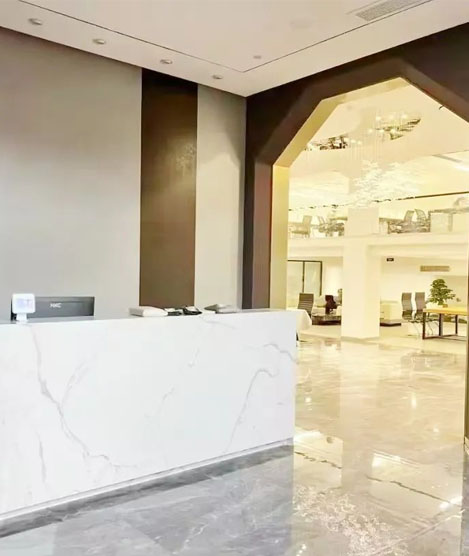
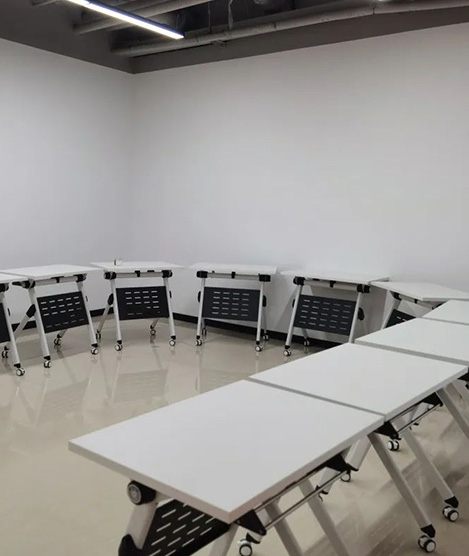
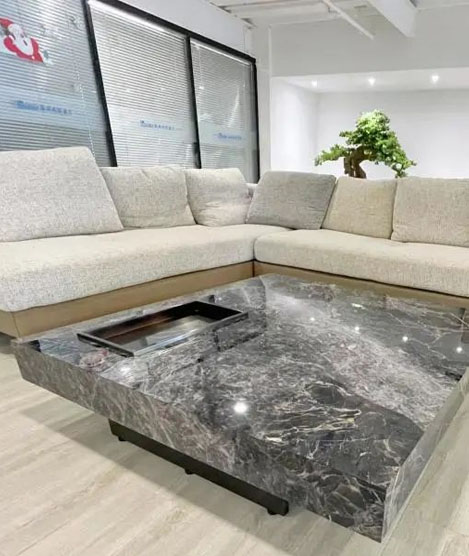
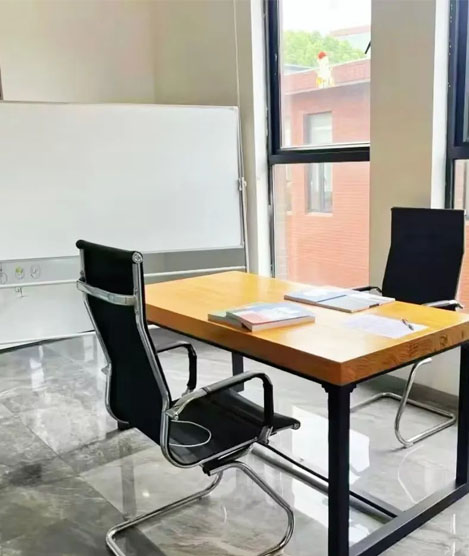
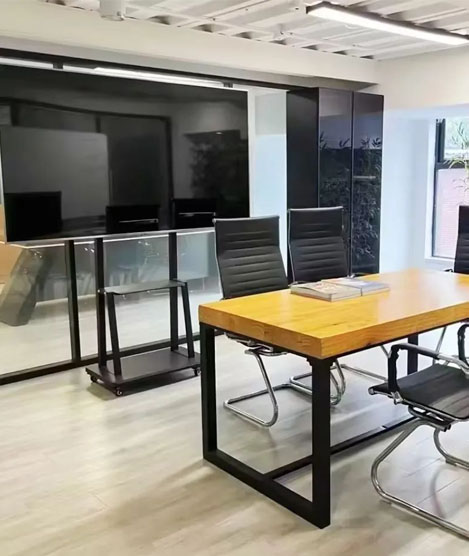
Teaching runs from Hanlin's own centres in Shanghai, Shenzhen, Chengdu and Hangzhou, and online for students elsewhere.


Talk to an advisor
Everything Hanlin does for MOG, in one conversation.
Entry, planning, coaching and the past papers. An advisor will tell you which of these a student actually needs, including when the answer is none of them.
Competition entry and planning
Which competitions suit this student, in what order, and by when - then we handle the registration, including the ones that can only be entered through a school or a centre.
Competition coaching
Taught by full-time subject tutors, on a course tier chosen by placement paper rather than by year group.
International curriculum tutoring
IB, AP, A-Level, IGCSE and the US high school curriculum, taught alongside school and timed around the exam calendar.
Competition past papers, free
A large library of past papers, mark schemes and syllabus breakdowns across every competition on this site. No charge and no enrolment.
Scan to add an advisor
Say which competition or course you are asking about. Replies in Chinese or English.
Or call +86 21 6352 6630FAQ
MOG, briefly answered.
What students and families ask before entering.
Is MOG only for girls?
Yes. It is open to girls in grades 10 to 12. UKMT created it specifically to raise the participation of girls in olympiad mathematics, and more than five thousand students enter each year in the UK.
How is the paper structured?
Five questions of 10 marks each, out of 50, in two and a half hours. Questions 2 and 3 require only an answer; questions 1, 4 and 5 require a full written solution.
What happens if I only write the answer?
On the three written questions, very little. UKMT states plainly that an answer alone will earn few marks if any - the explanation of where each step came from is what is being marked.
Can I get marks for an incomplete solution?
Yes. Partial credit is available for good ideas, so everything that records your thinking is worth submitting. But one complete solution scores more than several unfinished attempts.
What equipment is allowed?
A ruler and a pair of compasses. Calculators and protractors are prohibited. Rough paper may be used for working, but solutions must be written on the answer sheet for each question.
What score is needed for an award?
The thresholds are set each year. In 2023 they were 26 marks for a Distinction and 16 for a Merit, out of 50. Students below the Merit line receive a participation certificate.
Does MOG lead anywhere?
Results are used as a reference in selecting students for the European Girls’ Mathematical Olympiad, which is the international route out of this paper.
Can I get a refund if I cannot sit it?
Contact the organiser. Applications made before the registration deadline are refunded less 25% retained for academic materials and service. After the deadline the fee is not refundable.
Related
The rest of the UKMT ladder.
Where MOG sits among the British papers, and its international counterparts.
MOG enquiries
Four free places per school, and a low Merit line.
MOG is one of the most accessible olympiad papers a student can enter - schools get four places at no cost, and a Merit needs under a third of the marks. Tell us the year group and an advisor will map the September entry.