
Competitions · Mathematics · SEAMO
SEAMO, the Southeast Asian Mathematical Olympiad.
Seven papers covering every year from grade 1 to grade 12, sat by more than twenty thousand students across twenty countries. The organisers are unusually direct about what it asks: only about half the concepts it tests appear in a school curriculum at all.

At a glance
What the olympiad is, and who sits it.
SEAMO was founded in 2016 by a team whose mathematics institute dates to 1991, and which built its framework by studying olympiad curricula from Singapore, the United States, Russia and elsewhere.
- Who can enter
- Students from grade 1 to grade 12, roughly ages 5 to 18
- Scale
- More than 20,000 students from over twenty countries and regions each year
- Syllabus
- Built on the Singapore mathematics olympiad syllabus, with elements drawn from other international systems
- Seven levels
- Pre-A through F, one paper per band of year groups
- Format
- Sat online, at partner teaching schools. Schools may also apply to provide the assessment themselves
- Language
- Chinese and English
- When
- The qualifying round is a Saturday in late October
- What follows
- SEAMO X, an international round held in the winter holiday, with a preparation camp for grades 4 to 9
- How much is taught at school
- The organisers state that only 50 to 60% of the concepts tested appear in school curricula, and recommend olympiad preparation before entering
- Founder
- Terry Chew, the first author to publish a mathematics olympiad textbook series in Singapore, whose books are used in eight countries
The papers
Seven levels, and which year group sits each.
A student is assigned a level from their year group at registration. Only the youngest paper differs in length and question count.
| Level | Year groups | Questions | Time |
|---|---|---|---|
| Pre-A | Grade 1 | 10 multiple choice + 5 fill-in | 40 minutes |
| A | Grades 2 and 3 | 20 multiple choice + 5 fill-in | 90 minutes |
| B | Grades 4 and 5 | 20 multiple choice + 5 fill-in | 90 minutes |
| C | Grades 6 and 7 | 20 multiple choice + 5 fill-in | 90 minutes |
| D | Grades 8 and 9 | 20 multiple choice + 5 fill-in | 90 minutes |
| E | Grades 10 and 11 | 20 multiple choice + 5 fill-in | 90 minutes |
| F | Grade 12 | 20 multiple choice + 5 fill-in | 90 minutes |
Awards are given separately within each level, so a grade 4 student is ranked against other grade 4 and 5 students rather than against the whole entry.
Qualifying round awards
Three medal bands, by level.
Bands are percentiles within a level. Everyone below bronze receives a participation certificate, and that certificate is itself a route onward.
SEAMO X
The international round, and why nobody is excluded from it.
SEAMO X is where qualifying-round entrants compete internationally. Its most unusual feature is that a participation certificate is enough to continue.
Champions League, for medallists
Students who won gold, silver or bronze in the qualifying round enter the Champions League and are ranked against each other.
Open division, for everyone else
Students who received a participation certificate enter the Open division, ranked separately. Very few international rounds are structured so that a non-medallist can still take part.
Four days in the winter holiday
The global round runs over four days in mid-January. Grades 1 to 12 are eligible, and places are limited - the organisers allocate them first come, first served.
A nine-day camp first, for grades 4 to 9
Younger medallists can join a preparation camp before the global round, taught in part by the contest’s founder. Students may also skip the camp and travel only for the competition days.
Before you book
Confirm the venue with the organiser.
This is worth its own section. The published information on SEAMO X gives three different host countries, and a family cannot plan travel around three answers.
Three venues appear in print
Singapore, Malaysia and Bangkok all appear as the SEAMO X location in different places. We are not going to pick one for you, because international flights and visas follow from it.
Places are limited and released late
The organisers state that global-round places are capped by venue size, that numbers are announced close to the date, and that allocation is first come, first served. Delay costs a place.
The camp and the competition can be separated
Students may attend the full camp or travel only for the competition days at the end. That choice changes the length of the trip considerably.
Get the venue in writing
Before booking anything, ask the organiser or your advisor to confirm the host country and dates in writing for the specific year you are entering.
SEAMO X awards
Four bands, plus one that takes three years.
The global round awards one band further down the field than the qualifier, and adds a distinction no single result can earn.
Preparation
How Hanlin prepares students for SEAMO.
The organisers say plainly that school mathematics covers only half of what this paper asks. That single fact should shape how a family plans for it.
Half the material is not taught
With only 50 to 60% of the tested concepts appearing in school curricula, entering on school mathematics alone leaves a large gap. Preparation covers the olympiad topics deliberately rather than hoping they overlap.
The level is fixed by year group
A student cannot choose an easier paper, so preparation is aimed squarely at the band their year group sits in. Knowing that band early makes the syllabus concrete.
Twenty-five questions, ninety minutes
Just over three minutes a question across twenty multiple-choice and five fill-in. Timed practice builds the pace before the content is fully covered, not after.
Aiming at the bronze line
Bronze at the top 40% is the realistic first target for most entrants and it carries a medal. For students below it, the Open division keeps the international round available anyway.
Why Hanlin
Preparation for SEAMO at Hanlin is taught by full-time subject tutors, on a course tier chosen by placement paper rather than by year group.
Programme formats
Five ways this is taught.
Group size is the whole difference between these. It decides how much of the tutor's attention a student gets and how far the course can bend to them, so it is worth choosing rather than accepting.
| Format | Group size | What it suits |
|---|---|---|
| One-to-one | One student | Content, pace and emphasis set by what this student actually needs rather than by a syllabus. The only format that can be rebuilt mid-course. |
| Small group | Three to eight | Opens at three. Frequent discussion, and the tutor can slow down or move on according to what the group has absorbed. Most students chasing a higher award are taught in this one. |
| Class | Eight to twelve | Taught by the subject lead or a medal coach. Less back-and-forth, so it suits a student who will say when something is unclear. |
| Large class | Ten to twenty | For students in the middle of the placement range, and a way to try a competition before committing. Students often move to a small group or to one-to-one afterwards. |
| Past-paper class | No cap | Past papers worked through in sequence in the weeks before the sitting. Free to students already enrolled. |
Course length for SEAMO is set after a placement paper. The gap between where a student is and what the paper asks for is what the course has to close, and that gap is not the same for two students in the same year group.
How it runs
Six steps, four people on your side.
The same process for every student, so that nothing depends on one tutor remembering to do it.
 Step 1
Pre-course assessment
A placement paper before anything is booked, so the course tier is chosen on evidence rather than on a year group.
 Step 2
Tutor matching
A subject tutor is matched to the result, and their full background is provided before you agree to it.
 Step 3
Plan and group
A study group opens with four people on one student: the tutor, a planner, a supervisor and an academic manager.
 Step 4
Scheduled teaching
The teaching office sets the timetable around the competition date and school term, and teaching begins.
 Step 5
After-class reports
What was covered, and how the student handled it, reported after every lesson.
 Step 6
Homework follow-up
The teaching assistant and the form teacher both check that homework is done, which is where most preparation quietly fails.
Free resource pack
Past papers and preparation pack
The same material our own SEAMO students work from. Scan the code, say what you need, and an advisor sends it.

Tell an advisor which competition and year group, and the material comes back the same day. Free, and you do not have to enrol in anything. If we do not already hold what you need, we will go and find it.
- PDFPast papers, every year the organiser has released
- PDFWorked solutions, where the organiser publishes them
- PDFThe syllabus on one page - every topic, and how heavily it is examined
- PDFEntry checklist and the dates for the current cycle
Teaching team
Who would teach it.
Three of the twenty-two tutors on the published Hanlin roster - the ones whose subject this is.

Dr Zhang
PhD in theoretical mathematics from the University of Rochester and a postdoctoral fellow at the Shanghai Center for Mathematical Sciences at Fudan. An AMC-accredited coach, ASDAN-accredited for DMM and ITCCC, and an accredited UKMT BMO2 and PUMaC coach. His students have gone on to read mathematics and physics at Harvard, MIT, Princeton, Caltech and Cambridge.

Dr Zhuang
PhD in mathematics from the University of Denver, working in mathematical logic, after a first degree in applied mathematics at Southeast University. A repeat conference speaker on his research, with three years lecturing and assisting on undergraduate mathematics at Denver.
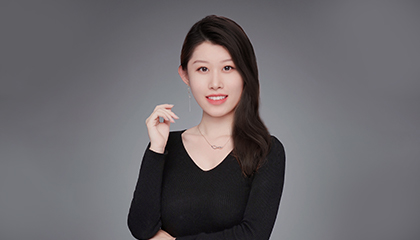
He
A Cambridge master's after a computer science degree with a mathematics minor at the University of Nebraska-Lincoln, and a US high school GPA of 4.13. Six years overseas and teaches entirely in English, across AMC, Math League, AP Computer Science and AP Calculus.
Where it is taught
Hanlin learning centres.
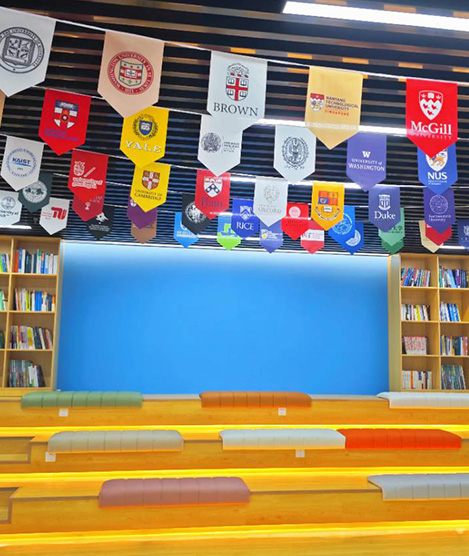
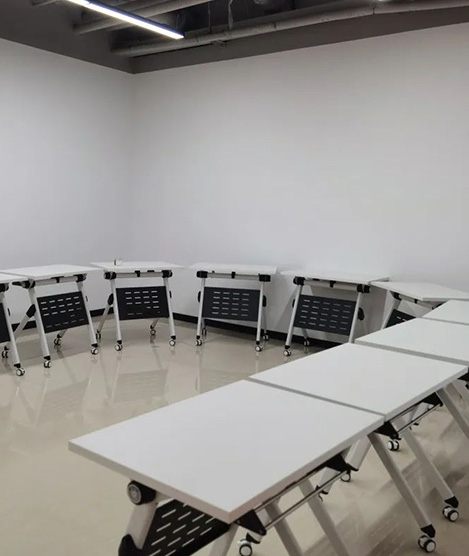
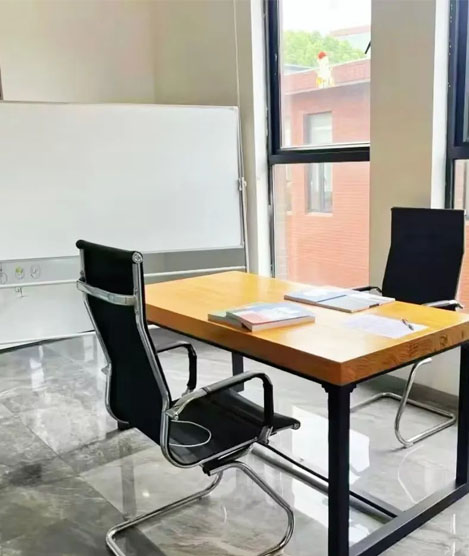
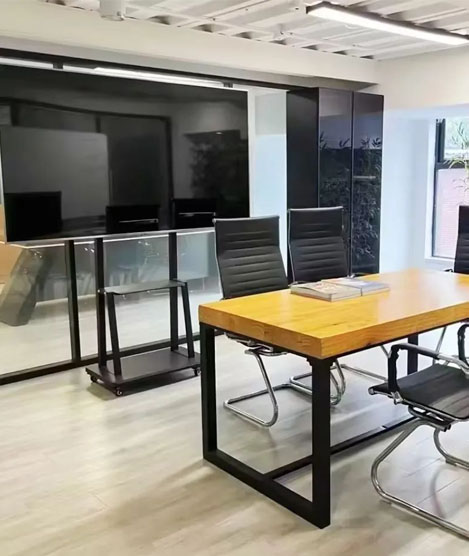
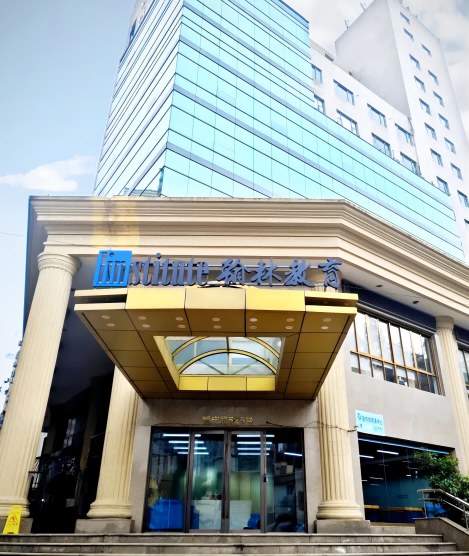
Teaching runs from Hanlin's own centres in Shanghai, Shenzhen, Chengdu and Hangzhou, and online for students elsewhere.


Talk to an advisor
Everything Hanlin does for SEAMO, in one conversation.
Entry, planning, coaching and the past papers. An advisor will tell you which of these a student actually needs, including when the answer is none of them.
Competition entry and planning
Which competitions suit this student, in what order, and by when - then we handle the registration, including the ones that can only be entered through a school or a centre.
Competition coaching
Taught by full-time subject tutors, on a course tier chosen by placement paper rather than by year group.
International curriculum tutoring
IB, AP, A-Level, IGCSE and the US high school curriculum, taught alongside school and timed around the exam calendar.
Competition past papers, free
A large library of past papers, mark schemes and syllabus breakdowns across every competition on this site. No charge and no enrolment.
Scan to add an advisor
Say which competition or course you are asking about. Replies in Chinese or English.
Or call +86 21 6352 6630FAQ
SEAMO, briefly answered.
What students and families ask before entering.
Who can enter SEAMO?
Students from grade 1 to grade 12, roughly ages 5 to 18. Seven difficulty levels cover the range, and a student is assigned one from their year group at registration.
How much of the material is taught at school?
The organisers state that only 50 to 60% of olympiad concepts appear in school curricula, and recommend working through olympiad material before entering.
What is on the paper?
For grade 1, ten multiple-choice and five fill-in questions in 40 minutes. For every other level, twenty multiple-choice and five fill-in questions in 90 minutes.
How are awards decided?
Gold to the top 8%, silver to the top 20% and bronze to the top 40%, awarded separately within each difficulty level. Everyone below bronze receives a participation certificate.
Who can go on to SEAMO X?
Medallists enter the Champions League. Students holding a participation certificate enter the Open division, which is ranked separately - so the international round is not restricted to medallists.
Where is SEAMO X held?
Confirm this directly with the organiser before booking travel. The published material gives Singapore, Malaysia and Bangkok in different places, and places at the global round are limited and allocated first come, first served.
What is the Legendary award?
It goes to a student who wins gold in three different SEAMO competitions across three consecutive years. It cannot be earned in a single season.
How do I register?
Either through an advisor, who supplies the entry form, or directly on the official site. After payment an admission slip is emailed; it must be printed and brought on the day, and the candidate number on it is used for marking.
Related
The rest of this family.
Contests students commonly sit alongside or after SEAMO.
SEAMO enquiries
Half the syllabus is not in the school syllabus.
The organisers are explicit that school mathematics covers only about half of what SEAMO tests. Tell us the student’s year group and an advisor will set out the level they will sit and what needs covering before October.