
Competitions · Mathematics · MMT
MMT, the Mustang Math Tournament.
Built jointly by the people who run the Stanford, Berkeley and Johns Hopkins tournaments, for students in grades 4 to 8. One round hands a team a puzzle type they have never seen, gives them fifteen minutes to learn the rules, and then an hour to solve as many as they can.

At a glance
What the tournament is, and how you get in.
Mustang Math is a non-profit set up by the directors of the Stanford and Berkeley mathematics tournaments, and MMT is run jointly with the Johns Hopkins competition organisation. Entry is by invitation from a qualifying contest.
- Organiser
- Mustang Math, a non-profit founded by the heads of the Stanford and Berkeley tournaments, working with the Johns Hopkins organisation
- Who can enter
- Students in grades 4 to 8 who have won a silver award or better at AMO, SASMO or SMGF
- Team size
- Three to four students. The organisers describe a full team as four, and will match students who cannot find teammates
- Rounds
- One individual paper and four team rounds, none of which resembles a conventional question set
- Divisions
- Set by the team’s oldest member. A team may enter a division above its own but never below
- When
- March or April each year
- Format
- Online
- Language
- English
- Preparation provided
- Eight hours of recorded training from the tournament’s own development team, free to registered entrants
- What it tests
- The organisers list teamwork, sharing methods, devising a strategy and adapting under pressure alongside mathematical ability
Divisions
Your oldest member decides your division.
This is the first strategic decision an MMT team makes, and it is made when the team is assembled rather than on the day.
Foal, up to grade 6
A team whose oldest member is in grade 6. Adding one older student moves the whole team up a division, so a strong grade 7 recruit is not automatically an improvement.
Colt, up to grade 7
A team whose oldest member is in grade 7. The middle division, and where most teams with a mixed age range end up.
Stallion, up to grade 8
A team whose oldest member is in grade 8. Any team may also choose to enter a division above its own, but never one below.
The team rounds
Four rounds, four completely different games.
Very few tournaments make each round a distinct format. MMT makes all four distinct, and none of them is a paper of ordinary questions.
Mounting Mayhem: learn, then solve
Twenty-two Slitherlink puzzles in three variants - standard, Pigs and Wolves, and non-square - half basic and half advanced. Teams get fifteen minutes to learn the rules and sixty to solve as many as they can.
Herding Hexes: difficulty by distance
Twenty-six questions laid out on a hexagonal grid, in forty-five minutes. The further a question sits from the centre the harder it is - 2 marks for the first ten, 3 for the next nine, 4 for the last seven.
Gallop: nine sets, then an estimate
Twenty-seven questions in nine sets of three over an hour, rising in difficulty and value to 420 marks. The final set is estimation, scored on how close the answer comes rather than on being exact.
Relay Rodeo: four suits and a Joker
Twenty-one questions dealt as four suits of five plus one Joker, in forty-five minutes. Answers chain within a suit, and the Joker depends on the last question of every suit - so it cannot be attempted until all four are done.
Awards
Consecutive bands, individually and by team.
The bands are successive slices rather than cumulative thresholds, and every entrant lands in one of them.
| Award | Individual | Team |
|---|---|---|
| Gold | Top 10% | Top 8% of teams |
| Silver | The next 15% | The next 12% of teams |
| Bronze | The next 25% | The next 20% of teams |
| Honourable mention | The next 20% | — |
| Participation | The remaining 30% | — |
Individual bands account for the whole field. Half of all entrants finish with a bronze or better.
Grand Champion
How the overall title is decided.
A separate title is awarded in each year group large enough to support it, and it is calculated in an unusual way.
Medals convert to points
A gold counts 10, a silver 7 and a bronze 4. A competitor’s individual and team medals are converted and added, and the highest combined total takes the title.
Which means the team result counts twice
Because a team medal converts on the same scale as an individual one, a student on a strong team has a real advantage in this ranking regardless of their own paper.
Only in year groups above fifty entrants
The title is awarded per grade, and only where more than fifty students entered that grade. In a thin year group it may not be awarded at all.
Vouchers and honour society points
The champion receives a US$150 voucher and three points toward the International Junior Honour Society, with US$100 and two points for second and US$50 and one point for third.
Preparation
How Hanlin prepares an MMT team.
MMT is the least conventional tournament on this site. Preparing for it by doing more mathematics problems misses most of what it measures.
Learning a game under a clock
Mounting Mayhem gives fifteen minutes to absorb a puzzle type from scratch. That is a trainable skill: teams practise reading an unfamiliar rule set quickly and agreeing how to attack it.
Deciding the division when you build the team
Because the oldest member sets the division, team composition is a strategic call made weeks before the tournament rather than a matter of who is available.
The Joker cannot be rushed
Relay Rodeo’s final question needs the last answer from all four suits, so a team that neglects one suit forfeits six marks it cannot otherwise reach. Sequencing the round is the round.
What the organisers recommend
Past papers from MMT itself, MATHCOUNTS and BmMT. All three reward the same combination of speed, collaboration and unfamiliar formats.
Why Hanlin
Preparation for MMT at Hanlin is taught by full-time subject tutors, on a course tier chosen by placement paper rather than by year group.
Programme formats
Five ways this is taught.
Group size is the whole difference between these. It decides how much of the tutor's attention a student gets and how far the course can bend to them, so it is worth choosing rather than accepting.
| Format | Group size | What it suits |
|---|---|---|
| One-to-one | One student | Content, pace and emphasis set by what this student actually needs rather than by a syllabus. The only format that can be rebuilt mid-course. |
| Small group | Three to eight | Opens at three. Frequent discussion, and the tutor can slow down or move on according to what the group has absorbed. Most students chasing a higher award are taught in this one. |
| Class | Eight to twelve | Taught by the subject lead or a medal coach. Less back-and-forth, so it suits a student who will say when something is unclear. |
| Large class | Ten to twenty | For students in the middle of the placement range, and a way to try a competition before committing. Students often move to a small group or to one-to-one afterwards. |
| Past-paper class | No cap | Past papers worked through in sequence in the weeks before the sitting. Free to students already enrolled. |
Course length for MMT is set after a placement paper. The gap between where a student is and what the paper asks for is what the course has to close, and that gap is not the same for two students in the same year group.
How it runs
Six steps, four people on your side.
The same process for every student, so that nothing depends on one tutor remembering to do it.
 Step 1
Pre-course assessment
A placement paper before anything is booked, so the course tier is chosen on evidence rather than on a year group.
 Step 2
Tutor matching
A subject tutor is matched to the result, and their full background is provided before you agree to it.
 Step 3
Plan and group
A study group opens with four people on one student: the tutor, a planner, a supervisor and an academic manager.
 Step 4
Scheduled teaching
The teaching office sets the timetable around the competition date and school term, and teaching begins.
 Step 5
After-class reports
What was covered, and how the student handled it, reported after every lesson.
 Step 6
Homework follow-up
The teaching assistant and the form teacher both check that homework is done, which is where most preparation quietly fails.
Free resource pack
Past papers and preparation pack
The same material our own MMT students work from. Scan the code, say what you need, and an advisor sends it.

Tell an advisor which competition and year group, and the material comes back the same day. Free, and you do not have to enrol in anything. If we do not already hold what you need, we will go and find it.
- PDFPast papers, every year the organiser has released
- PDFWorked solutions, where the organiser publishes them
- PDFThe syllabus on one page - every topic, and how heavily it is examined
- PDFEntry checklist and the dates for the current cycle
Teaching team
Who would teach it.
Three of the twenty-two tutors on the published Hanlin roster - the ones whose subject this is.

Dr Zhang
PhD in theoretical mathematics from the University of Rochester and a postdoctoral fellow at the Shanghai Center for Mathematical Sciences at Fudan. An AMC-accredited coach, ASDAN-accredited for DMM and ITCCC, and an accredited UKMT BMO2 and PUMaC coach. His students have gone on to read mathematics and physics at Harvard, MIT, Princeton, Caltech and Cambridge.

Dr Zhuang
PhD in mathematics from the University of Denver, working in mathematical logic, after a first degree in applied mathematics at Southeast University. A repeat conference speaker on his research, with three years lecturing and assisting on undergraduate mathematics at Denver.

He
A Cambridge master's after a computer science degree with a mathematics minor at the University of Nebraska-Lincoln, and a US high school GPA of 4.13. Six years overseas and teaches entirely in English, across AMC, Math League, AP Computer Science and AP Calculus.
Where it is taught
Hanlin learning centres.
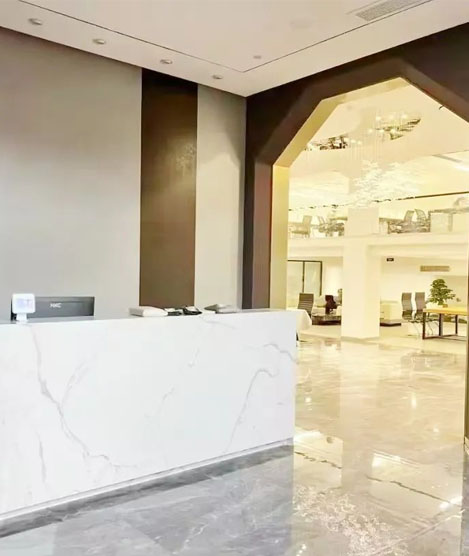
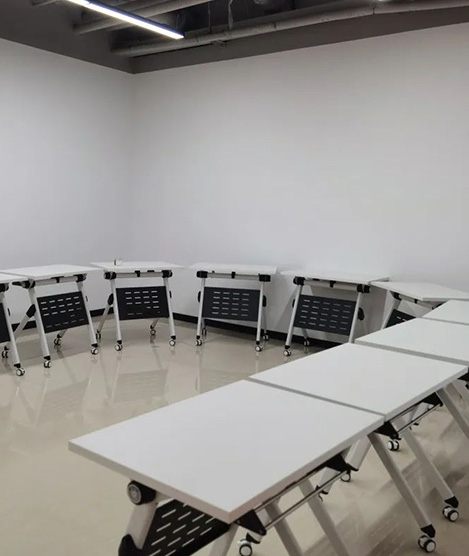
Teaching runs from Hanlin's own centres in Shanghai, Shenzhen, Chengdu and Hangzhou, and online for students elsewhere.





Talk to an advisor
Everything Hanlin does for MMT, in one conversation.
Entry, planning, coaching and the past papers. An advisor will tell you which of these a student actually needs, including when the answer is none of them.
Competition entry and planning
Which competitions suit this student, in what order, and by when - then we handle the registration, including the ones that can only be entered through a school or a centre.
Competition coaching
Taught by full-time subject tutors, on a course tier chosen by placement paper rather than by year group.
International curriculum tutoring
IB, AP, A-Level, IGCSE and the US high school curriculum, taught alongside school and timed around the exam calendar.
Competition past papers, free
A large library of past papers, mark schemes and syllabus breakdowns across every competition on this site. No charge and no enrolment.
Scan to add an advisor
Say which competition or course you are asking about. Replies in Chinese or English.
Or call +86 21 6352 6630FAQ
MMT, briefly answered.
What students and families ask before entering a team.
Who can enter MMT?
Students in grades 4 to 8 who have won a silver award or better at AMO, SASMO or SMGF. Entry runs through those qualifying contests rather than through a direct registration.
How big is a team?
Three to four students, with the organisers describing four as a full team. Students who cannot find teammates are matched automatically.
Which division will we be in?
The one set by your oldest member: grade 6 for Foal, grade 7 for Colt, grade 8 for Stallion. A team may choose to enter a higher division but never a lower one.
What are the four team rounds?
Mounting Mayhem, a set of Slitherlink puzzles with fifteen minutes to learn the rules; Herding Hexes, on a hexagonal grid where difficulty rises with distance from the centre; Gallop, nine escalating sets ending in estimation; and Relay Rodeo, four suits of chained questions plus a Joker.
What is the individual round?
Twenty questions in sixty minutes, answered as fill-in or short answer. Individual scores also contribute to the team result.
Is there any preparation provided?
Yes. Registered entrants receive eight hours of recorded training from the tournament’s own development team at no cost.
How is the Grand Champion decided?
Medals are converted to points - gold 10, silver 7, bronze 4 - and a competitor’s individual and team medals are added. It is awarded per year group, and only where more than fifty students entered that grade.
What should we practise on?
The organisers recommend past papers from MMT, MATHCOUNTS and BmMT, which reward the same mix of speed, collaboration and unfamiliar formats.
Related
How students reach MMT, and what sits alongside it.
The qualifying contests, and the papers the organisers recommend for practice.
MMT enquiries
Your oldest teammate decides which division you face.
MMT qualifies from AMO, SASMO or SMGF, and the team you assemble determines the field you compete against. Tell us who has qualified and their year groups, and an advisor will work through the division and the entry.