
Competitions · Mathematics · MOEMS
MOEMS, Math Olympiads for Elementary and Middle Schools.
Five contests of five questions, one a month from November to March, entered by teams rather than individuals. Founded in 1977 and now drawing around 170,000 students in over 6,000 teams from more than thirty countries, it is built to be run inside a school over a whole season rather than sat in a single morning.
At a glance
What MOEMS is, and how a school runs it.
MOEMS was founded in 1977 by the American educator Dr George Lenchner. Unlike most contests on this site it is not a single sitting: it is a season, hosted and marked by the school itself.
- Organiser
- MOEMS, founded in 1977 by Dr George Lenchner
- Who competes
- Students in grades 4 to 8, in two divisions. Division E is for grades 4 to 6 and Division M for grades 6 to 8
- Scale
- Around 170,000 students in more than 6,000 teams across over thirty countries in a recent year
- Structure
- Five monthly contests between November and March, each of five non-routine questions in 30 minutes
- Where
- At the school - public, private, home school or a qualified educational institution. Papers may be sat online or on paper; the questions are the same either way
- Marking
- The hosting institution marks the papers and enters results online. All results must be submitted by 31 March
- Scoring
- One mark per correct answer, so five per contest and twenty-five across the season. A team scores the sum of its ten highest individual totals, to a maximum of 250
- Equipment
- No calculators, rulers, graph paper or other aids. Any concept beyond the expected range is defined in the question itself
- Language
- English
- Question types
- Multiple choice and fill-in
Team rules
Four rules that decide how a team is built.
MOEMS is entered as a team, and the composition rules are stricter than they first appear - getting one of them wrong can cost the team its award eligibility.
Up to 35 students, and more than one team
A team may have as many as 35 members, and a single school may enter several teams. That makes it practical to enter a whole year group rather than a selected few, which is much of the point of the format.
One division per team
A team enters Division E or Division M, never both. If a team includes any student in grade 7 or 8, it must enter Division M - so a mixed team is pushed up to the harder paper by its oldest members.
Grade 8 is the ceiling
No team may include a student above grade 8. Students below grade 4 are permitted to take part, but the organisers do not recommend it without proper support, because the questions assume a grade 4 footing.
One school per team, for awards
A team drawn from more than one school is classed as a regional or institute team. It may compete, but it is not eligible for the team awards - which is worth knowing before combining students across schools.
Individual scores
What a score out of 25 is worth.
The two divisions are marked on the same 25-point scale but ranked separately, and the difference between them is large: 14 marks puts a Division M student in the top 20% and a Division E student only in the top 30%.
| Percentile | Division E, grades 4-6 | Division M, grades 6-8 |
|---|---|---|
| Top 2% | 23 and above | 23 and above |
| Top 10% | 19 and above | 18 and above |
| Top 20% | 16 and above | 14 and above |
| Top 25% | 15 and above | 12 and above |
| Top 30% | 14 and above | 11 and above |
| Top 40% | 12 and above | 8 and above |
| Top 50% | 10 and above | 6 and above |
A grade 6 student may be entered in either division. These two columns are the clearest argument for thinking carefully about which - the same performance is read very differently depending on the field it is ranked against.
Team scores
What a team total out of 250 is worth.
A team score is the sum of its ten best individual totals, so it rewards depth rather than one exceptional student - a team of eleven strong mathematicians beats a team of one prodigy and thirty-four others.
| Percentile | Division E | Division M |
|---|---|---|
| Top 10% | 194 | 185 |
| Top 20% | 177 | 155 |
| Top 25% | 169 | 142 |
| Top 30% | 162 | 134 |
| Top 40% | 151 | 111 |
| Top 50% | 140 | 91 |
The Division M thresholds fall away much faster than the Division E ones, which reflects both a harder paper and a wider spread of ability in the older field.
Awards
What students and teams take away.
Recognition is deliberately broad. Every entrant receives a certificate, and half the field receives something beyond it.
The individual honours
The Dr George Lenchner Award goes to a perfect score of 25. Each team’s highest scorer receives the Highest Score Award, and other strong team members receive honourable mention.
Pins, patches and certificates
A competition pin goes to the top 10% of individuals and an embroidered patch to the top 50%. Every entrant, regardless of score, receives a certificate for taking part in the season.
Team medals and achievement
Medals go to teams in the top 10%, and an Achievement Award certificate to those placing between 11% and 20% within their division. Regional and institute teams are not eligible for these.
Awards by year group
Separate certificates recognise the top 20% within a year group - fourth, fifth and seventh grade, and sixth grade within Division M - so a younger student in a mixed team is measured against their own peers.
Registration
Team fees, and why registering early matters.
MOEMS charges per team rather than per student, which is what makes entering a whole year group affordable. The fee nearly doubles between the earliest and latest windows, so the date a school decides is worth real money.
| Registration window | US, Canada and Mexico | International teams |
|---|---|---|
| Early bird, registered and paid in full by 31 July | US$175 | US$215 |
| Standard, by 15 October | US$200 | US$240 |
| Late, by 31 October | US$250 | US$290 |
| Last chance, from 1 November | US$300 | US$340 |
Figures are the organiser’s published fees for the 2025-26 season, paid by the team directly to MOEMS. Because a team may hold up to 35 students, the cost per student falls sharply as the team grows.
Preparation
How Hanlin prepares students for MOEMS.
Five questions in thirty minutes, once a month for five months, is a very different rhythm from a single annual paper - and it is the rhythm that determines how preparation should be organised.
Six minutes a question
Each contest gives thirty minutes for five problems, so there is no time to be stuck. Students practise recognising quickly whether a problem is one they can start, and moving on decisively when it is not.
Non-routine, by design
MOEMS problems are chosen to be unfamiliar rather than difficult, and no advanced technique is needed - anything unusual is defined in the question. What is trained is the habit of finding a way in when nothing looks familiar.
Improving across five rounds
Because the season runs monthly, each contest is a diagnostic for the next. Reviewing the five questions immediately after each round is the single highest return activity in a MOEMS season.
Building the team’s top ten
A team scores on its ten best totals, so the marginal student matters more than the strongest one. Preparation is aimed at lifting a broad group over the threshold rather than at perfecting a few.
Why Hanlin
Preparation for MOEMS at Hanlin is taught by full-time subject tutors, on a course tier chosen by placement paper rather than by year group.
Programme formats
Five ways this is taught.
Group size is the whole difference between these. It decides how much of the tutor's attention a student gets and how far the course can bend to them, so it is worth choosing rather than accepting.
| Format | Group size | What it suits |
|---|---|---|
| One-to-one | One student | Content, pace and emphasis set by what this student actually needs rather than by a syllabus. The only format that can be rebuilt mid-course. |
| Small group | Three to eight | Opens at three. Frequent discussion, and the tutor can slow down or move on according to what the group has absorbed. Most students chasing a higher award are taught in this one. |
| Class | Eight to twelve | Taught by the subject lead or a medal coach. Less back-and-forth, so it suits a student who will say when something is unclear. |
| Large class | Ten to twenty | For students in the middle of the placement range, and a way to try a competition before committing. Students often move to a small group or to one-to-one afterwards. |
| Past-paper class | No cap | Past papers worked through in sequence in the weeks before the sitting. Free to students already enrolled. |
Course length for MOEMS is set after a placement paper. The gap between where a student is and what the paper asks for is what the course has to close, and that gap is not the same for two students in the same year group.
How it runs
Six steps, four people on your side.
The same process for every student, so that nothing depends on one tutor remembering to do it.
 Step 1
Pre-course assessment
A placement paper before anything is booked, so the course tier is chosen on evidence rather than on a year group.
 Step 2
Tutor matching
A subject tutor is matched to the result, and their full background is provided before you agree to it.
 Step 3
Plan and group
A study group opens with four people on one student: the tutor, a planner, a supervisor and an academic manager.
 Step 4
Scheduled teaching
The teaching office sets the timetable around the competition date and school term, and teaching begins.
 Step 5
After-class reports
What was covered, and how the student handled it, reported after every lesson.
 Step 6
Homework follow-up
The teaching assistant and the form teacher both check that homework is done, which is where most preparation quietly fails.
Free resource pack
Past papers and preparation pack
The same material our own MOEMS students work from. Scan the code, say what you need, and an advisor sends it.

Tell an advisor which competition and year group, and the material comes back the same day. Free, and you do not have to enrol in anything. If we do not already hold what you need, we will go and find it.
- PDFPast papers, every year the organiser has released
- PDFWorked solutions, where the organiser publishes them
- PDFThe syllabus on one page - every topic, and how heavily it is examined
- PDFEntry checklist and the dates for the current cycle
Teaching team
Who would teach it.
Three of the twenty-two tutors on the published Hanlin roster - the ones whose subject this is.

Dr Zhang
PhD in theoretical mathematics from the University of Rochester and a postdoctoral fellow at the Shanghai Center for Mathematical Sciences at Fudan. An AMC-accredited coach, ASDAN-accredited for DMM and ITCCC, and an accredited UKMT BMO2 and PUMaC coach. His students have gone on to read mathematics and physics at Harvard, MIT, Princeton, Caltech and Cambridge.

Dr Zhuang
PhD in mathematics from the University of Denver, working in mathematical logic, after a first degree in applied mathematics at Southeast University. A repeat conference speaker on his research, with three years lecturing and assisting on undergraduate mathematics at Denver.

He
A Cambridge master's after a computer science degree with a mathematics minor at the University of Nebraska-Lincoln, and a US high school GPA of 4.13. Six years overseas and teaches entirely in English, across AMC, Math League, AP Computer Science and AP Calculus.
Where it is taught
Hanlin learning centres.
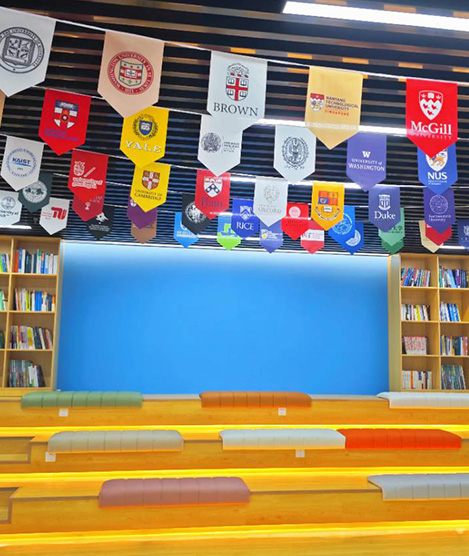
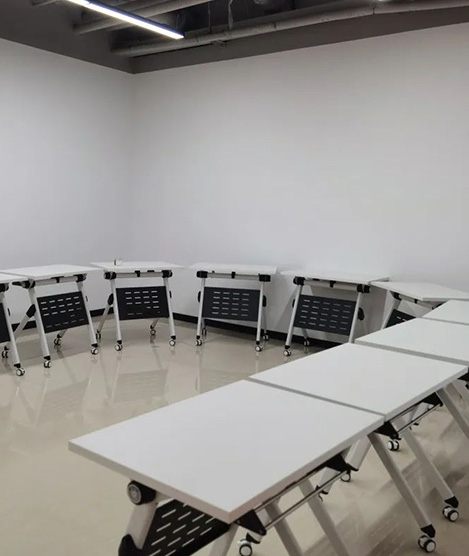
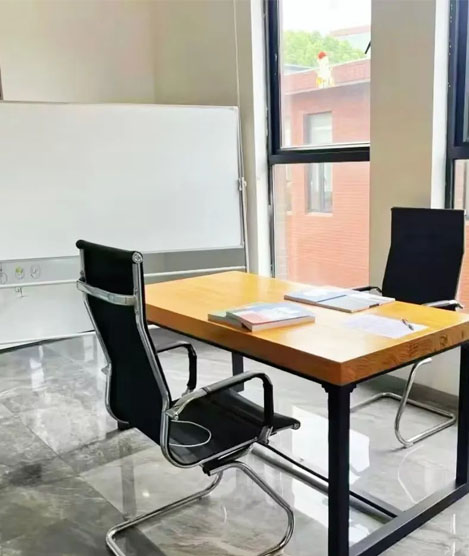
Teaching runs from Hanlin's own centres in Shanghai, Shenzhen, Chengdu and Hangzhou, and online for students elsewhere.




Talk to an advisor
Everything Hanlin does for MOEMS, in one conversation.
Entry, planning, coaching and the past papers. An advisor will tell you which of these a student actually needs, including when the answer is none of them.
Competition entry and planning
Which competitions suit this student, in what order, and by when - then we handle the registration, including the ones that can only be entered through a school or a centre.
Competition coaching
Taught by full-time subject tutors, on a course tier chosen by placement paper rather than by year group.
International curriculum tutoring
IB, AP, A-Level, IGCSE and the US high school curriculum, taught alongside school and timed around the exam calendar.
Competition past papers, free
A large library of past papers, mark schemes and syllabus breakdowns across every competition on this site. No charge and no enrolment.
Scan to add an advisor
Say which competition or course you are asking about. Replies in Chinese or English.
Or call +86 21 6352 6630FAQ
MOEMS, briefly answered.
What schools and families ask before entering a season.
Who can take part in MOEMS?
Students in grades 4 to 8, entered as a team by a school or qualified institution. Division E is for grades 4 to 6 and Division M for grades 6 to 8. Students below grade 4 may take part but it is not recommended without support.
How does the season work?
Five contests, one a month from November to March. Each has five non-routine questions and lasts 30 minutes. Scores accumulate across the five, to a maximum of 25 for an individual.
How are team scores calculated?
A team score is the sum of its ten highest individual totals after all five contests, so the maximum is 250. It rewards a strong group rather than one outstanding student.
Which division should a grade 6 student enter?
Either is allowed, and it matters. A grade 6 student in Division E is ranked against younger students on an easier scale; in Division M, against older ones. A team containing any grade 7 or 8 student must enter Division M regardless.
Can students from different schools form a team?
They can compete, but such a team is classed as a regional or institute team and is not eligible for the team awards.
Are calculators allowed?
No. Calculators, rulers, graph paper and other aids are all prohibited. Any concept that goes beyond the expected knowledge range is defined within the question.
Who marks the papers?
The hosting school or institution marks them and enters the results online. All results for a season must be submitted by 31 March.
What does it cost to enter?
MOEMS charges per team, not per student. For the 2025-26 season the published fees ran from US$175 for an early-bird team in the US, Canada or Mexico to US$340 for an international team registering at the last opportunity.
Related
Other contests at this age.
What schools usually run alongside or after a MOEMS season.
MOEMS enquiries
Register the team in July, not in November.
The fee nearly doubles across the registration windows and the season starts in November. Tell us the year groups you want to enter and roughly how many students, and an advisor will set out the divisions and the calendar.