
Competitions · Mathematics · CSMC
CSMC, the Canadian Senior Mathematics Contest.
The senior paper in Waterloo’s November pair, and the only contest in the CEMC family whose syllabus is stated to run past the school curriculum. Nine questions in two hours, with half the marks reserved for three problems whose full argument has to be written out.

At a glance
What the contest is, and who sits it.
CEMC has run this series since 1963, with more than 230,000 students taking part across its history. CSMC is the senior paper, and the one that assumes the most.
- Organiser
- The Centre for Education in Mathematics and Computing (CEMC) at the University of Waterloo, home to the largest independent faculty of mathematics in the world
- Who sits it
- Students in grades 10 and 11, and students in the Quebec CEGEP system
- Syllabus
- Built on grade 12 mathematics and on material beyond the high-school curriculum. This is the substantive difference from every other contest in the family, which stay within what has been taught
- Format
- Nine questions in two parts: six answer-only and three requiring a full written solution
- Duration
- 120 minutes
- Marks
- 60 in total - 5 for each answer-only question and 10 for each full-solution question, so the written half carries exactly half the paper
- Marking
- Judged on completeness, clarity and the working shown. A correct answer without a clear and complete solution will not receive full marks
- Language
- English
- Where
- On paper, in person, at a partner school
- Registration
- Through the school, which registers candidates as a group. CEMC publishes a fee of $14 per entrant
- Calculators
- Permitted for numerical work, but not models with internet access, device communication, stored formulas or notes, a computer algebra system, or dynamic geometry software
The demand
What makes the senior paper senior.
CSMC is sat mainly by grade 10 and 11 students against a grade 12 and beyond syllabus. That inversion is deliberate, and it is what the preparation has to account for.
Content ahead of the year group
The syllabus is stated as grade 12 mathematics and material past it, while the entrants are mostly in grades 10 and 11. A candidate is expected to meet ideas before their school has taught them, which no other CEMC paper asks.
Half the marks are written
Three questions at ten marks each carry exactly half the paper, and they are marked on completeness, clarity and process. A correct answer with thin working does not score full marks; incomplete reasoning that is correct as far as it goes does score.
Two hours, unevenly spent
Nine questions in 120 minutes, but the six answer-only questions are worth half what the three written ones are. Time has to be allocated by mark rather than by question, which is the commonest planning error on this paper.
Repeatable across years
A grade 10 student can sit CSMC and sit it again in grade 11, improving against the same standard. Because preparation is short relative to the return, entering more than once is the normal pattern rather than the exception.
Awards
Certificates, medals, honour rolls and prize money.
The award structure matches the rest of the family, with the senior paper carrying the larger cash prize.
Certificate of Distinction
Awarded to the top 25% of entrants, the same threshold CEMC uses across all its contests. That consistency is what lets a CSMC result be read alongside a Euclid or CIMC result without further explanation.
The school champion
A Contest Medal goes to the champion at each participating school, decided by the CEMC executive committee - a distinction that does not depend on how the global field performed that year.
Four honour rolls
Top scorers are named on regional, provincial, Canadian and international honour rolls, with strong results from unofficial entrants at Canadian schools listed separately rather than merged in.
Prize money at the top
The five highest-scoring official Canadian entrants each receive a medal and $500 - the largest cash prize in the CEMC series, and a reflection of the senior paper sitting at the top of it.
Teams and admissions
What a school and a candidate each get out of it.
CSMC is entered individually, but a school may also opt into a team standing - and for some candidates the result reaches further than either ranking.
Five scores make a team
A school’s team score is the sum of its five highest individual results. Because entering is optional, a school with depth has something to gain by opting in and a school relying on one strong candidate has little.
Zone, provincial and national
Canadian schools are ranked at three levels, with Canadian Champion, Provincial Champion and Zone Champion certificates. Schools outside Canada join the rankings and appear on the team honour rolls.
A direct route to Waterloo
Waterloo may select students from among the award winners for direct admission with a full scholarship. Very few school-age contests carry a consequence that specific.
Recognised beyond Waterloo
Results across the Waterloo series are recognised by universities in Canada and the United States, and a top-quarter finish is read as evidence of mathematical and English-language ability together.
Season
How the year runs.
CSMC is sat on the same two days as CIMC, which means a school runs both papers in one sitting window.
Registration closes
Schools register their candidates. For the 2026 cycle the deadline was 22 October.
Contest day
North and South America sit on the Wednesday, other regions on the Thursday - 18 and 19 November for the 2026 cycle.
Scripts returned to CEMC
The school returns all materials to CEMC, which marks the written solutions centrally.
Results and certificates
CEMC returns the marked results to the school, which distributes the certificates and any medals with them.
Preparation
How Hanlin prepares students for CSMC.
Unlike the rest of the family, preparation here genuinely involves content the student has not been taught yet - as well as the writing.
Working ahead of the syllabus
Because the paper reaches into grade 12 material and past it, preparation covers topics before school does. CEMC publishes open courseware for the grade 12 content specifically, which is the natural starting point.
Writing up full solutions
Half the marks depend on a written argument being complete and legible. Students practise writing up problems they have already solved, checking against CEMC’s own published solutions to see what full credit requires.
Waterloo’s free material
Past papers going back years, CEMC’s official publications, the weekly Math Circles sessions Waterloo runs, and the other resources on the CEMC site. All of it is free and pitched at exactly this level.
Allocating by marks
Timed papers are run so that candidates finish the answer-only half briskly and reach the three written questions with real time in hand. Marks, not question count, decide where the two hours go.
Why Hanlin
Preparation for CSMC at Hanlin is taught by full-time subject tutors, on a course tier chosen by placement paper rather than by year group.
Programme formats
Five ways this is taught.
Group size is the whole difference between these. It decides how much of the tutor's attention a student gets and how far the course can bend to them, so it is worth choosing rather than accepting.
| Format | Group size | What it suits |
|---|---|---|
| One-to-one | One student | Content, pace and emphasis set by what this student actually needs rather than by a syllabus. The only format that can be rebuilt mid-course. |
| Small group | Three to eight | Opens at three. Frequent discussion, and the tutor can slow down or move on according to what the group has absorbed. Most students chasing a higher award are taught in this one. |
| Class | Eight to twelve | Taught by the subject lead or a medal coach. Less back-and-forth, so it suits a student who will say when something is unclear. |
| Large class | Ten to twenty | For students in the middle of the placement range, and a way to try a competition before committing. Students often move to a small group or to one-to-one afterwards. |
| Past-paper class | No cap | Past papers worked through in sequence in the weeks before the sitting. Free to students already enrolled. |
Course length for CSMC is set after a placement paper. The gap between where a student is and what the paper asks for is what the course has to close, and that gap is not the same for two students in the same year group.
How it runs
Six steps, four people on your side.
The same process for every student, so that nothing depends on one tutor remembering to do it.
 Step 1
Pre-course assessment
A placement paper before anything is booked, so the course tier is chosen on evidence rather than on a year group.
 Step 2
Tutor matching
A subject tutor is matched to the result, and their full background is provided before you agree to it.
 Step 3
Plan and group
A study group opens with four people on one student: the tutor, a planner, a supervisor and an academic manager.
 Step 4
Scheduled teaching
The teaching office sets the timetable around the competition date and school term, and teaching begins.
 Step 5
After-class reports
What was covered, and how the student handled it, reported after every lesson.
 Step 6
Homework follow-up
The teaching assistant and the form teacher both check that homework is done, which is where most preparation quietly fails.
Free resource pack
Past papers and preparation pack
The same material our own CSMC students work from. Scan the code, say what you need, and an advisor sends it.

Tell an advisor which competition and year group, and the material comes back the same day. Free, and you do not have to enrol in anything. If we do not already hold what you need, we will go and find it.
- PDFPast papers, every year the organiser has released
- PDFWorked solutions, where the organiser publishes them
- PDFThe syllabus on one page - every topic, and how heavily it is examined
- PDFEntry checklist and the dates for the current cycle
Teaching team
Who would teach it.
Three of the twenty-two tutors on the published Hanlin roster - the ones whose subject this is.

Dr Zhang
PhD in theoretical mathematics from the University of Rochester and a postdoctoral fellow at the Shanghai Center for Mathematical Sciences at Fudan. An AMC-accredited coach, ASDAN-accredited for DMM and ITCCC, and an accredited UKMT BMO2 and PUMaC coach. His students have gone on to read mathematics and physics at Harvard, MIT, Princeton, Caltech and Cambridge.

Dr Zhuang
PhD in mathematics from the University of Denver, working in mathematical logic, after a first degree in applied mathematics at Southeast University. A repeat conference speaker on his research, with three years lecturing and assisting on undergraduate mathematics at Denver.

He
A Cambridge master's after a computer science degree with a mathematics minor at the University of Nebraska-Lincoln, and a US high school GPA of 4.13. Six years overseas and teaches entirely in English, across AMC, Math League, AP Computer Science and AP Calculus.
Where it is taught
Hanlin learning centres.
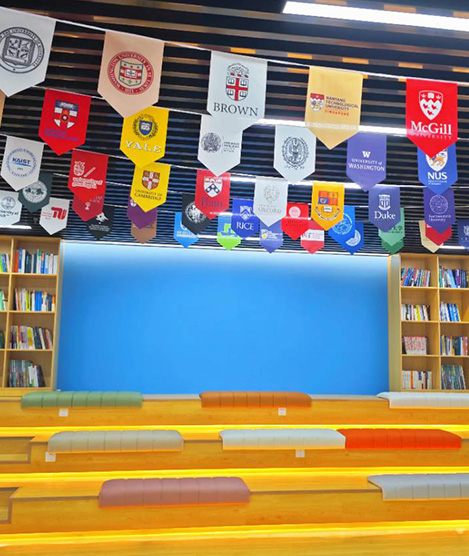
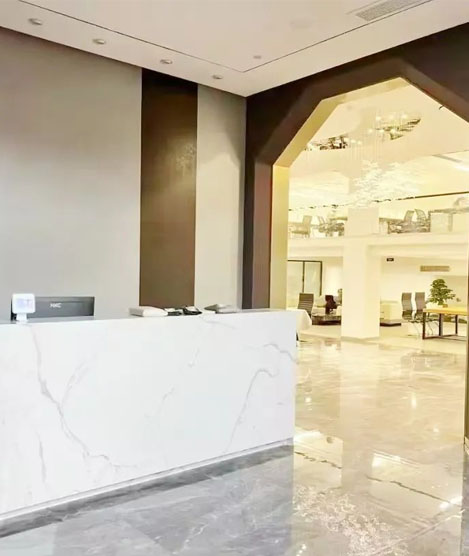
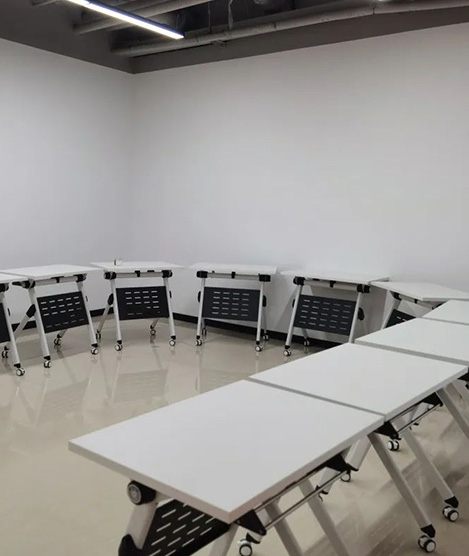
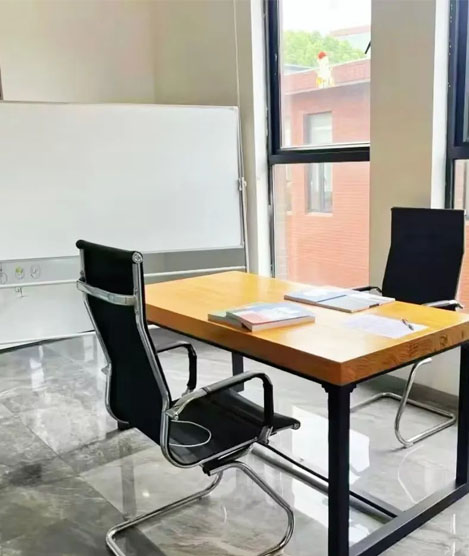
Teaching runs from Hanlin's own centres in Shanghai, Shenzhen, Chengdu and Hangzhou, and online for students elsewhere.


Talk to an advisor
Everything Hanlin does for CSMC, in one conversation.
Entry, planning, coaching and the past papers. An advisor will tell you which of these a student actually needs, including when the answer is none of them.
Competition entry and planning
Which competitions suit this student, in what order, and by when - then we handle the registration, including the ones that can only be entered through a school or a centre.
Competition coaching
Taught by full-time subject tutors, on a course tier chosen by placement paper rather than by year group.
International curriculum tutoring
IB, AP, A-Level, IGCSE and the US high school curriculum, taught alongside school and timed around the exam calendar.
Competition past papers, free
A large library of past papers, mark schemes and syllabus breakdowns across every competition on this site. No charge and no enrolment.
Scan to add an advisor
Say which competition or course you are asking about. Replies in Chinese or English.
Or call +86 21 6352 6630FAQ
CSMC, briefly answered.
What students and families ask before entering.
Who can sit CSMC?
Students in grades 10 and 11, and students in the Quebec CEGEP system. The syllabus is pitched at grade 12 mathematics and beyond, so most candidates meet material ahead of their school year.
How is CSMC different from CIMC?
They share a date, a length, a format and a fee. CIMC is for grades 9 and 10 and is built on the grade 10 curriculum and earlier. CSMC is for grades 10, 11 and CEGEP, and its syllabus covers grade 12 mathematics and content beyond high school. The top Canadian prize is $500 on CSMC against $300 on CIMC.
How is the paper marked?
Six answer-only questions at 5 marks each and three full-solution questions at 10 marks each, out of 60. Written solutions are marked on completeness, clarity and process, so a correct answer without complete working will not get full marks.
Do I need to have studied grade 12 mathematics?
Not formally, but the syllabus assumes it. Most candidates prepare by working ahead of their school year, using the grade 12 courseware CEMC publishes openly for exactly this purpose.
How do I register?
Through a school. CSMC is administered at partner schools as a written paper and students cannot register individually. CEMC publishes a fee of $14 per entrant.
Is the contest online or on paper?
It is normally sat in person as a written paper at the school. Any change is announced by the organiser, so confirm the arrangement for the current cycle.
Can I sit both CSMC and CIMC?
They run on the same days, so in practice a candidate sits one. A grade 10 student is eligible for both and chooses between an intermediate paper on familiar material and a senior paper reaching past it.
What can a strong result lead to?
The top 25% receive a Certificate of Distinction, and the five highest official Canadian entrants receive a medal and $500. Waterloo may also select students from among the award winners for direct admission with a full scholarship.
Related
The rest of the Waterloo family.
Where CSMC sits among CEMC’s contests.
CSMC enquiries
The syllabus runs ahead of the year group. Plan for that.
CSMC expects grade 12 material from grade 10 and 11 candidates, and half its marks are for written argument. Tell us the student’s year group and what they have covered, and an advisor will map the gap before the October deadline.