
Competitions · Mathematics · Purple Comet
Purple Comet! Math Meet.
A team contest that has been fully online since 2003, sat any time inside a ten-day window. Its rules are unusually permissive - textbooks, notes, calculators and even your own programs are allowed - and unusually strict about the two things that are not: the internet, and generative AI.

At a glance
What the contest is, and who sets it.
Purple Comet is run by AwesomeMath and designed by Jonathan Kane, professor of mathematics and computer science at the University of Wisconsin-Whitewater, and Titu Andreescu, formerly head coach of the United States olympiad team and director of the American AMC.
- Organiser
- AwesomeMath, with support from the University of Wisconsin-Whitewater’s mathematics and computer science department
- Running since
- 2003, annually, always online
- Who can enter
- Middle and high school students worldwide, aged 12 to 18
- Team size
- One to six students, with a supervisor aged 21 or over
- Supervisor
- Usually a teacher, but a parent, relative or other adult may serve. One supervisor may cover several teams from the same school
- Language
- English, for both the system and the questions
- When
- A ten-day window in April. Teams choose their own start time inside it
- Registration
- Opens in February and stays open until the contest closes
- Two tracks
- Competitive teams, which meet age and school rules and are ranked, and non-competitive teams, which are not
- Awards
- Certificates. First place, second place and honourable mention in each division and geographic region
Why online matters
The problem this contest was built to solve.
Most team mathematics requires everyone to travel to one hall on one day. Purple Comet was designed around that constraint rather than accepting it.
No venue, no travel
Teams compete from wherever they are. For a school far from any contest centre, or a family unwilling to fund a trip, this removes the entire barrier rather than reducing it.
A ten-day window, not a fixed hour
Teams pick any time inside the window and log in together. That accommodates time zones, school timetables and examination seasons in a way a single global sitting cannot.
A team can be one person
Teams run from one to six students. A student without teammates is not shut out, though the contest is built for collaboration and rewards it.
Or span several schools
Mixed School Teams draw members from different schools or home education. Very few ranked team contests allow that at all.
The papers
Two groups, two very different scopes.
The high-school paper is not simply a harder version of the middle-school one. It reaches into material the younger paper does not touch.
| Middle school | High school | |
|---|---|---|
| Who | Grade 8 and below, under 16 on contest day | Grade 9 and above, under 20 on contest day |
| Questions | 20 | 30 |
| Time | 60 minutes | 90 minutes |
| Content | Arithmetic, elementary algebra, elementary geometry, simple counting and probability, prime factors and divisibility | Advanced algebra, geometry, combinatorics, probability, trigonometry, conic sections and functions |
Both papers give three minutes a question. The step between them is in scope rather than pace - conic sections and trigonometry have no counterpart on the younger paper.
The rules
Almost everything is allowed. Two things are not.
Purple Comet’s rules are worth reading properly, because they are more open than any other contest here and the prohibitions are absolute.
Books, notes and references: allowed
Textbooks, notes and other reference material may all be consulted during the contest. The organisers are not testing what a student has memorised.
Calculators and your own code: allowed
Calculators are permitted, and so is writing and running your own programs locally to explore or solve a problem - though every question is solvable without any computing device.
The internet and outside help: prohibited
No help may be sought from anyone outside the team, or from internet resources. Where a second computer is used for working, it must be a different machine and disconnected from the internet.
Generative AI: prohibited, new for 2026
ChatGPT, Gemini, Copilot, Claude and any comparable tool may not be used to generate, explain or verify any answer. Students must reach their own methods. Breaking this invalidates the answers concerned.
Two more rules worth knowing
What the supervisor may and may not do.
The supervisor’s role is narrower than families often assume, and one further rule extends past the contest itself.
The supervisor may not help at all
Not with solving, and not even with interpreting a question. Their role is to ensure the rules are followed, not to support the team through the paper.
Silence until the season closes
Neither students nor supervisors may reveal or discuss the problems with anyone outside the team, or post them anywhere accessible, until the season officially ends. The ten-day window is why.
Anyone over 21 can supervise
A teacher is usual but not required. A parent or another adult may take the role, which makes entry practical for a team without institutional backing.
Non-competitive entry has no restrictions
A team that does not meet the age, grade or school rules can still enter as non-competitive. They receive a participation certificate but are not ranked or listed.
Divisions
Six competitive divisions, then geography.
Competitive teams are sorted by school size as well as age group, so a small school is not ranked against a large one.
| Division | Who qualifies |
|---|---|
| Large School | All members from one school — over 1,200 students for high school, over 400 for middle school |
| Small School | All members from one school, below those sizes |
| Mixed School | Members from different schools, or home educated |
Each of the three applies to both the middle-school and high-school groups, giving six divisions. Awards are then made within geographic regions as well, so a team competes against a comparable field twice over.
Preparation
How Hanlin prepares a Purple Comet team.
An open-book contest rewards different preparation from a closed one. Knowing where to find something quickly matters more than having memorised it.
Building a reference you can use fast
Since notes and textbooks are permitted, the useful preparation is assembling material you can navigate under time pressure. A reference you have to search is worth less than one you have organised.
Dividing thirty questions among six
Ninety minutes across thirty questions and up to six people rewards a division of labour agreed beforehand. Teams practise splitting and reconvening rather than all working the same problems.
Building the AI habit before the contest
The generative-AI prohibition is new and easy to break out of ordinary habit. Students preparing with these tools need to practise without them well before the window opens.
Choosing when to sit it
A ten-day window means the team picks its own conditions. Choosing a time when everyone is rested and free, rather than the first convenient slot, is a decision worth making deliberately.
Why Hanlin
Preparation for Purple Comet at Hanlin is taught by full-time subject tutors, on a course tier chosen by placement paper rather than by year group.
Programme formats
Five ways this is taught.
Group size is the whole difference between these. It decides how much of the tutor's attention a student gets and how far the course can bend to them, so it is worth choosing rather than accepting.
| Format | Group size | What it suits |
|---|---|---|
| One-to-one | One student | Content, pace and emphasis set by what this student actually needs rather than by a syllabus. The only format that can be rebuilt mid-course. |
| Small group | Three to eight | Opens at three. Frequent discussion, and the tutor can slow down or move on according to what the group has absorbed. Most students chasing a higher award are taught in this one. |
| Class | Eight to twelve | Taught by the subject lead or a medal coach. Less back-and-forth, so it suits a student who will say when something is unclear. |
| Large class | Ten to twenty | For students in the middle of the placement range, and a way to try a competition before committing. Students often move to a small group or to one-to-one afterwards. |
| Past-paper class | No cap | Past papers worked through in sequence in the weeks before the sitting. Free to students already enrolled. |
Course length for Purple Comet is set after a placement paper. The gap between where a student is and what the paper asks for is what the course has to close, and that gap is not the same for two students in the same year group.
How it runs
Six steps, four people on your side.
The same process for every student, so that nothing depends on one tutor remembering to do it.
 Step 1
Pre-course assessment
A placement paper before anything is booked, so the course tier is chosen on evidence rather than on a year group.
 Step 2
Tutor matching
A subject tutor is matched to the result, and their full background is provided before you agree to it.
 Step 3
Plan and group
A study group opens with four people on one student: the tutor, a planner, a supervisor and an academic manager.
 Step 4
Scheduled teaching
The teaching office sets the timetable around the competition date and school term, and teaching begins.
 Step 5
After-class reports
What was covered, and how the student handled it, reported after every lesson.
 Step 6
Homework follow-up
The teaching assistant and the form teacher both check that homework is done, which is where most preparation quietly fails.
Free resource pack
Past papers and preparation pack
The same material our own Purple Comet students work from. Scan the code, say what you need, and an advisor sends it.

Tell an advisor which competition and year group, and the material comes back the same day. Free, and you do not have to enrol in anything. If we do not already hold what you need, we will go and find it.
- PDFPast papers, every year the organiser has released
- PDFWorked solutions, where the organiser publishes them
- PDFThe syllabus on one page - every topic, and how heavily it is examined
- PDFEntry checklist and the dates for the current cycle
Teaching team
Who would teach it.
Three of the twenty-two tutors on the published Hanlin roster - the ones whose subject this is.

Dr Zhang
PhD in theoretical mathematics from the University of Rochester and a postdoctoral fellow at the Shanghai Center for Mathematical Sciences at Fudan. An AMC-accredited coach, ASDAN-accredited for DMM and ITCCC, and an accredited UKMT BMO2 and PUMaC coach. His students have gone on to read mathematics and physics at Harvard, MIT, Princeton, Caltech and Cambridge.

Dr Zhuang
PhD in mathematics from the University of Denver, working in mathematical logic, after a first degree in applied mathematics at Southeast University. A repeat conference speaker on his research, with three years lecturing and assisting on undergraduate mathematics at Denver.

He
A Cambridge master's after a computer science degree with a mathematics minor at the University of Nebraska-Lincoln, and a US high school GPA of 4.13. Six years overseas and teaches entirely in English, across AMC, Math League, AP Computer Science and AP Calculus.
Where it is taught
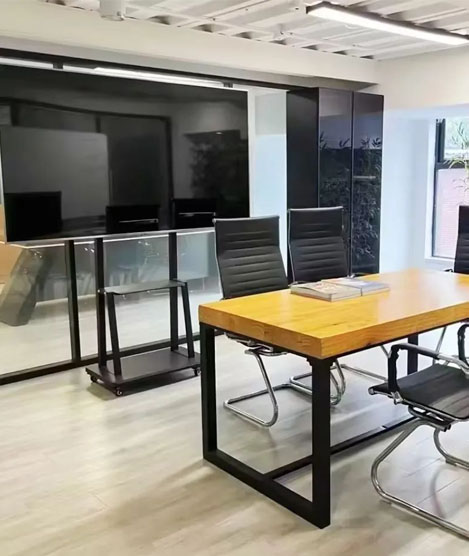
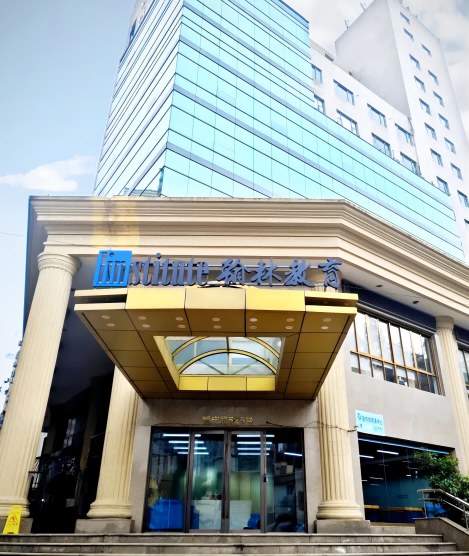
Hanlin learning centres.
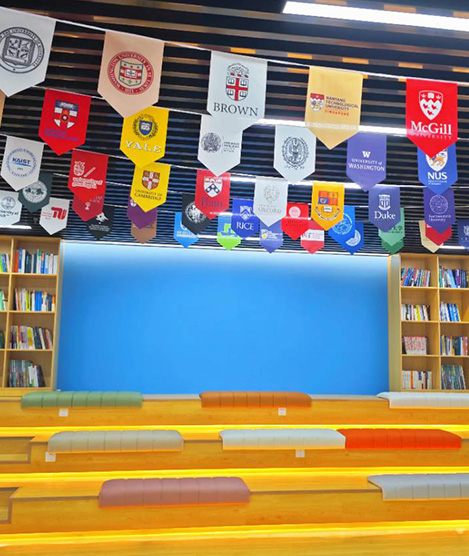
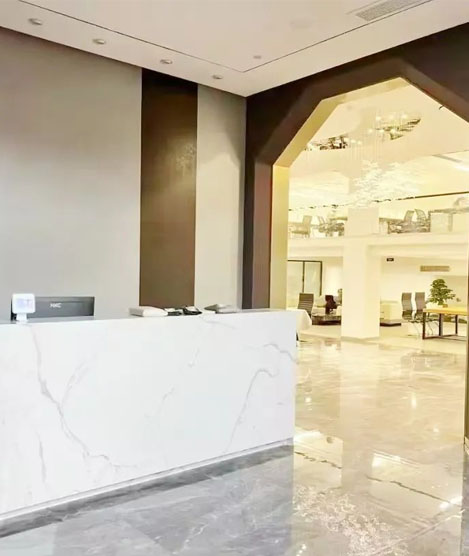
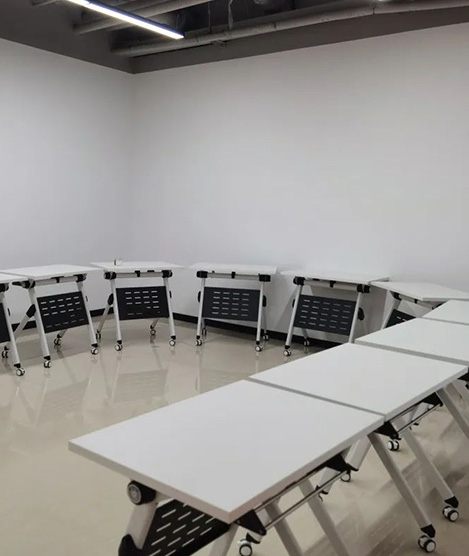
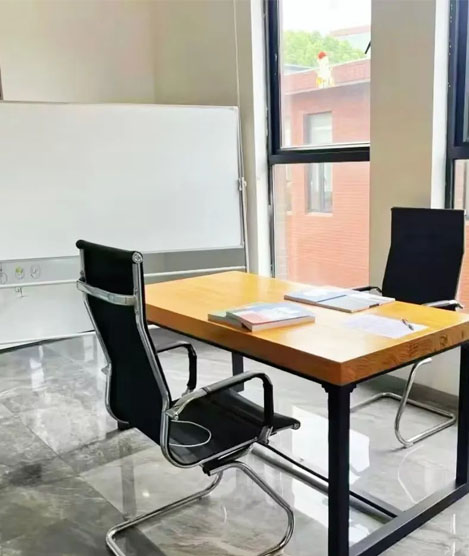
Teaching runs from Hanlin's own centres in Shanghai, Shenzhen, Chengdu and Hangzhou, and online for students elsewhere.

Talk to an advisor
Everything Hanlin does for Purple Comet, in one conversation.
Entry, planning, coaching and the past papers. An advisor will tell you which of these a student actually needs, including when the answer is none of them.
Competition entry and planning
Which competitions suit this student, in what order, and by when - then we handle the registration, including the ones that can only be entered through a school or a centre.
Competition coaching
Taught by full-time subject tutors, on a course tier chosen by placement paper rather than by year group.
International curriculum tutoring
IB, AP, A-Level, IGCSE and the US high school curriculum, taught alongside school and timed around the exam calendar.
Competition past papers, free
A large library of past papers, mark schemes and syllabus breakdowns across every competition on this site. No charge and no enrolment.
Scan to add an advisor
Say which competition or course you are asking about. Replies in Chinese or English.
Or call +86 21 6352 6630FAQ
Purple Comet, briefly answered.
What students, teachers and families ask before entering.
Who can enter Purple Comet?
Middle and high school students worldwide, aged 12 to 18, in teams of one to six with a supervisor aged 21 or over. Competitive middle-school teams must be grade 8 or below and under 16; high-school teams grade 9 or above and under 20.
Do we have to travel anywhere?
No. The contest has been fully online since 2003. Teams choose any time inside a ten-day window in April and log in together from wherever they are.
Can we use books, notes or a calculator?
Yes to all three, and you may also write and run your own programs locally. Every question is nonetheless solvable without any computing device.
What is not allowed?
Help from anyone outside your team, any internet resource, and - new for 2026 - any generative AI tool such as ChatGPT, Gemini, Copilot or Claude, for generating, explaining or verifying an answer. Breaking the AI rule invalidates the answers concerned.
Can our teacher help during the contest?
No. The supervisor may not assist with solving problems or even with interpreting a question. Their role is to ensure the rules are kept.
What if we do not meet the age or school rules?
You can enter as a non-competitive team, with no age, grade or school restrictions. You receive a participation certificate but are not ranked and do not appear in the published results.
How are awards decided?
First place, second place and honourable mention within each of six divisions - middle and high school, each split into Large School, Small School and Mixed School - and within geographic regions.
Can one person enter alone?
Yes, a team may be a single student. The contest is built around collaboration though, and a fuller team has a real advantage across thirty questions.
Related
Other team mathematics.
Contests students commonly enter alongside Purple Comet.
Purple Comet enquiries
Open book, closed internet, no AI.
Purple Comet lets a team use almost anything on the desk and nothing off it, and the AI prohibition is new this cycle. Tell us who you have and an advisor will map the April window and the division you would enter.