
Competitions · Mathematics · ARML
ARML, the American Regions Mathematics League.
A six-person team contest founded in 1976 and now in its fifth decade, sat by close to ten thousand students a year. Its problems are pitched around AIME level, but what makes it different is the structure: four kinds of round, including a relay where each member needs the previous answer before they can start.

At a glance
What the contest is, and who can enter it.
ARML has run since 1976. Since April 2016 the Local and Power contests have been held in China on the same day as in the United States, with the same questions, the same rules, the same marking and one global ranking.
- Organiser
- The American Regions Mathematics League, running since 1976 and supported by a number of major US technology companies and educational institutions
- Who can enter
- High-school students in any year, entering as a team of six. Local contests are open to any student interested in mathematics
- Three components
- The Local contest, the Power Contest for teams placing well at Local, and the International contest
- Available in China
- Local and Power Rounds I and II. The International contest is open to some students at overseas high schools but not to candidates entering from China
- Where the International runs
- Mainly at the University of Pennsylvania, Georgia State University and the University of Iowa, with an earlier start at the University of Nevada in Las Vegas
- Local format
- Individual, team, relay and tiebreaker rounds in one sitting, mostly short answer
- Duration
- 170 minutes
- Difficulty
- Broadly AIME level, and evenly spread - there are no giveaway questions on this paper
- Language
- Chinese and English
- Where
- Online and in person
- Results
- Published within six weeks of the contest
The Local rounds
Four rounds, and only one of them is a normal paper.
The mix is the point. A team can be strong at mathematics and still lose marks to the format, which is why the rounds are worth rehearsing separately.
Team round
Fifteen short-answer questions worked collaboratively, at four marks each for a maximum of sixty. This is the round closest to a conventional paper, and the one where dividing the questions sensibly across six people matters most.
Individual round
Five rounds of two short-answer questions, ten minutes each, one mark per correct answer. The next round’s questions are handed out as the previous one ends, so there is no pause to regroup. Individual results feed the team total.
Relay round
Three relays in which the first member solves and passes their answer to the second, who needs it to start. Faster submissions score more: within three minutes in the first relay, four in the second, five in the third.
Tiebreaker
A ten-minute decider on a single question, used to separate tied individual scores. It affects the individual ranking only and does not change the team total.
The relay rule
Why the relay is the round teams lose.
The relay is where ARML stops being a mathematics paper and starts being a test of how a team behaves under pressure.
Speed is scored, in bands
Each relay pays more for a faster correct answer and less for a slower one, and the bands widen as the relays get longer - three and six minutes in the first, four and eight in the second, five and ten in the third.
A wrong answer after a right one wipes the round
If a team submits a wrong answer to the invigilator after having submitted a correct one, it scores nothing for that relay. Knowing when to stop is therefore worth as much as knowing how to solve.
Every member is a single point of failure
Because each person needs the previous answer to begin, one error early does not cost one question - it costs the whole relay for everyone downstream of it. Teams usually put their steadiest member first, not their fastest.
Updated answers can be passed forward
A team may send a corrected answer down the chain more than once, which means a mistake is recoverable if it is caught quickly. That is the argument for checking aloud rather than working silently.
ARML and AMC
How it differs from the paper most students arrive from.
US schools commonly use AMC results to pick who goes to ARML, so most entrants meet ARML having prepared for something quite different.
| ARML | AMC 10 and 12 | |
|---|---|---|
| Entry | Teams of six | Individual |
| Questions | Mostly short answer, requiring an answer to be produced | Multiple choice, requiring one to be selected |
| Difficulty | Higher, and spread evenly across the paper | Progressive, with the hard questions concentrated in the last ten |
| Duration | 170 minutes | 75 minutes |
| Content | Wider, with noticeably more trigonometry and inverse trigonometry, and a taste for questions that combine several topics at once | Algebra, geometry, number theory and combinatorics, usually one topic at a time |
| Scheduling | One globally synchronised sitting | Scheduled by each school inside a window |
The practical consequence is that a strong AMC score does not transfer automatically. ARML rewards producing an answer rather than recognising one, and it rewards a team rather than a person.
Local awards
Team awards on percentile, individual awards on rank.
Team awards are decided by percentile within the global field, while the individual awards go to fixed numbers of students regionally and nationally.
The Power Contest
Two proof rounds, for teams that placed at Local.
The Power Contest is where ARML changes character again: no short answers at all, and problems built around applying mathematics to a real question.
| Power Round I | Power Round II | |
|---|---|---|
| When | October | The following February |
| Who can enter | Teams that won an award at ARML Local | Teams that won an award in Power Round I |
| Team size | Six to eight students | Six to eight students |
| Question type | Proof-based | Proof-based |
| Awards | Global top ten; nationally, gold to the top 25% of teams, silver to the top 50%, bronze to the top 75% | Global top ten; nationally, gold to the top 30% of teams, silver to the top 60%, bronze to the top 90% |
Power Contest problems are typically framed around a current social or public question and ask a team to address it mathematically, which makes the round closer to applied research than to a competition paper.
Preparation
How Hanlin prepares an ARML team.
The mathematics is at a level most ARML entrants already have. Almost all the gain available is in how the six of them work together.
Rehearsing the relay
Order of members, how an answer is called out, when to stop rather than resubmit. Teams that have never practised a relay lose marks on it every time, and no amount of individual ability substitutes for having done it before.
Producing answers, not choosing them
Students moving across from AMC have to stop relying on options being available. Practice is on short-answer papers where an answer must be constructed, which is a measurably different skill.
Trigonometry and composite problems
ARML tests trigonometry and inverse trigonometry more heavily than AMC does, and favours problems combining several topics. Both gaps are closed deliberately rather than assumed to close on their own.
Writing proofs for the Power round
A team that places at Local will need proofs by October. Preparation for that starts before the Local result is known, because there is not enough time afterwards to learn to write one.
Why Hanlin
Preparation for ARML at Hanlin is taught by full-time subject tutors, on a course tier chosen by placement paper rather than by year group.
Programme formats
Five ways this is taught.
Group size is the whole difference between these. It decides how much of the tutor's attention a student gets and how far the course can bend to them, so it is worth choosing rather than accepting.
| Format | Group size | What it suits |
|---|---|---|
| One-to-one | One student | Content, pace and emphasis set by what this student actually needs rather than by a syllabus. The only format that can be rebuilt mid-course. |
| Small group | Three to eight | Opens at three. Frequent discussion, and the tutor can slow down or move on according to what the group has absorbed. Most students chasing a higher award are taught in this one. |
| Class | Eight to twelve | Taught by the subject lead or a medal coach. Less back-and-forth, so it suits a student who will say when something is unclear. |
| Large class | Ten to twenty | For students in the middle of the placement range, and a way to try a competition before committing. Students often move to a small group or to one-to-one afterwards. |
| Past-paper class | No cap | Past papers worked through in sequence in the weeks before the sitting. Free to students already enrolled. |
Course length for ARML is set after a placement paper. The gap between where a student is and what the paper asks for is what the course has to close, and that gap is not the same for two students in the same year group.
How it runs
Six steps, four people on your side.
The same process for every student, so that nothing depends on one tutor remembering to do it.
 Step 1
Pre-course assessment
A placement paper before anything is booked, so the course tier is chosen on evidence rather than on a year group.
 Step 2
Tutor matching
A subject tutor is matched to the result, and their full background is provided before you agree to it.
 Step 3
Plan and group
A study group opens with four people on one student: the tutor, a planner, a supervisor and an academic manager.
 Step 4
Scheduled teaching
The teaching office sets the timetable around the competition date and school term, and teaching begins.
 Step 5
After-class reports
What was covered, and how the student handled it, reported after every lesson.
 Step 6
Homework follow-up
The teaching assistant and the form teacher both check that homework is done, which is where most preparation quietly fails.
Free resource pack
Past papers and preparation pack
The same material our own ARML students work from. Scan the code, say what you need, and an advisor sends it.

Tell an advisor which competition and year group, and the material comes back the same day. Free, and you do not have to enrol in anything. If we do not already hold what you need, we will go and find it.
- PDFPast papers, every year the organiser has released
- PDFWorked solutions, where the organiser publishes them
- PDFThe syllabus on one page - every topic, and how heavily it is examined
- PDFEntry checklist and the dates for the current cycle
Teaching team
Who would teach it.
Three of the twenty-two tutors on the published Hanlin roster - the ones whose subject this is.

Dr Zhang
PhD in theoretical mathematics from the University of Rochester and a postdoctoral fellow at the Shanghai Center for Mathematical Sciences at Fudan. An AMC-accredited coach, ASDAN-accredited for DMM and ITCCC, and an accredited UKMT BMO2 and PUMaC coach. His students have gone on to read mathematics and physics at Harvard, MIT, Princeton, Caltech and Cambridge.

Dr Zhuang
PhD in mathematics from the University of Denver, working in mathematical logic, after a first degree in applied mathematics at Southeast University. A repeat conference speaker on his research, with three years lecturing and assisting on undergraduate mathematics at Denver.

He
A Cambridge master's after a computer science degree with a mathematics minor at the University of Nebraska-Lincoln, and a US high school GPA of 4.13. Six years overseas and teaches entirely in English, across AMC, Math League, AP Computer Science and AP Calculus.
Student results
What Hanlin students got.
Taken from Hanlin's published record of student honours and rewritten in English. Figures are as the organisers reported them.
ARML
- 2022A team placed in the global top 100 and took a national team Gold; one student placed in the national top 100 individually
Earlier years
- 2020Top 20 in the West China division and top 100 in the South China division, with a team Bronze and advancement to the challenge round
The full record, across every subject and year, is on the student honours page.
Where it is taught
Hanlin learning centres.
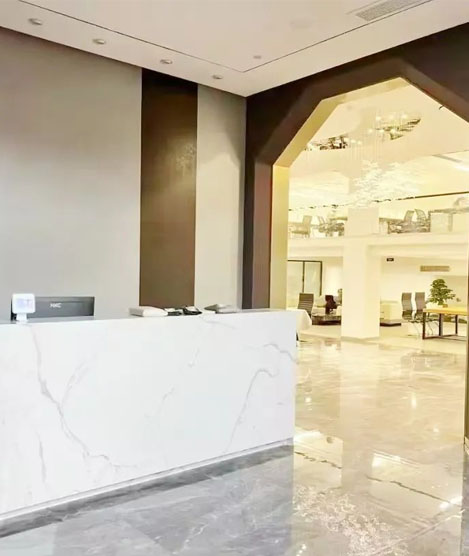
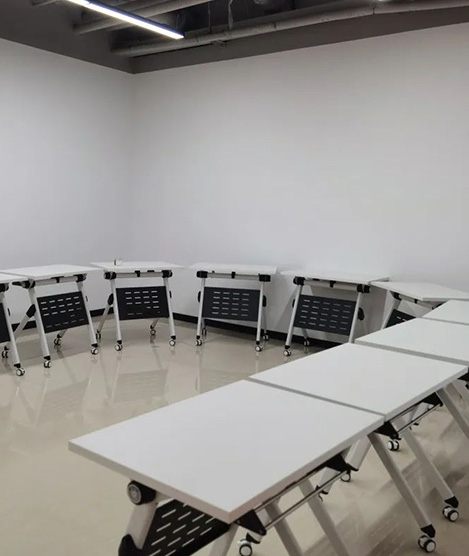
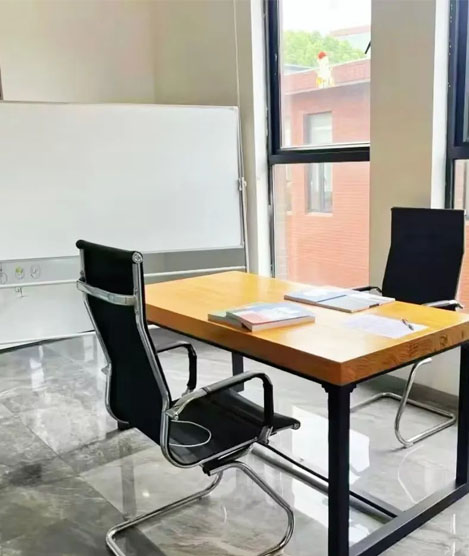
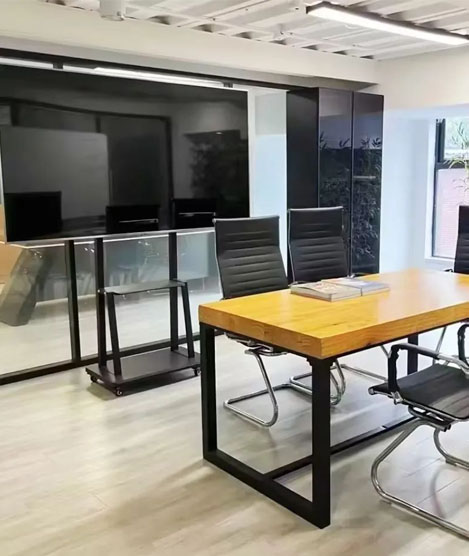
Teaching runs from Hanlin's own centres in Shanghai, Shenzhen, Chengdu and Hangzhou, and online for students elsewhere.



Talk to an advisor
Everything Hanlin does for ARML, in one conversation.
Entry, planning, coaching and the past papers. An advisor will tell you which of these a student actually needs, including when the answer is none of them.
Competition entry and planning
Which competitions suit this student, in what order, and by when - then we handle the registration, including the ones that can only be entered through a school or a centre.
Competition coaching
Taught by full-time subject tutors, on a course tier chosen by placement paper rather than by year group.
International curriculum tutoring
IB, AP, A-Level, IGCSE and the US high school curriculum, taught alongside school and timed around the exam calendar.
Competition past papers, free
A large library of past papers, mark schemes and syllabus breakdowns across every competition on this site. No charge and no enrolment.
Scan to add an advisor
Say which competition or course you are asking about. Replies in Chinese or English.
Or call +86 21 6352 6630FAQ
ARML, briefly answered.
What students and families ask before entering a team.
Who can enter ARML?
High-school students in any year, competing as a team of six. Local contests are open to anyone interested in mathematics rather than to a selected group.
Can students in China enter?
Yes, for the Local contest and Power Rounds I and II. These have been run in China since April 2016 on the same day as in the United States, with the same questions, rules, marking and global ranking. The International contest is not open to candidates entering from China.
How hard is ARML compared with AMC?
Harder, and differently so. The difficulty is spread evenly rather than concentrated at the end, there are no giveaway questions, and answers must be produced rather than selected from options.
What are the four rounds?
A team round of fifteen short-answer questions; an individual round of five ten-minute rounds with two questions each; a relay round of three relays; and a ten-minute tiebreaker on a single question that affects individual ranking only.
How does the relay round work?
The first team member solves a question and passes their answer to the second, who needs it to begin theirs, and so on. Faster correct submissions score more. If a team submits a wrong answer after having submitted a correct one, it scores nothing for that relay.
What is the Power Contest?
A proof-based team round for teams that won an award at Local. Power Round I runs in October and Power Round II the following February, in teams of six to eight. Problems are usually framed around a current public question to be addressed mathematically.
What awards are available?
At Local, team gold, silver and bronze go to the top 10%, 25% and 35% of teams, with a global top-100 team award and a regional top-20% award. Individually, the top 100 are recognised regionally and nationally.
When are results published?
Within six weeks of the contest, alongside the global ranking.
Related
Other team mathematics.
Contests students commonly enter alongside ARML.
ARML enquiries
Six strong individuals are not yet a team.
The relay and team rounds reward practice together, and most entrants have never had any. Tell us how many students you have and where they sit on AMC or AIME, and an advisor will map the April entry and what the squad needs first.