
Competitions · Mathematics · Math Kangaroo
Math Kangaroo, the world’s largest school mathematics contest.
Six levels covering grades 1 to 12, sat on one Saturday in March by more than six million students across over eighty countries. It is built on the opposite premise to an olympiad: the questions are approachable and often playful, and the aim is to make mathematics interesting to a whole year group rather than to separate the top of it.

At a glance
What the contest is, and who it is for.
Math Kangaroo began with the Australian mathematician Peter O’Halloran in 1980. Two French mathematics educators formed the official organising committee in 1991 and took it across Europe, naming it in his honour. The international committee is based in Paris.
- Organiser
- The international Math Kangaroo committee, headquartered in Paris. ASDAN China has been the exclusive China-region organising committee since 2019
- Who can enter
- Students from grade 1 to grade 12, at any level of mathematical ability. The contest is deliberately built to be entered by a whole class rather than by a selected few
- Levels
- Six, by school year: A for grades 1-2, B for 3-4, C for 5-6, D for 7-8, E for 9-10 and F for 11-12
- When
- One Saturday in March. The 2026 contest was held on 28 March, with registration closing on 17 March
- Format
- An individual multiple-choice paper, sat in person at a centre school
- Language
- A bilingual Chinese and English paper. Level A additionally carries Chinese reading support for the youngest candidates
- Scale
- More than 6.3 million students a year, across 87 countries and regions
- In China
- More than 20,000 students from over 1,000 schools took part in 2020, across state key schools and international schools
- Award rate
- Around 65% of candidates receive an award of some kind, which is by design - the contest is meant to encourage rather than to filter
The premise
Why it is not an olympiad, on purpose.
Almost every design decision follows from one choice: that the contest should be worth entering for a student who is not going to win it.
Problems drawn from ordinary life
Questions are framed around situations a child recognises rather than around abstract statements. The mathematics is real, but the entry cost of understanding what is being asked is deliberately low, which is what lets a mixed-ability class sit the same paper.
Reading is part of the test
Because problems arrive as short descriptions rather than as equations, the paper trains reading, comprehension and analysis alongside calculation. For many younger candidates the hard step is turning a sentence into a sum, not doing the sum.
Built for a whole year group
Six levels mean a school can enter every year from grade 1 to grade 12 on the same morning, and a roughly 65% award rate means most of those students take something home. Very few international contests are structured to do that.
A genuinely global field
With more than 6.3 million entrants across 87 countries and regions, a percentile here is measured against an unusually broad population rather than against a self-selected group of specialists.
Levels
Six levels, two sittings on the day.
The younger three levels sit in the morning and the older three in the afternoon, which is what allows a school to enter its whole roll on one day.
| Level | School years |
|---|---|
| Level A | Grades 1 and 2 |
| Level B | Grades 3 and 4 |
| Level C | Grades 5 and 6 |
| Level D | Grades 7 and 8 |
| Level E | Grades 9 and 10 |
| Level F | Grades 11 and 12 |
The 2026 China sitting is Saturday 28 March, with exact session times issued at entry confirmation. A student may enter a level above their school year but never one below it. Levels are awarded separately, so a candidate is only ever ranked against others sitting the same paper.
Scoring
You start with marks, and wrong answers cost you.
The scoring is unusual and worth understanding before the day. Every candidate begins with a score equal to the number of questions, so the floor is not zero - but a wrong answer takes a mark away, while a blank does not.
| Levels | Questions | Starting score | Question values | Maximum |
|---|---|---|---|---|
| A and B | 24 | 24 | Questions 1-8 are worth 3 marks, 9-16 are worth 4, 17-24 are worth 5 | 120 |
| C to F | 30 | 30 | Questions 1-10 are worth 3 marks, 11-20 are worth 4, 21-30 are worth 5 | 150 |
A wrong answer costs 1 mark at every level; an unanswered question costs nothing. Since the easiest questions are worth 3 and a mistake costs 1, guessing wildly at the hard end is a poor trade - and leaving a question you genuinely cannot start is the correct decision, which is not true of most contests.
Awards
Four China-region awards, decided by level.
Awards are given separately within each level, so a grade 3 candidate is ranked only against other Level B papers. A perfect score is recognised globally and also carries a trophy.
Rules worth knowing first
The four things families ask about after registering.
None of these are obscure, but each of them has caught candidates out often enough to be worth reading before you commit to a place.
You can go up a level, never down
A student may register for a level above their school year - a capable grade 6 student can sit Level D - but may not enter one below it. Entering up means being ranked against the older cohort, since awards are decided within the level.
You sit where you live
Candidates must register with the Math Kangaroo committee for their own country or region. Sitting the China-region contest from outside mainland China is not permitted, and cross-region entry is not allowed in either direction.
Withdrawing before and after the deadline
A place can be given up after payment. Withdrawing before the registration deadline retains 25% of the fee to cover academic materials and service; after the deadline has passed, the fee is not refunded.
A proficiency award as well
Beyond the four China-region awards there is a proficiency award for the top 25% within each province, municipality, autonomous region or special administrative region, applied after the national awards have been decided.
Preparation
How Hanlin prepares students for Math Kangaroo.
This is a contest where over-preparing on hard mathematics is the common mistake. What actually moves a score is reading speed, care, and knowing when to stop.
Reading the problem correctly
Most marks lost at the younger levels are lost before any calculation begins, in misreading what a short problem is asking. Practice is built around turning a described situation into a mathematical question quickly and accurately.
Playing the mark scheme
Given that a wrong answer costs a mark and a blank costs nothing, students learn where the line is for them: which questions to attempt, which to leave, and how not to spend the last ten minutes losing marks they already had.
Past papers by level
Papers are published for every level and year, and working through them at the right level is the most reliable preparation there is. It also settles which level a borderline candidate should enter.
Seventy-five minutes, unhurried
The paper is not a sprint in the way MATHCOUNTS is, but the last third carries the five-mark questions. Timed practice teaches candidates to reach those with enough time left to think rather than to guess.
Why Hanlin
Hanlin has been entering students for Math Kangaroo for years, and publishes what they got. The record is further down this page.
Programme formats
Five ways this is taught.
Group size is the whole difference between these. It decides how much of the tutor's attention a student gets and how far the course can bend to them, so it is worth choosing rather than accepting.
| Format | Group size | What it suits |
|---|---|---|
| One-to-one | One student | Content, pace and emphasis set by what this student actually needs rather than by a syllabus. The only format that can be rebuilt mid-course. |
| Small group | Three to eight | Opens at three. Frequent discussion, and the tutor can slow down or move on according to what the group has absorbed. Most students chasing a higher award are taught in this one. |
| Class | Eight to twelve | Taught by the subject lead or a medal coach. Less back-and-forth, so it suits a student who will say when something is unclear. |
| Large class | Ten to twenty | For students in the middle of the placement range, and a way to try a competition before committing. Students often move to a small group or to one-to-one afterwards. |
| Past-paper class | No cap | Past papers worked through in sequence in the weeks before the sitting. Free to students already enrolled. |
Course length for Math Kangaroo is set after a placement paper. The gap between where a student is and what the paper asks for is what the course has to close, and that gap is not the same for two students in the same year group.
How it runs
Six steps, four people on your side.
The same process for every student, so that nothing depends on one tutor remembering to do it.
 Step 1
Pre-course assessment
A placement paper before anything is booked, so the course tier is chosen on evidence rather than on a year group.
 Step 2
Tutor matching
A subject tutor is matched to the result, and their full background is provided before you agree to it.
 Step 3
Plan and group
A study group opens with four people on one student: the tutor, a planner, a supervisor and an academic manager.
 Step 4
Scheduled teaching
The teaching office sets the timetable around the competition date and school term, and teaching begins.
 Step 5
After-class reports
What was covered, and how the student handled it, reported after every lesson.
 Step 6
Homework follow-up
The teaching assistant and the form teacher both check that homework is done, which is where most preparation quietly fails.
Free resource pack
Past papers and preparation pack
The same material our own Math Kangaroo students work from. Scan the code, say what you need, and an advisor sends it.

Tell an advisor which competition and year group, and the material comes back the same day. Free, and you do not have to enrol in anything. If we do not already hold what you need, we will go and find it.
- PDFPast papers, every year the organiser has released
- PDFWorked solutions, where the organiser publishes them
- PDFThe syllabus on one page - every topic, and how heavily it is examined
- PDFEntry checklist and the dates for the current cycle
Teaching team
Who would teach it.
Three of the twenty-two tutors on the published Hanlin roster - the ones whose subject this is.

Dr Zhang
PhD in theoretical mathematics from the University of Rochester and a postdoctoral fellow at the Shanghai Center for Mathematical Sciences at Fudan. An AMC-accredited coach, ASDAN-accredited for DMM and ITCCC, and an accredited UKMT BMO2 and PUMaC coach. His students have gone on to read mathematics and physics at Harvard, MIT, Princeton, Caltech and Cambridge.

Dr Zhuang
PhD in mathematics from the University of Denver, working in mathematical logic, after a first degree in applied mathematics at Southeast University. A repeat conference speaker on his research, with three years lecturing and assisting on undergraduate mathematics at Denver.

He
A Cambridge master's after a computer science degree with a mathematics minor at the University of Nebraska-Lincoln, and a US high school GPA of 4.13. Six years overseas and teaches entirely in English, across AMC, Math League, AP Computer Science and AP Calculus.
Student results
What Hanlin students got.
Taken from Hanlin's published record of student honours and rewritten in English. Figures are as the organisers reported them.
Golds in 2024
One line from Hanlin's published Math Kangaroo record. The rest of it is below.
Math Kangaroo
- 202510 Super Gold, 11 Gold, 9 Silver, 16 Bronze and 8 skills awards
- 20248 global achievement awards, 26 Super Gold, 42 Gold, 27 Silver, 34 Bronze and 23 skills awards
Earlier years
- 20234 Super Gold, 9 Gold, 15 Silver, 10 Bronze and 4 skills awards
The full record, across every subject and year, is on the student honours page.
Where it is taught
Hanlin learning centres.
Teaching runs from Hanlin's own centres in Shanghai, Shenzhen, Chengdu and Hangzhou, and online for students elsewhere.

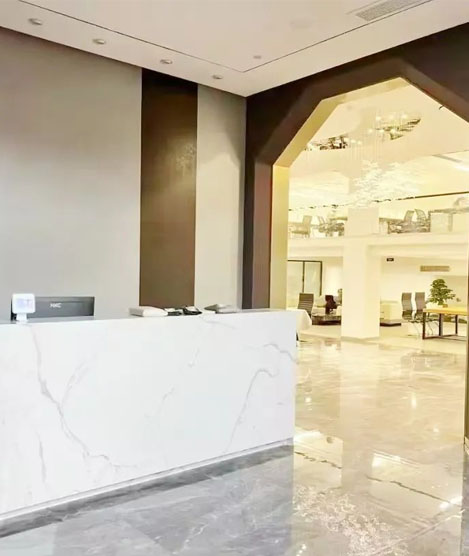
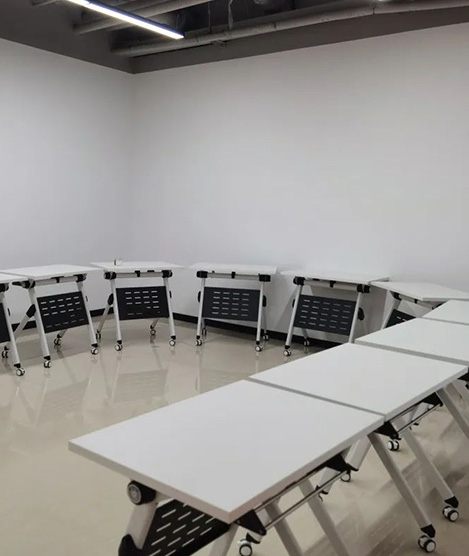

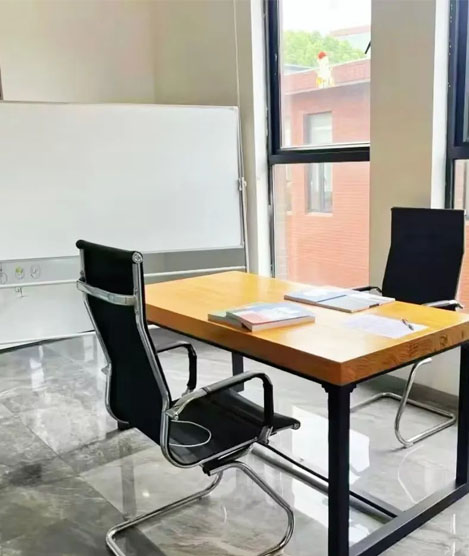
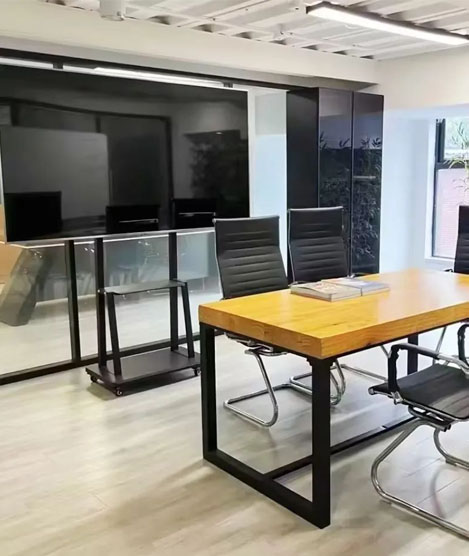

Talk to an advisor
Everything Hanlin does for Math Kangaroo, in one conversation.
Entry, planning, coaching and the past papers. An advisor will tell you which of these a student actually needs, including when the answer is none of them.
Competition entry and planning
Which competitions suit this student, in what order, and by when - then we handle the registration, including the ones that can only be entered through a school or a centre.
Competition coaching
Taught by full-time subject tutors, on a course tier chosen by placement paper rather than by year group.
International curriculum tutoring
IB, AP, A-Level, IGCSE and the US high school curriculum, taught alongside school and timed around the exam calendar.
Competition past papers, free
A large library of past papers, mark schemes and syllabus breakdowns across every competition on this site. No charge and no enrolment.
Scan to add an advisor
Say which competition or course you are asking about. Replies in Chinese or English.
Or call +86 21 6352 6630FAQ
Math Kangaroo, briefly answered.
What students and families ask before entering.
Who can enter Math Kangaroo?
Students from grade 1 to grade 12, at any level of ability. It is designed to be entered by a whole class rather than by selected students, and the six levels mean a school can enter every year group on the same day.
Can my child enter a different level?
They can enter a level above their school year, but never one below it. Since awards are decided within each level, entering up means being ranked against older candidates.
How is the paper scored?
You start with marks rather than at zero - 24 at Levels A and B, 30 at Levels C to F. Questions are worth 3, 4 or 5 marks in rising thirds. A wrong answer costs 1 mark; leaving a question blank costs nothing.
Should my child guess?
Not on questions they cannot begin. A wrong answer costs a mark and a blank costs nothing, so wild guessing on the hardest questions loses marks that were already banked. Where an option or two can be eliminated, guessing becomes reasonable.
Is the paper in English?
It is bilingual, with the questions given in both Chinese and English. Level A, for the youngest candidates, carries additional Chinese reading support.
How likely is an award?
Around 65% of candidates receive one, which is intentional. The China-region awards are Top Gold for the top 5%, Gold for the top 15%, Silver for the top 25% and Bronze for the top 40%, each decided within a level.
Can we sit the China contest from abroad?
No. Candidates register with the Math Kangaroo committee for the country or region where they are, and cross-region entry is not permitted.
What happens if we withdraw?
A place can be given up after payment. Withdrawing before the registration deadline retains 25% of the fee for academic materials and service; after the deadline, the fee is not refunded.
Related
Other contests at this age range.
What families usually consider alongside Math Kangaroo.
Math Kangaroo enquiries
The hardest decision is which level to enter.
For a student sitting between two levels, the choice changes both the paper and the field they are ranked against. Tell us the year group and how they find school mathematics, and an advisor will recommend a level and a centre.