
Competitions · Mathematics · BMT
BMT, the Berkeley Math Tournament.
Run by a student organisation at UC Berkeley and held over two days, with teams of four to six. Its problems sit around AMC 12, AIME and ARML difficulty, and the China region uses the same papers, the same rules and the same global ranking as the United States.
At a glance
What the tournament is, and who can enter.
BMT has been running for over a decade and is counted among the major American university mathematics tournaments. Berkeley’s own contest committee travels to China to mark the regional event.
- Organiser
- A student organisation at the University of California, Berkeley
- Who can enter
- The published eligibility is grades 10 to 12. The organiser’s own FAQ words it more broadly as grade 12 and below, so confirm before entering a younger student
- Team size
- Four to six students. Four is a hard floor, because the scoring rules require it
- Team composition
- Members need not come from the same school, which is unusual among tournaments of this kind and makes it practical to build a squad across a city
- How many teams
- A coach may register as many teams as they wish
- Difficulty
- Comparable to AMC 12, AIME and ARML
- Language
- English
- Format
- Four rounds plus a tiebreaker, spread across two days, mixing team and individual work
- When and where
- Late November, over two days. The China-region tournament is held in Beijing
- Same as the US
- The China region uses the same papers, the same rules and one global ranking
The rounds
Two team rounds, one individual choice, one decider.
The individual portion is a genuine fork - a student takes one route or the other, and the choice should be made on where they actually are rather than on ambition.
Power Round, by team
Ninety minutes to complete and submit as a team. The theme is often pitched at undergraduate level, but no substantial mathematical background is assumed - the round is designed to be entered cold and worked out.
Guts Round, by team
Nine sets of three questions. Each set is submitted before the next is issued and cannot be revisited, and a live scoreboard shows every team’s score and position as the round runs.
Individual, one route or the other
Either the Individual General paper, which is the less difficult of the two, or the Focus Round, where a student picks two subjects from calculus, geometry, algebra, and combinatorics with number theory.
Tiebreaker
Held when individual scores tie in the top three. Every answer in this round is a positive integer, which removes any ambiguity about form at the moment it would matter most.
Scoring
How the marks are put together.
Individual marking is as simple as it gets. The team calculation is where the thinking happens - particularly for a team that is short of members.
Every question is worth one mark
Individual scores are simply the number of correct answers, with no weighting between easier and harder questions. That is unusual: most tournaments at this level price questions by difficulty.
Team scores combine both halves
A team’s score is built from its performance in the team rounds together with its members’ individual results, so neither half can be neglected in favour of the other.
Normalised against the top of the field
Scores on a given test are normalised using either the mean of the top ten scores or the mean of the top 10%, whichever covers more students or teams. That corrects for one paper being harder than another.
Short teams are padded with zeros
The individual total is averaged across four, five or six members. A team with fewer than four has zeros added until it reaches four, and then the average is taken - so entering three students costs a quarter of the individual score.
Rules
What you may bring, and what ends your tournament.
BMT is more permissive than most about instruments and considerably less permissive about everything else.
Allowed at the desk
A protractor, a ruler, scratch paper and a pair of compasses. Candidates may also print the questions themselves where that is needed.
Not allowed
Calculators and graph paper are both prohibited. So is artificial intelligence, and so is any other external resource, for the whole duration of every paper.
Cheating ends it permanently
Any form of cheating results in immediate and permanent disqualification. The rule is stated without qualification, and it is the one place the organisers use that kind of language.
Declare prior sight of the paper
A student who has already seen the questions or the answers is required to say so and must not sit the paper. The obligation is on the student, not on the invigilator to catch it.
Answering
Exact, simplified, and no partial credit.
Outside the Power Round nothing is given for incomplete work, and an answer that is correct but left unsimplified is marked wrong.
Finish the arithmetic
Evaluate what can reasonably be evaluated rather than leaving an expression standing. An answer written as an unresolved sum of fractions is not a finished answer.
Clear the radicals and denominators
Move square factors outside a radical, and rationalise denominators. Both are mechanical steps, and both are routinely forgotten under time pressure by students who have solved the problem.
No repeated sums or products
An answer should not be expressed as a repeated sum or product where a closed form exists. Graders read simplification reasonably, but the tournament coordinators have the final say on what qualifies.
The Power Round is the exception
Proofs there earn partial credit, which makes it the one round where writing down an incomplete argument is worth doing rather than abandoning.
The two days
How the tournament runs.
The rounds are spread across two days with a social evening between them, which is part of why teams travel to it.
Check-in and opening
Registration, then the opening ceremony before the first round.
Power Round
Ninety minutes of team proof work on a single theme.
Individual round
Either the Individual General paper or the two Focus Round subjects.
Math Social
An informal evening of mathematical events, and much of the reason the tournament runs over two days rather than one.
Tiebreaker, then Guts Round
The individual decider first, then the nine-set team round with its live scoreboard.
Closing and awards
Awards are presented at the closing ceremony before teams depart.
Awards
Global top tens, and China-region placings.
Global awards go ten deep in each event. The China region awards separately, on percentile, in each of the four events and on team total.
| Award | Individual events | Team events |
|---|---|---|
| Global | Top 10 in each individual event, published by the BMT committee | Top 10 on team total, published by the BMT committee |
| China region, placings | Champion, runner-up and third in the Individual General and Focus rounds | Champion, runner-up and third in the Power and Guts rounds, and on team total |
| China region, first prize | Top 10% | Top 10% of teams |
| China region, second prize | Top 25% | Top 25% of teams |
| China region, third prize | Top 40% | Top 40% of teams |
Awards are presented at the closing ceremony. The exact awards given are confirmed by the organiser each year.
Preparation
How Hanlin prepares a BMT team.
Two decisions shape a BMT result before any mathematics happens: how many students you bring, and which individual route each of them takes.
Bring at least four, ideally six
A team of three has a zero averaged into its individual score. Because members do not have to come from one school, filling a team is usually a matter of organisation rather than of finding four strong mathematicians in one place.
General or Focus, honestly assessed
The Individual General paper is the less difficult route and there is no penalty for taking it. Students who choose Focus because it sounds better routinely score worse and contribute less to the team.
Practising the Guts Round
Nine sets, no returning, and a live scoreboard is a specific kind of pressure. Teams rehearse deciding when a set is finished, because the round punishes perfectionism more than it punishes error.
Finishing answers properly
With no partial credit outside the Power Round and unsimplified answers marked wrong, the last thirty seconds of a question matter as much as the first two minutes. That is drilled rather than explained.
Why Hanlin
Preparation for BMT at Hanlin is taught by full-time subject tutors, on a course tier chosen by placement paper rather than by year group.
Programme formats
Five ways this is taught.
Group size is the whole difference between these. It decides how much of the tutor's attention a student gets and how far the course can bend to them, so it is worth choosing rather than accepting.
| Format | Group size | What it suits |
|---|---|---|
| One-to-one | One student | Content, pace and emphasis set by what this student actually needs rather than by a syllabus. The only format that can be rebuilt mid-course. |
| Small group | Three to eight | Opens at three. Frequent discussion, and the tutor can slow down or move on according to what the group has absorbed. Most students chasing a higher award are taught in this one. |
| Class | Eight to twelve | Taught by the subject lead or a medal coach. Less back-and-forth, so it suits a student who will say when something is unclear. |
| Large class | Ten to twenty | For students in the middle of the placement range, and a way to try a competition before committing. Students often move to a small group or to one-to-one afterwards. |
| Past-paper class | No cap | Past papers worked through in sequence in the weeks before the sitting. Free to students already enrolled. |
Course length for BMT is set after a placement paper. The gap between where a student is and what the paper asks for is what the course has to close, and that gap is not the same for two students in the same year group.
How it runs
Six steps, four people on your side.
The same process for every student, so that nothing depends on one tutor remembering to do it.
 Step 1
Pre-course assessment
A placement paper before anything is booked, so the course tier is chosen on evidence rather than on a year group.
 Step 2
Tutor matching
A subject tutor is matched to the result, and their full background is provided before you agree to it.
 Step 3
Plan and group
A study group opens with four people on one student: the tutor, a planner, a supervisor and an academic manager.
 Step 4
Scheduled teaching
The teaching office sets the timetable around the competition date and school term, and teaching begins.
 Step 5
After-class reports
What was covered, and how the student handled it, reported after every lesson.
 Step 6
Homework follow-up
The teaching assistant and the form teacher both check that homework is done, which is where most preparation quietly fails.
Free resource pack
Past papers and preparation pack
The same material our own BMT students work from. Scan the code, say what you need, and an advisor sends it.

Tell an advisor which competition and year group, and the material comes back the same day. Free, and you do not have to enrol in anything. If we do not already hold what you need, we will go and find it.
- PDFPast papers, every year the organiser has released
- PDFWorked solutions, where the organiser publishes them
- PDFThe syllabus on one page - every topic, and how heavily it is examined
- PDFEntry checklist and the dates for the current cycle
Teaching team
Who would teach it.
Three of the twenty-two tutors on the published Hanlin roster - the ones whose subject this is.

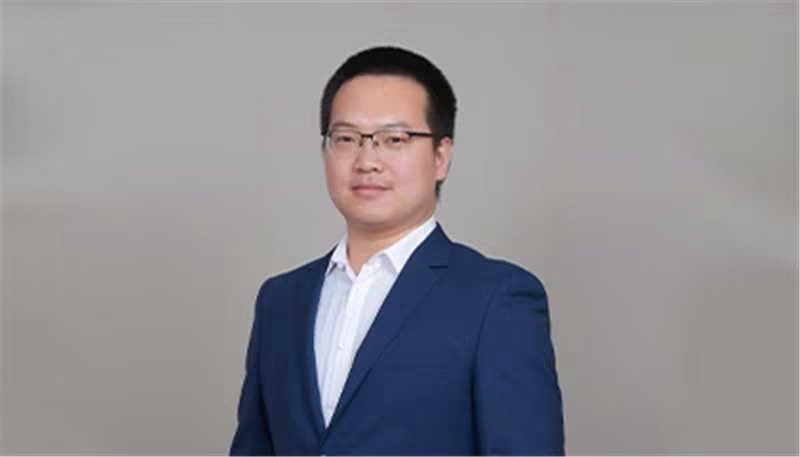
Dr Zhang
PhD in theoretical mathematics from the University of Rochester and a postdoctoral fellow at the Shanghai Center for Mathematical Sciences at Fudan. An AMC-accredited coach, ASDAN-accredited for DMM and ITCCC, and an accredited UKMT BMO2 and PUMaC coach. His students have gone on to read mathematics and physics at Harvard, MIT, Princeton, Caltech and Cambridge.
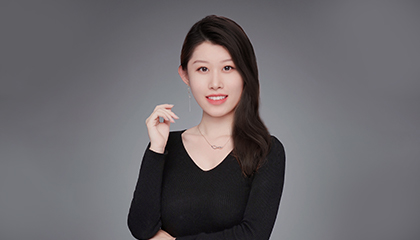
Dr Zhuang
PhD in mathematics from the University of Denver, working in mathematical logic, after a first degree in applied mathematics at Southeast University. A repeat conference speaker on his research, with three years lecturing and assisting on undergraduate mathematics at Denver.
He
A Cambridge master's after a computer science degree with a mathematics minor at the University of Nebraska-Lincoln, and a US high school GPA of 4.13. Six years overseas and teaches entirely in English, across AMC, Math League, AP Computer Science and AP Calculus.
Student results
What Hanlin students got.
Taken from Hanlin's published record of student honours and rewritten in English. Figures are as the organisers reported them.
BMT
- 2020The only perfect score worldwide in the calculus event; a top-three place in the China region for algebra; a team second prize; and one student third nationally
The full record, across every subject and year, is on the student honours page.
Where it is taught
Hanlin learning centres.
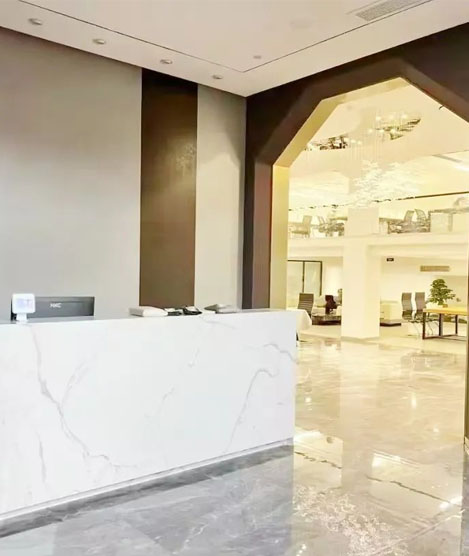
Teaching runs from Hanlin's own centres in Shanghai, Shenzhen, Chengdu and Hangzhou, and online for students elsewhere.

Talk to an advisor
Everything Hanlin does for BMT, in one conversation.
Entry, planning, coaching and the past papers. An advisor will tell you which of these a student actually needs, including when the answer is none of them.
Competition entry and planning
Which competitions suit this student, in what order, and by when - then we handle the registration, including the ones that can only be entered through a school or a centre.
Competition coaching
Taught by full-time subject tutors, on a course tier chosen by placement paper rather than by year group.
International curriculum tutoring
IB, AP, A-Level, IGCSE and the US high school curriculum, taught alongside school and timed around the exam calendar.
Competition past papers, free
A large library of past papers, mark schemes and syllabus breakdowns across every competition on this site. No charge and no enrolment.
Scan to add an advisor
Say which competition or course you are asking about. Replies in Chinese or English.
Or call +86 21 6352 6630FAQ
BMT, briefly answered.
What students and families ask before entering a team.
Who is eligible for BMT?
The published eligibility is grades 10 to 12, while the organiser’s FAQ describes the tournament as open to any student in grade 12 or below. If you are entering a student below grade 10, confirm with the organiser first.
How many students does a team need?
Four to six. Four is a hard minimum because of how the scoring works: the individual total is averaged across four, five or six members, and a team with fewer has zeros added until it reaches four.
Do team members have to attend the same school?
No. BMT does not require it, which makes it practical to assemble a team across several schools. A coach may also register as many teams as they wish.
Should a student sit Individual General or the Focus Round?
Individual General is the less difficult paper and carries no penalty for choosing it. The Focus Round is harder and asks a student to pick two subjects from calculus, geometry, algebra, and combinatorics with number theory.
Can I use a calculator?
No, and graph paper is also prohibited. A protractor, ruler, compasses and scratch paper are permitted. Artificial intelligence and any other external resource are strictly prohibited during the papers.
Is there partial credit?
Only in the Power Round. Everywhere else an answer is correct or worth nothing, and an answer left unsimplified is marked incorrect.
How is a team score calculated?
From the team rounds together with members’ individual scores. Scores on each test are normalised using the mean of the top ten or the mean of the top 10%, whichever covers more entrants, so that a harder paper is not worth less.
Can we get a refund if we withdraw?
Before the registration deadline, yes, with 25% of the fee retained for academic materials and service. After the deadline the fee is not refundable.
Related
Other university-run tournaments.
What teams commonly enter alongside BMT.
BMT enquiries
Members can come from different schools. Use that.
BMT is one of the few tournaments where a team need not come from one school, and one where being a member short costs real marks. Tell us who you have, and an advisor will help fill the team before the November deadline.