
Competitions · Mathematics · UKMT
UKMT, the United Kingdom Mathematics Trust challenges.
Three entry challenges by age - Junior, Intermediate and Senior - each opening onto an olympiad for the students who do best. More than 700,000 entrants a year from over 6,000 UK schools make it the largest mathematics challenge in Britain, and the series through which the UK selects its IMO team.
At a glance
One trust, three levels, seven contests.
UKMT was founded in 1996 to raise the standard of mathematics education for young people in Britain, and runs national competitions for students aged 11 to 18. Its problems reward logical reasoning and careful thinking using elementary methods, rather than advanced technique.
- Organiser
- The United Kingdom Mathematics Trust, founded 1996
- Scale
- More than 700,000 students from over 6,000 schools each year, making it the largest and most influential national mathematics challenge in the United Kingdom
- Three challenges
- Junior (JMC) for Year 7 and below, Intermediate (IMC) for Year 10 and below, and Senior (SMC) for Year 12 and below
- Four olympiads
- JMO follows the Junior challenge. Cayley, Hamilton and Maclaurin follow the Intermediate challenge, split by year group
- What it selects for
- UKMT uses the series to select British students for the national team that competes at the International Mathematical Olympiad
- Language
- The three challenges are offered in English and Chinese. The follow-on olympiads at Intermediate level are in English only
- Where
- On paper at a partner school. Applications for online provision are accepted
- Awards
- Gold, silver and bronze in a 1:2:3 ratio, to the top 50% of entrants on the Junior and Intermediate challenges and the top 66% on the Senior challenge. Candidates in China are judged against the published UK cutoff scores
- Standing in China
- The activity is not connected to any Chinese school or university admission-points scheme, and results are not a basis for admission or evaluation at any Chinese school. It is positioned as an extracurricular interest activity and an international teaching exchange
The three challenges
Where a student enters the series.
All three are 25 multiple-choice questions sat in an hour or so. What differs is the age group, the difficulty, and - importantly - how wrong answers are treated.
Junior, for Year 7 and below
Built on what is taught in class but asking students to use it in unfamiliar ways. Most questions are comfortable for a capable primary or lower-secondary student, with a handful that are genuinely hard. Nothing is deducted for a wrong answer.
Intermediate, for Year 10 and below
Similar in scope and style to Junior but appreciably harder, and reaching into material taught at high school. This is the level at which negative marking begins, which changes how the paper should be attempted.
Senior, for Year 12 and below
Geometry, number theory, counting and algebra, with problems built to be flexible rather than technical - no higher mathematics is involved. The Senior challenge is also the qualifying route to the British Mathematical Olympiad.
The series
Every contest, and what it takes to sit it.
The olympiads are not open entry. Each is reached by winning an award on the challenge below it, and at Intermediate level the specific olympiad depends on the student’s year group.
| Contest | Who may sit it | Format | Language |
|---|---|---|---|
| Junior Challenge (JMC) | Year 7 and below | 25 multiple-choice questions, 1 hour | English and Chinese |
| Junior Olympiad (JMO) | JMC award winners | 16 questions in two sections, 2 hours | English and Chinese |
| Intermediate Challenge (IMC) | Year 10 and below | 25 multiple-choice questions, 1 hour | English and Chinese |
| Cayley Olympiad (CMO) | IMC award winners in Year 8 and below | 6 questions, 2 hours | English |
| Hamilton Olympiad (HMO) | IMC award winners in Year 9 | 6 questions, 2 hours | English |
| Maclaurin Olympiad (MMO) | IMC award winners in Year 10 | 6 questions, 2 hours | English |
| Senior Challenge (SMC) | Year 12 and below | 25 multiple-choice questions, 1.5 hours | English and Chinese |
Registration for each contest closes roughly a week to ten days beforehand. The Junior challenge runs in May and its olympiad in June; the Intermediate challenge in January with its three olympiads in March; the Senior challenge in October. Confirm the current season’s dates before planning around them.
Marking
Four different mark schemes in one series.
This is the part students most often get wrong, because the right strategy on one paper is the wrong strategy on the next.
Junior: no penalty at all
Questions 1 to 15 are worth 5 marks and 16 to 25 are worth 6, with nothing deducted for a wrong answer. Every question should therefore carry an answer by the end - there is no reason to leave one blank.
Intermediate: penalties that escalate
The same 5 and 6 mark structure, but a wrong answer on questions 16 to 20 costs 1 mark and a wrong answer on 21 to 25 costs 2. Guessing at the hard end of this paper is expensive, and the last five questions should be attempted or left, not gambled on.
Senior: you start with marks
Candidates begin on 25, gain 4 for a correct answer and lose 1 for a wrong one. The floor is not zero, but a run of guesses eats into the opening credit, so the discipline is the same as at Intermediate level.
The olympiads: marks for writing
Olympiad questions carry 10 marks each and award partial credit for how clearly the mathematics is presented, so a well-set-out argument scores where a bare answer does not. A blank scores nothing at all.
Challenge cutoffs
The award lines on the three challenges.
Awards go to the top half of entrants at Junior and Intermediate level and the top two thirds at Senior level, split gold to silver to bronze in a 1:2:3 ratio. Candidates in China are marked against these UK lines.
| Challenge | Gold | Silver | Bronze |
|---|---|---|---|
| Junior (JMC), 2024 | 86 and above | 70 and above | 57 and above |
| Intermediate (IMC), 2024 | 77 and above | 61 and above | 47 and above |
| Senior (SMC), 2023 | 80 and above | 64 and above | 49 and above |
All entrants receive a participation award on the Intermediate and Senior challenges. Cutoffs move each year with the difficulty of the paper, so treat these as a guide to the region rather than as a fixed target.
Olympiad cutoffs
The award lines on the Intermediate olympiads.
Cayley, Hamilton and Maclaurin are the same format sat by different year groups, and their lines sit close together. Students who do not reach an award receive a certificate of qualification or participation.
| Olympiad | Gold | Silver | Bronze | Distinction | Merit |
|---|---|---|---|---|---|
| Cayley, Year 8 and below | 45+ | 38+ | 31+ | 26+ | 14+ |
| Hamilton, Year 9 | 50+ | 40+ | 33+ | 29+ | 14+ |
| Maclaurin, Year 10 | 46+ | 39+ | 33+ | 27+ | 14+ |
Figures are the 2024 lines, out of a possible 60. On the Junior Olympiad, medals are decided on the Section B total rather than on the overall score, so the written-solution half of that paper is what determines an award.
Preparation
How Hanlin prepares students for the UKMT series.
The series rewards planning across years rather than cramming for one paper, because each contest exists to qualify a student for the next one.
Enter at the right rung
A Year 7 student sits Junior; a strong Year 9 student may be better served by Intermediate than by waiting. Getting this right matters because an award, not a score, is what opens the olympiad above it.
Train the mark scheme, not just the mathematics
The same student should answer every question on the Junior paper and leave questions blank on the Intermediate one. Practice papers are run under the exact penalty rules so that the habit is right on the day.
Write solutions before the olympiad, not during it
Olympiad papers award partial credit for clear mathematical presentation, and students arriving from multiple-choice challenges have never had to write one. That is trained separately, well before the March or June sitting.
Past papers across the whole series
UKMT publishes papers for every contest and year. Working through them in sequence shows how the same idea is asked at Junior, Intermediate and Senior level, which is the most efficient way to move up the series.
Why Hanlin
Hanlin has been entering students for UKMT for years, and publishes what they got. The record is further down this page.
Programme formats
Five ways this is taught.
Group size is the whole difference between these. It decides how much of the tutor's attention a student gets and how far the course can bend to them, so it is worth choosing rather than accepting.
| Format | Group size | What it suits |
|---|---|---|
| One-to-one | One student | Content, pace and emphasis set by what this student actually needs rather than by a syllabus. The only format that can be rebuilt mid-course. |
| Small group | Three to eight | Opens at three. Frequent discussion, and the tutor can slow down or move on according to what the group has absorbed. Most students chasing a higher award are taught in this one. |
| Class | Eight to twelve | Taught by the subject lead or a medal coach. Less back-and-forth, so it suits a student who will say when something is unclear. |
| Large class | Ten to twenty | For students in the middle of the placement range, and a way to try a competition before committing. Students often move to a small group or to one-to-one afterwards. |
| Past-paper class | No cap | Past papers worked through in sequence in the weeks before the sitting. Free to students already enrolled. |
Course length for UKMT is set after a placement paper. The gap between where a student is and what the paper asks for is what the course has to close, and that gap is not the same for two students in the same year group.
How it runs
Six steps, four people on your side.
The same process for every student, so that nothing depends on one tutor remembering to do it.
 Step 1
Pre-course assessment
A placement paper before anything is booked, so the course tier is chosen on evidence rather than on a year group.
 Step 2
Tutor matching
A subject tutor is matched to the result, and their full background is provided before you agree to it.
 Step 3
Plan and group
A study group opens with four people on one student: the tutor, a planner, a supervisor and an academic manager.
 Step 4
Scheduled teaching
The teaching office sets the timetable around the competition date and school term, and teaching begins.
 Step 5
After-class reports
What was covered, and how the student handled it, reported after every lesson.
 Step 6
Homework follow-up
The teaching assistant and the form teacher both check that homework is done, which is where most preparation quietly fails.
Free resource pack
Past papers and preparation pack
The same material our own UKMT students work from. Scan the code, say what you need, and an advisor sends it.

Tell an advisor which competition and year group, and the material comes back the same day. Free, and you do not have to enrol in anything. If we do not already hold what you need, we will go and find it.
- PDFPast papers, every year the organiser has released
- PDFWorked solutions, where the organiser publishes them
- PDFThe syllabus on one page - every topic, and how heavily it is examined
- PDFEntry checklist and the dates for the current cycle
Teaching team
Who would teach it.
Three of the twenty-two tutors on the published Hanlin roster - the ones whose subject this is.

Dr Zhang
PhD in theoretical mathematics from the University of Rochester and a postdoctoral fellow at the Shanghai Center for Mathematical Sciences at Fudan. An AMC-accredited coach, ASDAN-accredited for DMM and ITCCC, and an accredited UKMT BMO2 and PUMaC coach. His students have gone on to read mathematics and physics at Harvard, MIT, Princeton, Caltech and Cambridge.

Dr Zhuang
PhD in mathematics from the University of Denver, working in mathematical logic, after a first degree in applied mathematics at Southeast University. A repeat conference speaker on his research, with three years lecturing and assisting on undergraduate mathematics at Denver.

He
A Cambridge master's after a computer science degree with a mathematics minor at the University of Nebraska-Lincoln, and a US high school GPA of 4.13. Six years overseas and teaches entirely in English, across AMC, Math League, AP Computer Science and AP Calculus.
Student results
What Hanlin students got.
Taken from Hanlin's published record of student honours and rewritten in English. Figures are as the organisers reported them.
JMC Golds in 2025
One line from Hanlin's published UKMT record. The rest of it is below.
UKMT
- 2025Junior Mathematical Challenge: 8 Gold, placing in the top 8%, and 7 Silver
- 2024Senior Mathematical Challenge: 8 Gold, 2 Silver, 2 Bronze
Earlier years
- 2023Senior Mathematical Challenge: 6 Gold, 2 Silver, 2 Bronze
- 2022Intermediate Mathematical Challenge: 2 Gold
The full record, across every subject and year, is on the student honours page.
Where it is taught
Hanlin learning centres.
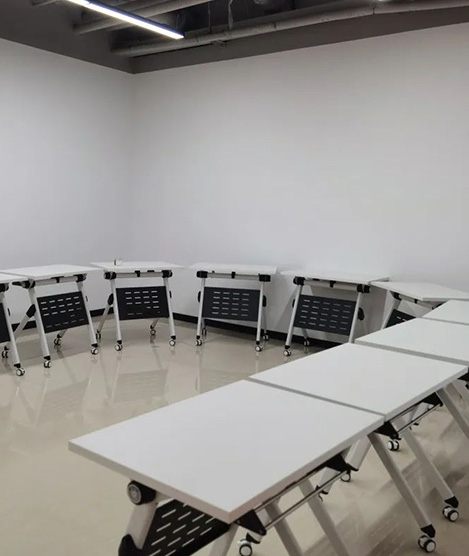
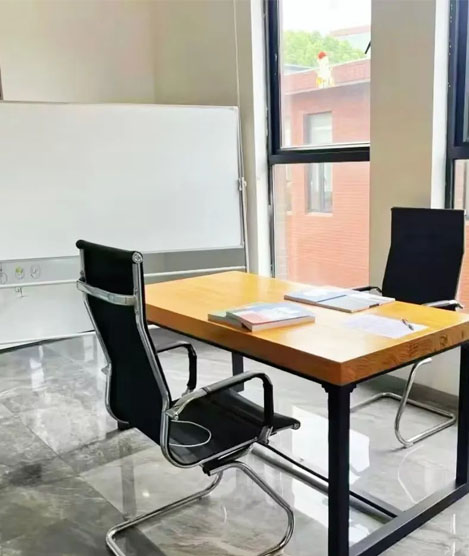
Teaching runs from Hanlin's own centres in Shanghai, Shenzhen, Chengdu and Hangzhou, and online for students elsewhere.





Talk to an advisor
Everything Hanlin does for UKMT, in one conversation.
Entry, planning, coaching and the past papers. An advisor will tell you which of these a student actually needs, including when the answer is none of them.
Competition entry and planning
Which competitions suit this student, in what order, and by when - then we handle the registration, including the ones that can only be entered through a school or a centre.
Competition coaching
Taught by full-time subject tutors, on a course tier chosen by placement paper rather than by year group.
International curriculum tutoring
IB, AP, A-Level, IGCSE and the US high school curriculum, taught alongside school and timed around the exam calendar.
Competition past papers, free
A large library of past papers, mark schemes and syllabus breakdowns across every competition on this site. No charge and no enrolment.
Scan to add an advisor
Say which competition or course you are asking about. Replies in Chinese or English.
Or call +86 21 6352 6630FAQ
UKMT, briefly answered.
What students and families ask before entering the series.
Which UKMT challenge should my child enter?
By year group: the Junior Challenge is for Year 7 and below, the Intermediate Challenge for Year 10 and below, and the Senior Challenge for Year 12 and below. Each is a ceiling rather than a target, so a capable younger student can sit a higher challenge.
How do I qualify for a UKMT olympiad?
By winning an award on the challenge below it. JMC award winners are invited to the Junior Olympiad; IMC award winners go to Cayley, Hamilton or Maclaurin depending on year group. There is no way to enter an olympiad directly.
Is there negative marking?
It depends which paper. The Junior Challenge has none. The Intermediate Challenge deducts 1 mark on questions 16 to 20 and 2 marks on questions 21 to 25. The Senior Challenge starts you on 25 marks, adds 4 for a correct answer and deducts 1 for a wrong one.
How many students win an award?
Half of all entrants on the Junior and Intermediate challenges and two thirds on the Senior challenge, split gold to silver to bronze in a 1:2:3 ratio. Candidates in China are judged against the published UK cutoff scores.
Are the papers in English?
The three challenges are offered in both English and Chinese. The Cayley, Hamilton and Maclaurin olympiads are in English only, and they ask for written solutions, so entering one means writing mathematics in English.
What comes after the Senior Challenge?
The British Mathematical Olympiad. The Senior Challenge is the qualifying assessment for it, and BMO in turn is part of how UKMT selects the British team for the International Mathematical Olympiad.
How are olympiad papers marked?
Six questions, 10 marks each. Partial credit is available for the clarity of the mathematical presentation, so working that sets out a correct line of reasoning scores even if it does not finish. A blank answer scores nothing.
Does a UKMT result help with school admission in China?
No, and the organisers are explicit about it. The activity is not connected to any Chinese admission-points scheme and results are not a basis for admission or evaluation at any Chinese school. It is an extracurricular interest activity and an international exchange.
Related
Where the UKMT series leads.
The olympiad above it, and the contests students commonly run alongside.
UKMT enquiries
Plan the series, not the single paper.
The challenges run in October, January and May, and each one decides whether an olympiad is available months later. Tell us the student’s year group, and an advisor will map which contests are reachable this season and which next.