
Competitions · Mathematics · AMC 12
AMC 12, the American Mathematics Competitions 12.
The senior paper in the AMC series: twenty-five questions in seventy-five minutes, open to students in grade 12 and below. It covers the whole of high-school mathematics and adds three areas AMC 10 leaves out - logarithms, trigonometry and complex numbers - which appear on almost every paper.

At a glance
What the paper is, and who may sit it.
Details below follow the published rules for the 2026 cycle. Hanlin is an MAA-authorised test centre and can register independent candidates as well as school groups.
- Organiser
- The Mathematical Association of America (MAA)
- Who can enter
- Students in grade 12 or below who are not over 19.5 on the day of the contest. In practice most candidates sit it in grade 10 or 11, so that a result is in hand before applications are submitted
- When
- Each November, in two sittings called the A paper and the B paper
- Format
- 25 multiple-choice questions, five options each
- Duration
- 75 minutes, or three minutes a question
- Marking
- 6 marks for a correct answer, 1.5 for one left blank, 0 for a wrong one. 150 marks in total
- Language
- Candidates sitting in China receive a bilingual Chinese and English paper
- Scope
- Every major area of high-school mathematics: algebra, geometry, combinatorics, number theory, probability and statistics, graded from routine to genuinely hard across the twenty-five
- A and B papers
- Two different papers of the same difficulty and scope. You may sit either or both. They are ranked and scored separately, and your better result is used for AIME qualification
- What it leads to
- A qualifying score earns an invitation to AIME - 85 or above from 2027, per the MAA. USA(J)MO qualification is then based primarily on AIME scores; the old index is retired
Content
Four modules, plus the three AMC 10 does not test.
Logarithms, trigonometric computation and graphs, and complex numbers are the genuine difference between the two papers. On AMC 12 they are close to guaranteed.
Advanced algebra
Inequalities including harmonic, cyclic and Cauchy-Schwarz; inverse and composite functions; trigonometric identities, sum-to-product and product-to-sum, and the half-angle substitution; complex numbers, the complex plane, Euler’s formula and De Moivre’s theorem; induction, sequences and limits.
Advanced geometry
Circle geometry beyond the AMC 10 level; the algebraic treatment of geometric figures, with two- and three-dimensional shapes expressed as functions; advanced analytic geometry; irregular plane and solid figures; vectors in two and three dimensions.
Advanced number theory
Quadratic residues and higher-power residues; Fermat’s little theorem and the modular arithmetic built on it; the standard methods for solving Diophantine equations. Number theory questions on this paper are usually the ones that reward a memorised technique.
Advanced combinatorics
Random processes and expectation; the harder counting techniques and the composite problems that combine them with algebra or geometry. Expectation in particular is a recurring source of the late, high-value questions.
2026 cycle
Registration and contest dates.
AMC 12 runs alongside AMC 10 on the same two days. China and the United States register on separate timetables, and the contest falls on a different calendar day in each because of the time difference.
| Stage | China | United States |
|---|---|---|
| Registration, A paper | 27 October 2026 | Early bird 30 September; regular 15 October; late 28 October 2026 |
| Registration, B paper | 3 November 2026 | Early bird 30 September; regular 15 October; late 28 October 2026 |
| Contest, A paper | Friday 6 November 2026, 17:00-18:15 | 5 November 2026 |
| Contest, B paper | Saturday 14 November 2026, 17:00-18:15 | 13 November 2026 |
| Scores released | 4 to 6 weeks after the contest | - |
| Cutoffs and certificates | 6 to 8 weeks after the contest | - |
Admission tickets for the China sittings are published closer to the date. Confirm every date against the organiser before relying on it.
Awards
Six global awards, plus the AIME invitation itself.
The MAA added the Top 10% and Top 25% Honor Rolls to widen recognition below the two long-standing global awards.
Score cutoffs
Where the lines have fallen since 2020.
Cutoffs are set on the global distribution and move with the difficulty of each paper. The 2025 A paper is the extreme case: the top-1% line landed on a perfect score.
| Paper | AIME cutoff | Distinction (top 5%) | Honor Roll of Distinction (top 1%) |
|---|---|---|---|
| 2025 AMC 12A | 96 | 127.5 | 150 |
| 2025 AMC 12B | 100.5 | 127.5 | 145.5 |
| 2024 AMC 12A | 76.5 (revised from 85.5) | 108 (revised from 111) | 133.5 (revised from 135) |
| 2024 AMC 12B | 88.5 | 118.5 (revised from 114) | 139.5 |
| 2023 AMC 12A | 85.5 | 112.5 | 136.5 |
| 2023 AMC 12B | 88.5 | 115.5 | 139.5 |
| 2022 AMC 12A | 93 | 106.5 | 126 |
| 2022 AMC 12B | 85.5 | 105 | 129 |
| 2021 AMC 12A, autumn | 91.5 | 96 | 130.5 |
| 2021 AMC 12B, autumn | 84 | 96 | 130 |
| 2021 AMC 12A, spring | 93 | 114 | 133.5 |
| 2021 AMC 12B, spring | 91.5 | 109.5 | 132 |
| 2020 AMC 12A | 87 | 100.5 | 123 |
| 2020 AMC 12B | 87 | 97.5 | 123 |
Six cutoffs were revised after publication in 2024. The MAA stated the revision changed awards and qualification for AMC 12A candidates only.
Why it matters
How an AMC 12 score is read.
No competition result decides an admission. What a strong AMC 12 score does is provide externally verified evidence of mathematical ability, in a form several universities ask for directly.
Asked for on the application form
MIT, Caltech, Stanford and Carnegie Mellon include a dedicated field for AMC and AIME results in their application systems. A score entered there is read as submitted, rather than needing to be argued for elsewhere in the application.
The senior rung before AIME
AMC 12 selects for AIME, and the USAMO index weights the AIME score twenty times against the AMC 12 score. For a student aiming at the olympiad route, the AMC 12 mark is the base the rest of the index is built on.
A common scale
Both papers are sat worldwide on the same two days against one global distribution, so a percentile means the same thing wherever it was earned. Very few academic results a school issues can make that claim.
A different demand from domestic contests
The mathematics behind AMC 12 overlaps heavily with Chinese competition syllabuses. The real difference is language: the paper places genuine demands on vocabulary and on reading English quickly enough to leave time to think.
Preparation
How Hanlin prepares students for AMC 12.
Preparation is usually organised in three stages, and the mistake most often made is spending all the available time on the first.
Stage one: secure the content
Close the gaps in the four modules, and in particular in logarithms, trigonometry and complex numbers, which AMC 10 candidates arrive without. Content work is necessary but it is not what earns the last thirty marks.
Stage two: connect it
Topic-based training that links the modules together, because the harder questions are rarely confined to one. This is the stage that builds mathematical judgement rather than recall, and it is the one most often skipped.
Stage three: mock and sprint
Timed full papers with review afterwards, working on rhythm, on how to allocate effort across twenty-five questions of rising difficulty, and on something as ordinary as how the scratch paper gets used.
Throughout: the real papers
Past papers run alongside all three stages. Reading several seasons in sequence is the only reliable way to see how the examiners phrase a question and where each year placed its difficulty.
Why Hanlin
Hanlin has been entering students for AMC 12 for years, and publishes what they got. The record is further down this page.
Programme formats
Five ways this is taught.
Group size is the whole difference between these. It decides how much of the tutor's attention a student gets and how far the course can bend to them, so it is worth choosing rather than accepting.
| Format | Group size | What it suits |
|---|---|---|
| One-to-one | One student | Content, pace and emphasis set by what this student actually needs rather than by a syllabus. The only format that can be rebuilt mid-course. |
| Small group | Three to eight | Opens at three. Frequent discussion, and the tutor can slow down or move on according to what the group has absorbed. Most students chasing a higher award are taught in this one. |
| Class | Eight to twelve | Taught by the subject lead or a medal coach. Less back-and-forth, so it suits a student who will say when something is unclear. |
| Large class | Ten to twenty | For students in the middle of the placement range, and a way to try a competition before committing. Students often move to a small group or to one-to-one afterwards. |
| Past-paper class | No cap | Past papers worked through in sequence in the weeks before the sitting. Free to students already enrolled. |
Course tiers
Which course, and on what evidence.
Every tier for AMC 12 is entered from a placement paper rather than from a year group. These are the actual standards.
| Course | Hours | Who it is for |
|---|---|---|
| Foundation | 80 hours | School mathematics to roughly grade 9-11 and four to nine correct on the placement paper. For a student new to competition mathematics |
| Full course | 60 hours | Eight to fourteen correct on the placement paper. Builds the AMC 12 syllabus with AIME qualification as the target |
| Intensive | 40 hours | A mock score above 90, or fifteen or more correct |
| Sprint | 30 hours | Around twelve correct on a real paper, for a student short of time before the sitting |
| Advanced intensive | 20 hours | Eighteen or more correct and already at qualifying standard. For securing the top 5% and going after the top 1% |
Ask for the placement paper before choosing a tier. It takes an hour and it settles the question.
How it runs
Six steps, four people on your side.
The same process for every student, so that nothing depends on one tutor remembering to do it.
 Step 1
Pre-course assessment
A placement paper before anything is booked, so the course tier is chosen on evidence rather than on a year group.
 Step 2
Tutor matching
A subject tutor is matched to the result, and their full background is provided before you agree to it.
 Step 3
Plan and group
A study group opens with four people on one student: the tutor, a planner, a supervisor and an academic manager.
 Step 4
Scheduled teaching
The teaching office sets the timetable around the competition date and school term, and teaching begins.
 Step 5
After-class reports
What was covered, and how the student handled it, reported after every lesson.
 Step 6
Homework follow-up
The teaching assistant and the form teacher both check that homework is done, which is where most preparation quietly fails.
Free resource pack
AMC 12 past papers and preparation pack
The same material our own AMC 12 students work from. Scan the code, say what you need, and an advisor sends it.

Tell an advisor which competition and year group, and the material comes back the same day. Free, and you do not have to enrol in anything. If we do not already hold what you need, we will go and find it.
- PDFTen years of AMC 12 A and B papers, with answer keys
- PDFAIME qualification cutoffs, year by year
- PDFThe syllabus on one page, with the placement paper we set
- PDFRegistration checklist and the dates for the current cycle
Teaching team
Who would teach it.
Three of the twenty-two tutors on the published Hanlin roster - the ones whose subject this is.

Dr Zhang
PhD in theoretical mathematics from the University of Rochester and a postdoctoral fellow at the Shanghai Center for Mathematical Sciences at Fudan. An AMC-accredited coach, ASDAN-accredited for DMM and ITCCC, and an accredited UKMT BMO2 and PUMaC coach. His students have gone on to read mathematics and physics at Harvard, MIT, Princeton, Caltech and Cambridge.

Dr Zhuang
PhD in mathematics from the University of Denver, working in mathematical logic, after a first degree in applied mathematics at Southeast University. A repeat conference speaker on his research, with three years lecturing and assisting on undergraduate mathematics at Denver.

He
A Cambridge master's after a computer science degree with a mathematics minor at the University of Nebraska-Lincoln, and a US high school GPA of 4.13. Six years overseas and teaches entirely in English, across AMC, Math League, AP Computer Science and AP Calculus.
Student results
What Hanlin students got.
Taken from Hanlin's published record of student honours and rewritten in English. Figures are as the organisers reported them.
In the global top 1%, 2024-25
One line from Hanlin's published AMC 12 record. The rest of it is below.
AMC 12
- 2024-25235 AIME qualifications across AMC 10 and 12. 123 students in the top 5%, 30 in the top 1%, 3 perfect scores
- 2023-24253 qualified for the AIME - a 65% rate - with 170 in the top 5% and 45 in the top 1%
- 2022-23137 qualified, a 56% rate, with 37 students in the top 1%
Earlier years
- February 2021Highest AMC 12 score 139.5, with 98 students qualifying - a 56% rate
- 2020Highest score 132 against a cohort average of 128
Hanlin reports AMC 10 and AMC 12 together, as one cohort sitting both papers.
The full record, across every subject and year, is on the student honours page.
Where it is taught
Hanlin learning centres.
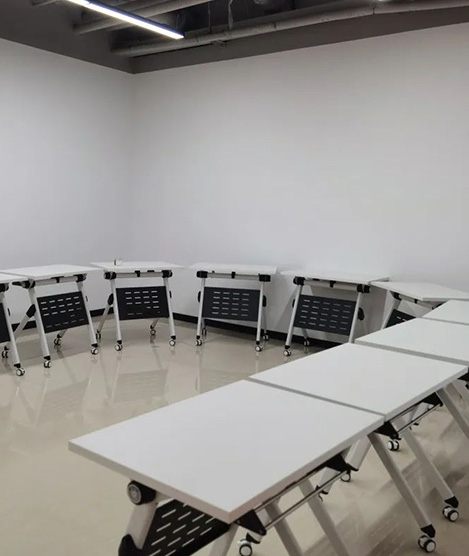
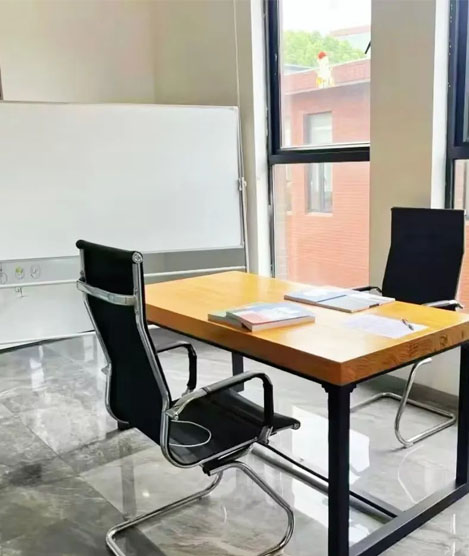
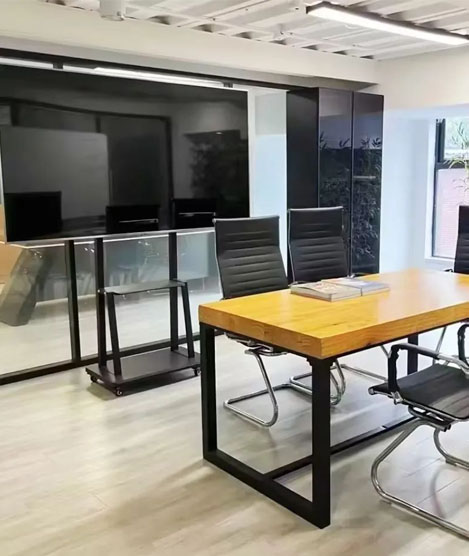
Teaching runs from Hanlin's own centres in Shanghai, Shenzhen, Chengdu and Hangzhou, and online for students elsewhere.




Talk to an advisor
Everything Hanlin does for AMC 12, in one conversation.
Entry, planning, coaching and the past papers. An advisor will tell you which of these a student actually needs, including when the answer is none of them.
Competition entry and planning
Which competitions suit this student, in what order, and by when - then we handle the registration, including the ones that can only be entered through a school or a centre.
Competition coaching
Taught by full-time subject tutors, on a course tier chosen by placement paper rather than by year group.
International curriculum tutoring
IB, AP, A-Level, IGCSE and the US high school curriculum, taught alongside school and timed around the exam calendar.
Competition past papers, free
A large library of past papers, mark schemes and syllabus breakdowns across every competition on this site. No charge and no enrolment.
Scan to add an advisor
Say which competition or course you are asking about. Replies in Chinese or English.
Or call +86 21 6352 6630FAQ
AMC 12, briefly answered.
What students and families ask before registering.
Which year group should sit AMC 12?
It is open to grade 12 and below, with an age ceiling of 19.5 on contest day, but most candidates sit it in grade 10 or 11. The reason is practical: a result earned before grade 12 is available to use when applications are submitted, and one earned during grade 12 often is not.
How does AMC 12 differ from AMC 10?
The four core modules are the same and the papers overlap considerably. AMC 12 adds logarithms, trigonometric computation and graphs, and complex numbers, and those three appear on virtually every paper. The age and grade ceilings are also higher.
What is the difference between the A and B papers?
They are separate papers of comparable difficulty and identical scope, ranked and scored separately. You may sit either or both, and your better result is the one used for AIME qualification.
Is a domestic competition background enough preparation?
It helps, because the underlying mathematics is largely shared - competition mathematics is much the same everywhere. The gap is language: AMC 12 asks a great deal of English vocabulary and reading speed, and that is where prepared mathematicians most often lose marks.
Should I answer every question?
A blank scores 1.5 and a wrong answer 0, so a blind guess among five options averages 1.2 and is slightly worse than leaving it. Ruling out one option makes the two equal; ruling out two makes guessing clearly better.
How long does preparation take?
It is normally organised in three stages - securing the content, linking the topics through themed practice, then mock papers and a final sprint. How long that takes depends on where a student starts, but the third stage should never be the one that gets compressed.
How high does a score need to be?
It depends on what it is for. The AIME cutoff has recently fallen between about 76 and 100 out of 150; the top-5% line has sat between roughly 96 and 128, and the top-1% line between 123 and a perfect 150.
When do results come out?
Scores are released four to six weeks after the contest. Award cutoffs and downloadable electronic certificates follow six to eight weeks after.
Related
Where AMC 12 sits.
The paper below it, the invitational above it, and the olympiad route beyond.
AMC 12 enquiries
Sit it early enough for the score to be useful.
Tell us the student’s year group and whether the aim is an AIME invitation, a global award, or a result to carry into applications, and an advisor will confirm the registration route and build a schedule back from the November dates.