
Tests · TOEFL Junior
TOEFL Junior — the first serious English benchmark for 11 to 15.
Developed by ETS as the middle-school member of the TOEFL family, TOEFL Junior is an authoritative international measure of English for students aged 11–15 (mainland registration up to 17, no lower limit). It runs at test centres and at home, expects a 3,000–3,500-word vocabulary with grammar through senior-school level, and reports on a 600–900 scale.
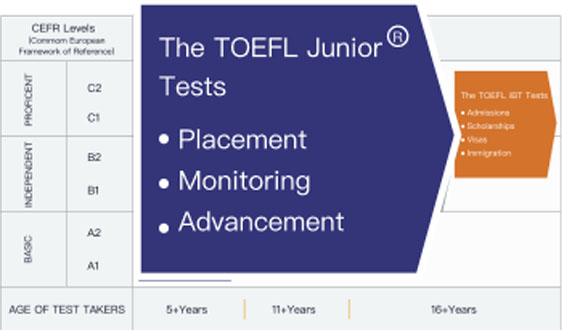
Why TOEFL Junior
Four things the score tells you.
An objective, accurate measure of communicative English for students 11 and up — reading, listening, language form and meaning, speaking and writing — that shows strengths and gaps in an English-medium classroom and guides how to improve.
Mapped to CEFR
The Common European Framework — the international standard for describing language ability, comparable across TOEFL and other tests.
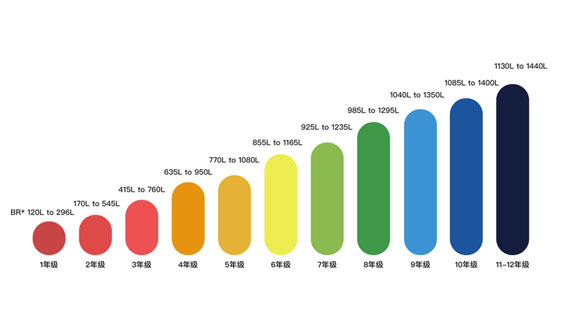
Matched to Lexile
A Lexile reading measure pairs the reader's level with book difficulty, so teachers and parents choose the right reading.
Benchmarked to US grades
Reflects the English level of native grade 6–8 students in US public schools, so Chinese students of the same age can see where they stand.

Proof for progress and admissions
A widely recognised youth English test — usable to check learning outcomes and as evidence of language ability for international-school entry.
The test
A written paper and a speaking-writing test.
The written paper is sat on paper with an answer sheet; speaking and writing are sat on computer at the centre.
Listening comprehension
Set in secondary-school life — classroom instructions, conversations, academic talks and discussions — to measure listening in an English-medium environment.
Language form & meaning
Everyday text types students actually meet, written as close to campus life as possible, testing communication and applied language.
Reading comprehension
Non-academic and academic passages across many genres, measuring reading in an English-medium environment.
Speaking — 4 tasks
Spoken expression across social, campus and academic settings, sat on computer at the centre.
Writing — 4 tasks
Written expression across the same three settings, sat on computer at the centre.
Formats
At the centre, or at home.
Choose by need — the written paper runs both ways.
Test-centre sitting
- Covers
- Both the written paper and the speaking-writing test
- Written
- Listening, language form and meaning, reading — answered on an answer sheet
- Speaking-writing
- Speaking and writing on computer
At-home sitting
- Covers
- The written paper only
- Device
- Sat on an Apple iPad
- Sections
- Listening, language form and meaning, reading
Scores & reports
Reading the score report.
Reports are built as a coaching tool — for students, parents and teachers to see level and progress. Scores are valid two years.
Three reports
A standard-test report, a speaking report and a writing report — each with score bands, ranges, ability descriptors and the matching CEFR level.
CEFR mapping
Total score and each section map to CEFR levels, so ability is measured on an international standard.
Lexile in the reading report
Every reading section carries a Lexile measure — below A2 at 550L and under, A2 at 620–750L, B1 at 775–950L, B2 at 1000–1160L. BR marks beginning readers below 0L.
Certificates and samples
- Score certificate issued to every candidate
- Sample reports and conversion tables in the free pack
- Collect the sample-question and handbook pack →
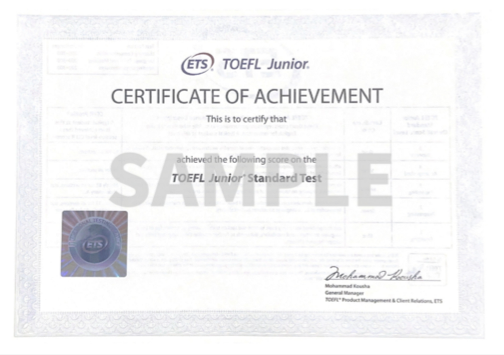
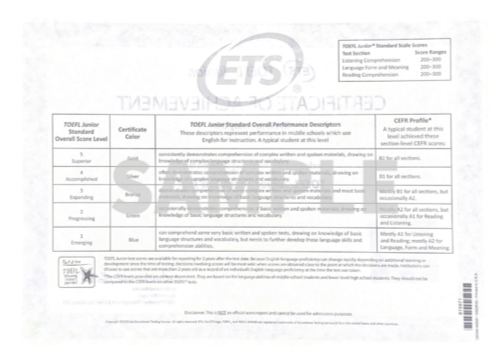
Sample ETS score report and certificate, and a Hanlin student's official report at Superior level (CEFR B2, Lexile 1090L).
Talk to an advisor
Everything Hanlin does for TOEFL Junior, in one conversation.
The first English benchmark, and what to do with the result.
Competition entry and planning
Which competitions suit this student, in what order, and by when - then we handle the registration, including the ones that can only be entered through a school or a centre.
Competition coaching
Taught by full-time subject tutors, on a course tier chosen by placement paper rather than by year group.
International curriculum tutoring
IB, AP, A-Level, IGCSE and the US high school curriculum, taught alongside school and timed around the exam calendar.
Competition past papers, free
A large library of past papers, mark schemes and syllabus breakdowns across every competition on this site. No charge and no enrolment.
Scan to add an advisor

Say which competition or course you are asking about. Replies in Chinese or English.
Or call +86 21 6352 6630FAQ
TOEFL Junior, briefly answered.
What parents ask when a first English benchmark comes up.
What age is TOEFL Junior for?
Designed for 11–15-year-olds; mainland registration is open up to age 17 with no lower limit.
How is it scored?
The written paper reports 600–900 in total, each of the three sections 200–300; speaking and writing report separately with bands, descriptors and CEFR levels.
What vocabulary does it expect?
About 3,000–3,500 words, with grammar covering the full senior-school syllabus.
Can it be sat at home?
The written paper can, on an iPad; the speaking-writing test is sat on computer at a centre.
What comes after TOEFL Junior?
The TOEFL iBT — Hanlin's TOEFL page carries the four-skill route for admissions, scholarships and beyond.
TOEFL Junior enquiries
Set the first English benchmark.
Tell us the child's age, school and current level, and an advisor will map the preparation and the sitting.