
Tests · SSAT
SSAT — the entrance test for top US and Canadian private schools.
The Secondary School Admission Test is the score selective private schools in the United States and Canada want to see. Set by the Admission Test Board, it measures verbal reasoning, reading and mathematics — and beneath them, logical thinking and potential. Since 1957 it has led private-school assessment on fairness, reliability and flexible delivery: paper, at-home and Prometric centres.

Why SSAT
Three essentials, four strengths.
Critical thinking, accuracy and efficiency are the test's core; the four qualities below are why schools trust it.
Relevance
Rigorously written and reviewed by subject experts.
Reliability
Strict standards and precise scoring.
Flexibility
Accommodations that keep the test accessible to candidates with disabilities.
Security
One unified global testing programme.
Why study for it
SSAT is an admission condition at top US and Canadian private schools — and a sharpening tool for elite thinking. Candidates need near-native language ability, a strong academic vocabulary, and English-language logical and critical reasoning; the preparation also lifts school grades above grade level. Notably, entrance tests for public-school IB programmes in Canada draw on SSAT's classic question styles, so IB-bound public-school students study it too.

Levels & sections
Three levels by age, five sections per paper.
Registration is strictly by grade band.
Elementary level
For grades 3–4, applying to grades 4–5.
Middle level
For grades 5–7, applying to grades 6–8.
Upper level
For grades 8–11, applying to grades 9–12.
Verbal
Synonyms and analogies — vocabulary, comprehension and logical reasoning.
Reading
Main idea, detail and inference across a wide range of passage types.
Quantitative
Maths fundamentals and problem-solving, in two sections split by other subjects.
Writing sample
A narrative or argumentative essay on a set prompt — unscored, but sent to schools as a writing sample.
Experimental
Verbal, reading and maths items trialled for future papers — unscored, and unmarked as such during the test.
Formats
Paper, Prometric or at home.
Paper and Prometric worldwide, at-home in the US and Canada, with multiple sittings a year.

The Paper SSAT
- Who
- International students worldwide; registration closes 14 days before the date
- Types
- Standard — six set dates a year at approved schools; Flex — specially arranged dates and venues
- Timing
- Usually 09:00 local; arrive 30–45 minutes early. Late-registration and rush fees apply in the final windows
- Season
- Sittings in early February for Upper and Middle levels — check the official calendar

Prometric SSAT
- Who
- Computer-based at supervised Prometric centres in the US, Canada and elsewhere — not China, Hong Kong, Korea, Laos, Myanmar, Vietnam or Jamaica; apply and be approved first
- Registration
- Closes mid-to-late July each year
- Sections
- Writing 25 · break 10 · maths 30 · reading 40 · break 10 · verbal 30 · maths 30 · experimental 15 — same paper, answered on screen with erasable boards

The SSAT at Home
- Who
- US and Canadian students; dates from August to mid-July; apply and be approved
- Registration
- Closes mid-to-late June; schedule through PSI at least 72 hours ahead — two sittings a month, January to June
- Timing
- 10:00 Eastern, or noon to 18:00 Eastern in 30-minute starts; a free laptop-and-hotspot kit is available, returned within two days; a remote proctor watches by webcam
Test day
What stays outside the room.
Prohibited items disqualify candidates without refund — leave them at home or with a parent in the waiting area.
Electronics
Calculators, phones (switched off, with a parent or in a locker), fitness trackers, media players and every kind of watch — the room has a clock and invigilators call time.
Clothing
Coats and hats; religious head coverings are exempt; hoodies allowed with the hood down.
Personal items
Backpacks, bags, large jewellery and wallets; feminine hygiene products may be stored in a locker or with a guardian.
Other
Books, erasers, mechanical pencils, notes or paper, pens and rulers.
Results and scoring
- Scores can take up to three weeks and release at varying times of day
- Paper, Prometric and at-home results follow separate schedules
- Scaled scores by section plus percentiles against the level cohort
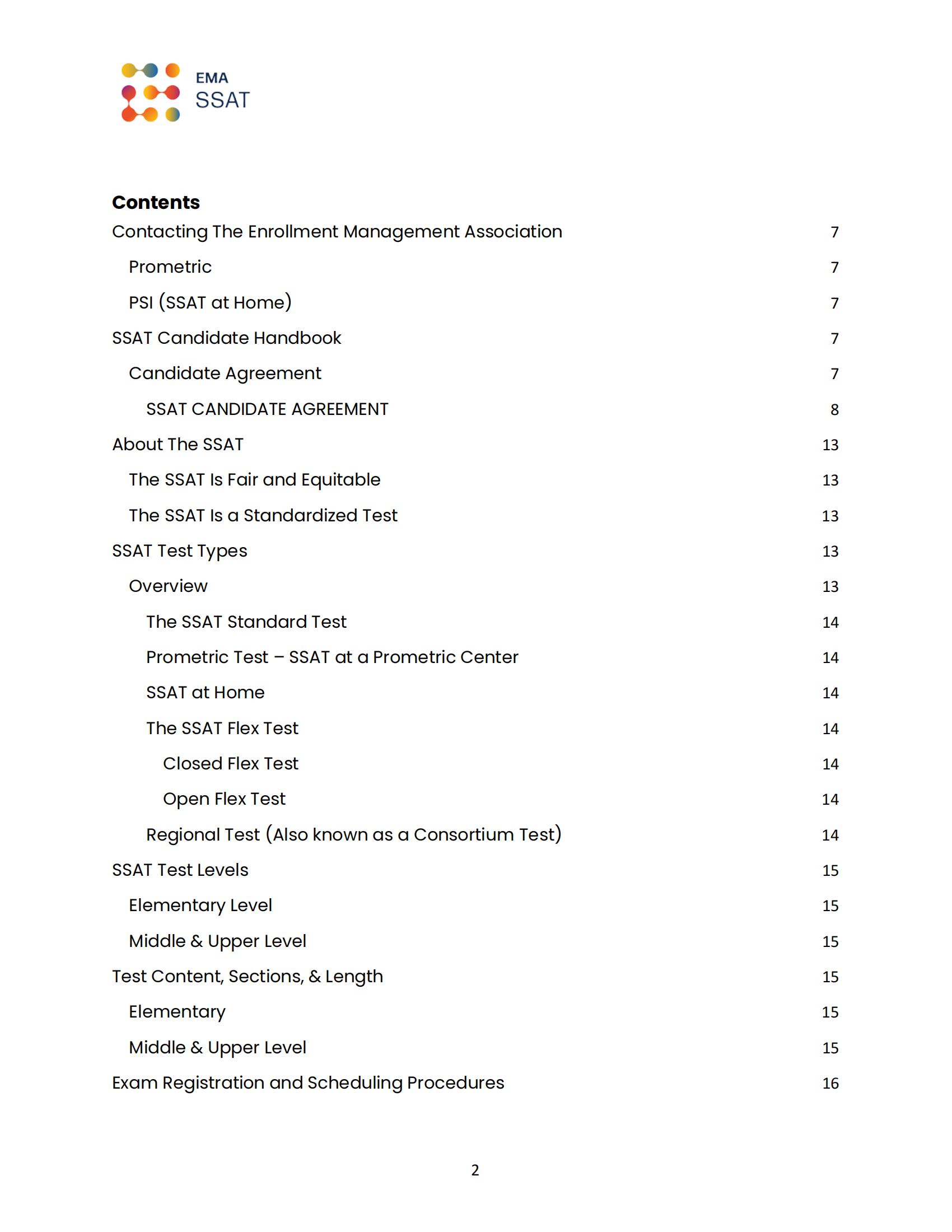
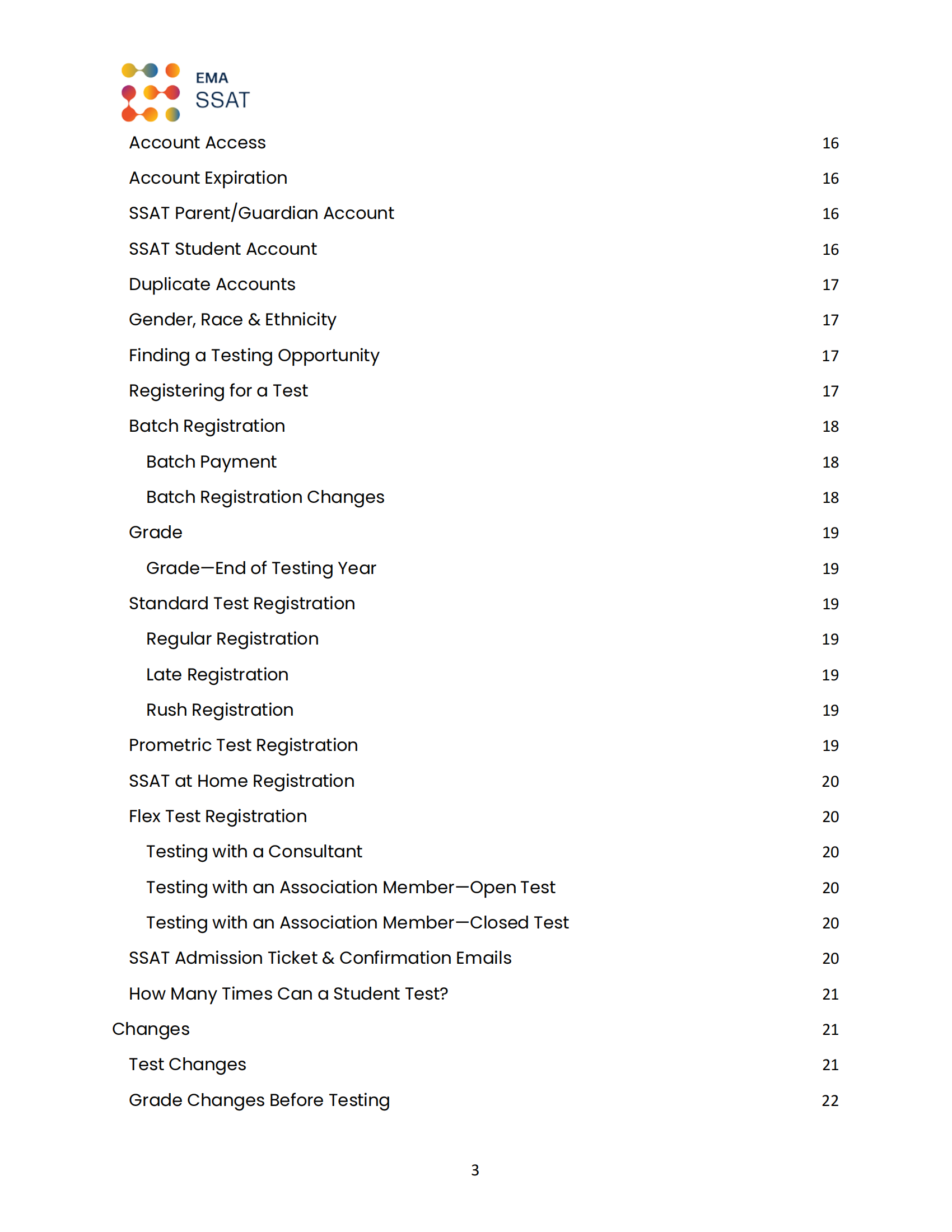
- Collect the candidate handbook →
Talk to an advisor
Everything Hanlin does for the SSAT, in one conversation.
The level, the timing, and what the schools being applied to actually want.
Competition entry and planning
Which competitions suit this student, in what order, and by when - then we handle the registration, including the ones that can only be entered through a school or a centre.
Competition coaching
Taught by full-time subject tutors, on a course tier chosen by placement paper rather than by year group.
International curriculum tutoring
IB, AP, A-Level, IGCSE and the US high school curriculum, taught alongside school and timed around the exam calendar.
Competition past papers, free
A large library of past papers, mark schemes and syllabus breakdowns across every competition on this site. No charge and no enrolment.
Scan to add an advisor

Say which competition or course you are asking about. Replies in Chinese or English.
Or call +86 21 6352 6630FAQ
SSAT, briefly answered.
What families ask when a private-school application starts.
Which level should my child sit?
By current grade: Elementary for grades 3–4, Middle for 5–7, Upper for 8–11 — each aimed at entry to the next band.
Can students in China sit the SSAT?
Yes, on paper — the Standard and Flex paper sittings run internationally. Prometric centres and at-home testing are not offered in China.
Does the writing sample count?
It is unscored, but schools receive it and read it as evidence of writing ability — prepare it as seriously as the scored sections.
How long until results?
Up to three weeks from the test date, released at varying times; each format follows its own schedule.
How does Hanlin prepare students?
One-to-one tutoring with top-30 and G5-trained tutors: vocabulary systems for the verbal section, passage strategy for reading, and problem-solving drills for the two maths sections, plus timed writing practice.
SSAT enquiries
Prepare for the school that fits.
Tell us the target schools and current grade, and an advisor will map the level, format and preparation plan.