
Programmes · Young learners
An early start on international education.
The young-learner line is one of Hanlin's four programme pillars — internationally synchronised school courses, early mathematics enrichment and a first competition ladder, built for primary and middle-school students before the A-Level, IB and olympiad years begin.
Why start early
What the early years buy.
The young-learner line exists because the international route rewards a head start — in language, in mathematical habits and in confidence.
English-medium footing
Studying mathematics through English lecture notes builds the classroom language international school demands.
Thinking before drilling
Enrichment courses reward reasoning and curiosity, laying habits the olympiad ladder will later lean on.
A visible ladder
From school-synced classes through Math Explorer to AMC 8, each stage has a clear next step.
Join any time
Synchronised classes follow the school semester and admit students mid-course, picking up at the current unit.
The routes
Six young-learner programmes.
Cards open the dedicated pages as the series comes online.
School-synced tutoring
International synchronised mathematics following the Envision Mathematics series used by leading international schools, taught with English lecture notes semester by semester, grades 1 and up.

Math Explorer
The enrichment course between school maths and contest maths — adventures in mathematical thinking, levelled by grade band.

AMC 8, the competition
The MAA's entry paper for grade 8 and below — 25 problems in 40 minutes, the first big milestone on the AMC ladder.

AMC 8 tutoring
Structured preparation courses for the paper, from foundation to sprint — with the bilingual coursebook Hanlin co-published with Tsinghua University Press.
AMC 8 video course
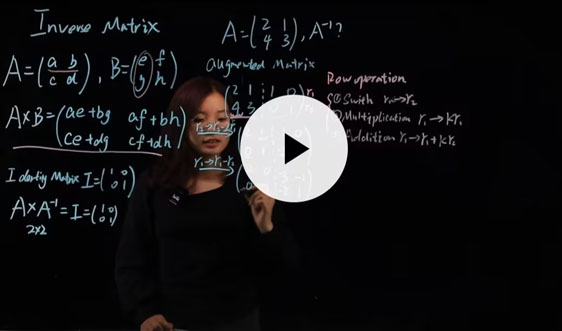
The recorded AMC 8 series for self-paced study — lesson by lesson through the syllabus, watched anywhere.

Junior competitions
The wider early-years contest map — Math Kangaroo, Math League, Gauss and more — surveyed in one place.
The pathway
From first classes to the contest ladder.
How the routes chain together across the school years.
 Grades 1–4
Synchronised foundations
School-synced mathematics keeps pace with the international classroom, semester by semester, in English.
 Grades 3–6
Enrichment years
Math Explorer and the junior contests — Kangaroo, Math League, Gauss — turn ability into contest habits.
 Grades 5–8
The AMC 8 milestone
Tutored or by video course, students build to the AMC 8 — and the strongest step straight onto the AMC 10 ladder and the senior competition map.
Talk to an advisor
Everything Hanlin does for younger students, in one conversation.
The early competitions, the junior curricula, and the order to take them in.
Competition entry and planning
Which competitions suit this student, in what order, and by when - then we handle the registration, including the ones that can only be entered through a school or a centre.
Competition coaching
Taught by full-time subject tutors, on a course tier chosen by placement paper rather than by year group.
International curriculum tutoring
IB, AP, A-Level, IGCSE and the US high school curriculum, taught alongside school and timed around the exam calendar.
Competition past papers, free
A large library of past papers, mark schemes and syllabus breakdowns across every competition on this site. No charge and no enrolment.
Scan to add an advisor

Say which competition or course you are asking about. Replies in Chinese or English.
Or call +86 21 6352 6630FAQ
Young-learner programmes, briefly answered.
What parents of primary-age students ask first.
What age can a child start?
Synchronised mathematics runs from grade 1, following the school semester. Enrichment and contest routes typically begin around grades 3–5, and the AMC 8 milestone sits at grade 8 and below.
Can a student join mid-semester?
Yes — synchronised classes admit students at any point in the term, joining the current unit and continuing with the class.
Are lessons in English or Chinese?
Synchronised courses use English lecture notes aligned to international-school teaching, delivered bilingually so younger students keep up; contest courses follow the same pattern.
Which competition should a young learner sit first?
Most start with Math Kangaroo or Math League for confidence, then Gauss, building to the AMC 8 — the paper that opens the AMC 10/12 ladder later.
What comes after AMC 8?
The senior map: AMC 10 within the mathematics ladder, and from there the full competition hub across sciences, computing, business and the humanities.
Young-learner enquiries
Give the route an early start.
Tell us the child's grade and current school, and an advisor will map the synchronised classes, enrichment stages and first contests.